Republic of ChinaAD 1912–1949
Republic of China: Timeline of Events (AD 1912–1949)
Monarchy overthrown; warlord conflicts and the War of Resistance against Japan
View on the timelineEvents in this period
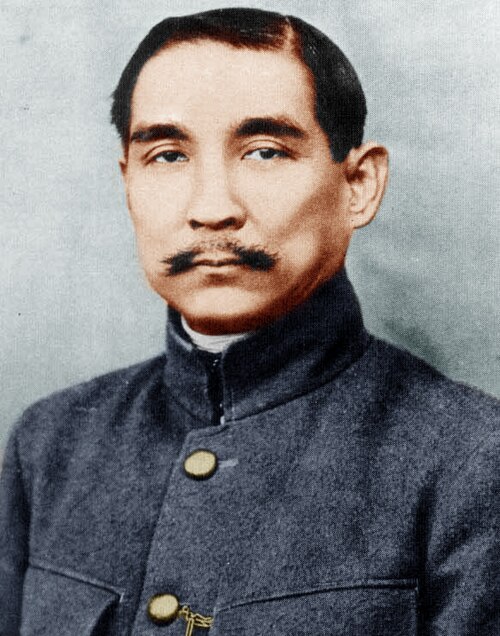 Founding of the Republic of China1 January 1912
On 1 January 1912 Sun Yat-sen took office in Nanjing as provisional president, proclaiming the Republic of China, the first bourgeois republic in Chinese history.
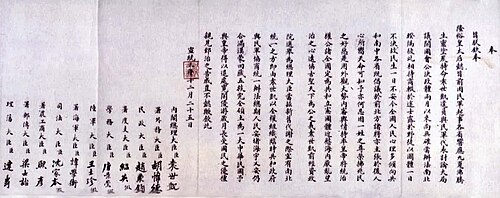 Qing Abdication and Yuan Shikai Seizes PowerFebruary–April 1912
On 12 February 1912 the child emperor Puyi abdicated and the Qing fell; Sun Yat-sen resigned, the Senate elected Yuan Shikai provisional president, and in April the government moved to Beijing.
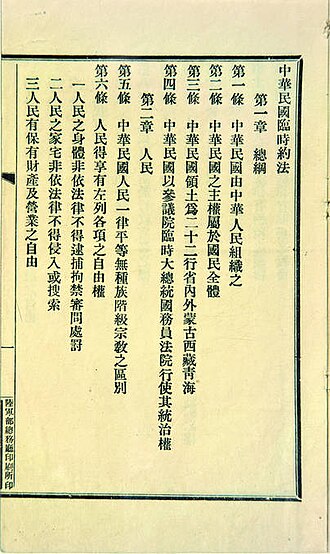 Provisional Constitution of the Republic of China11 March 1912
In March 1912 Sun Yat-sen promulgated the Provisional Constitution, vesting sovereignty in the people and setting up separation of powers and a responsible cabinet.
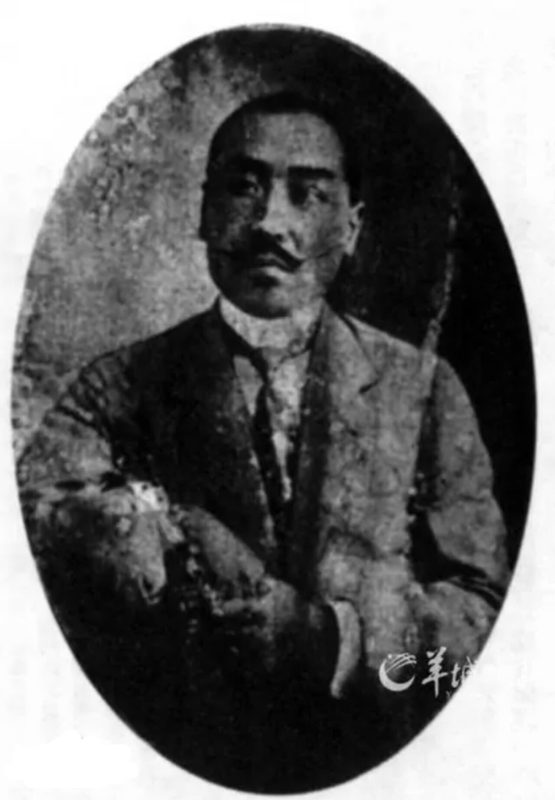 Song Jiaoren's Assassination and Second Revolution1913
In 1913 the Kuomintang won the elections and Song Jiaoren was assassinated in Shanghai; Sun Yat-sen's “Second Revolution” against Yuan Shikai failed within two months.
 The “Brief Spring” of National Industry1914–1918
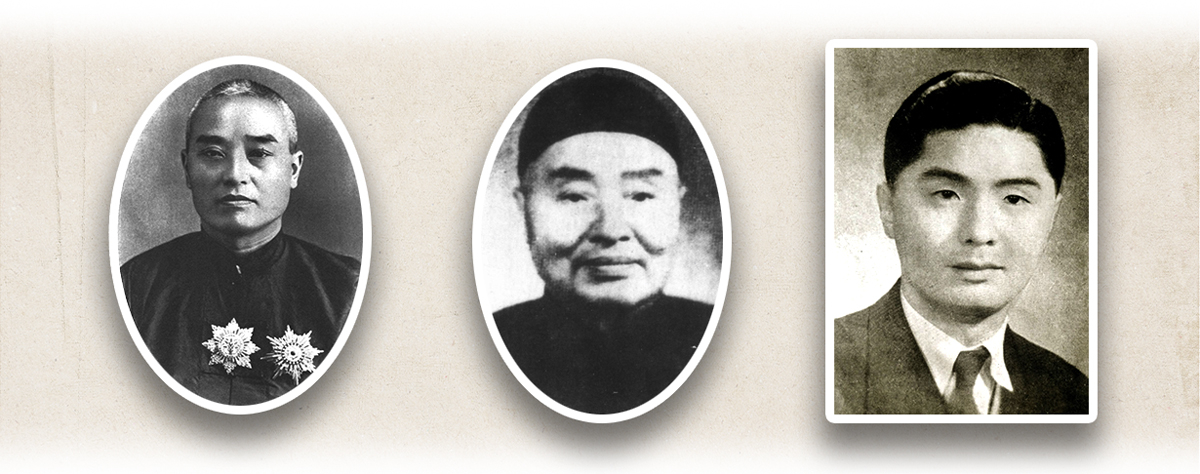
Early Republican policies encouraged industry, and during World War I the powers eased pressure on China; national industry grew in a “brief spring”, with entrepreneurs such as the Rong brothers.
 New Culture MovementFrom 1915
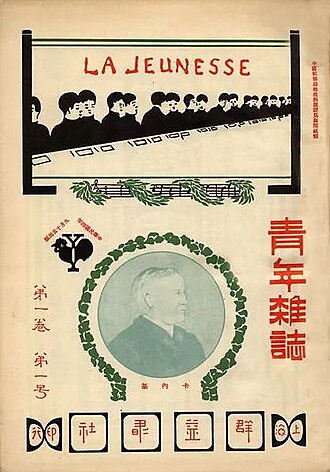
In 1915 Chen Duxiu founded Youth Magazine (later New Youth) in Shanghai, raising the banners of “democracy” and “science” and opening the New Culture Movement.
 Yuan Shikai's Dictatorship and Twenty-One Demands1914–1915
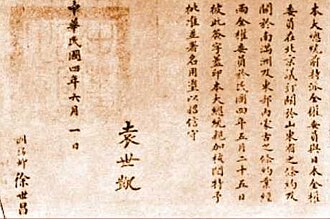
Yuan Shikai dissolved parliament and abolished the Provisional Constitution; to win Japanese backing for a monarchy he accepted most of Japan's “Twenty-One Demands” in 1915.
 National Protection War Against Yuan ShikaiLate 1915–June 1916
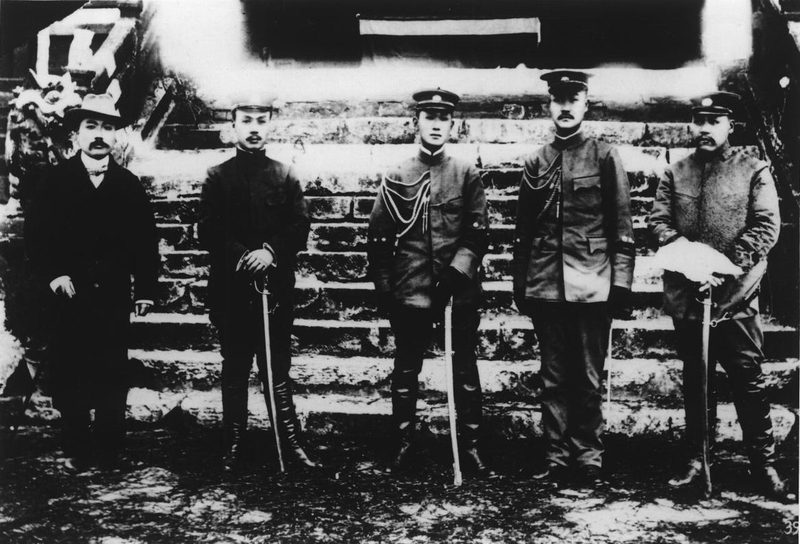
Yuan Shikai restored monarchy in late 1915; the National Protection War began in Yunnan, provinces joined, and Yuan abandoned the monarchy in March 1916 and died in June.
 Beiyang Warlord FragmentationFrom 1916
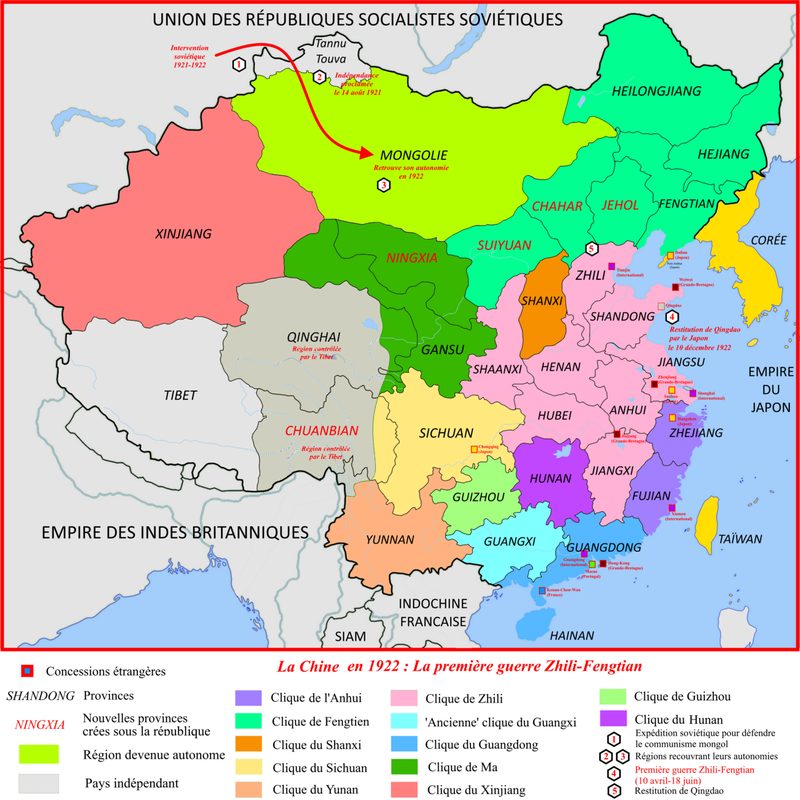
After Yuan Shikai's death the Beiyang warlords split into Anhui, Zhili and Fengtian cliques, each holding a region with foreign backing and fighting over Beijing; years of war brought great suffering.
 Cai Yuanpei at Peking University1917
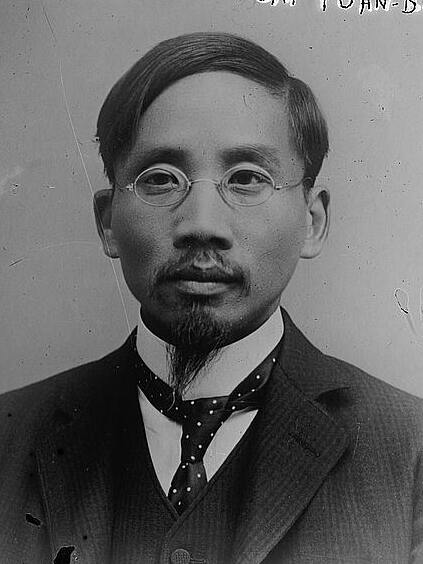
In 1917 Cai Yuanpei became president of Peking University, advocating “freedom of thought and tolerance of all views” and hiring Chen Duxiu, Hu Shi and Li Dazhao.
 Constitutional Protection Movement1917–1918
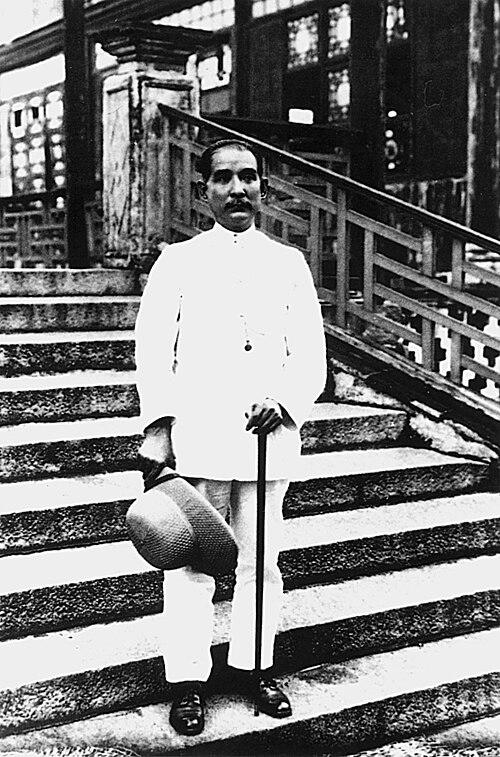
In 1917 Sun Yat-sen formed a military government in Guangzhou to defend the Provisional Constitution and parliament; sidelined by southwestern warlords, the movement failed in 1918.
 Li Dazhao and the Spread of Marxism1917–1919
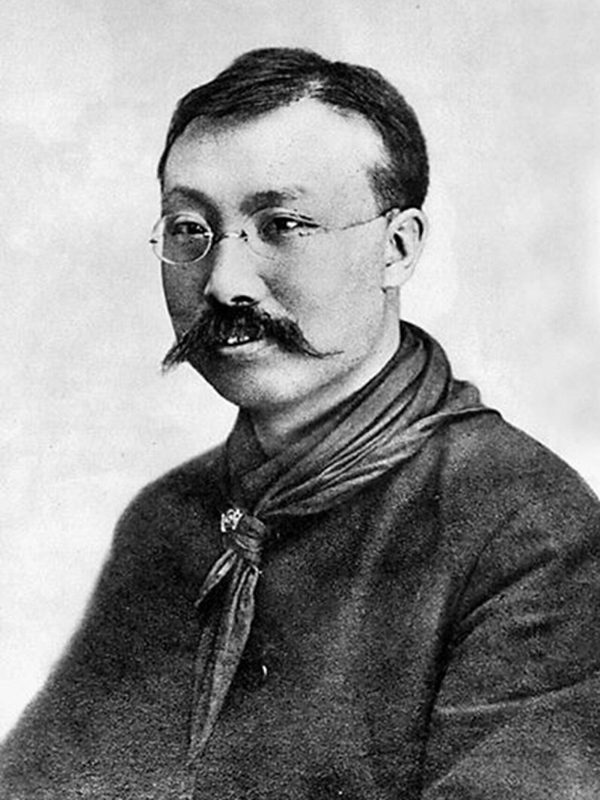
After the October Revolution Li Dazhao published “The Victory of the Common People”, “The Victory of Bolshevism” and “My Marxist View”, becoming a pioneer of Marxism in China.
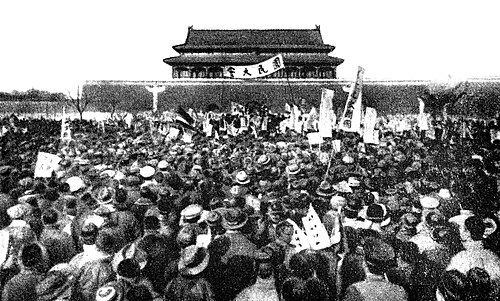 May Fourth Movement4 May 1919
In 1919 the Paris Peace Conference rejected China's just demands; on 4 May Beijing students marched shouting “Secure sovereignty abroad, punish traitors at home”, and China refused to sign.
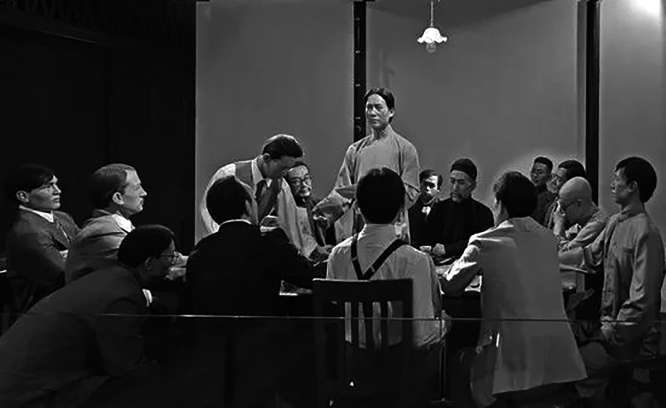 Early Communist Groups Established1920
In 1920, with Comintern help, Chen Duxiu founded the first early communist group in Shanghai; groups followed in Beijing, Wuhan, Changsha and elsewhere, including overseas.
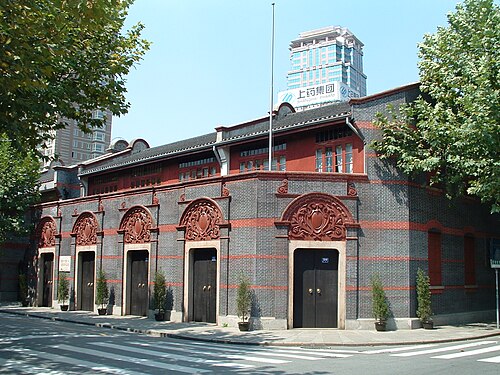 Founding of the Communist Party of China23 July 1921
The Party's First Congress opened in Shanghai on 23 July 1921, with its last session held on a boat on South Lake in Jiaxing, Zhejiang, proclaiming the founding of the Communist Party of China.
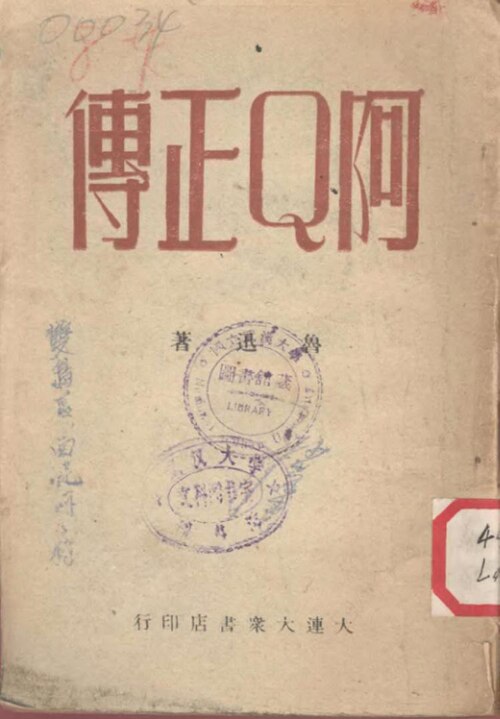 Lu Xun and The True Story of Ah QFrom 1921
Lu Xun, the founder of modern Chinese literature, published the first modern vernacular story “Diary of a Madman” in 1918 and later The True Story of Ah Q, exposing flaws in the national character.
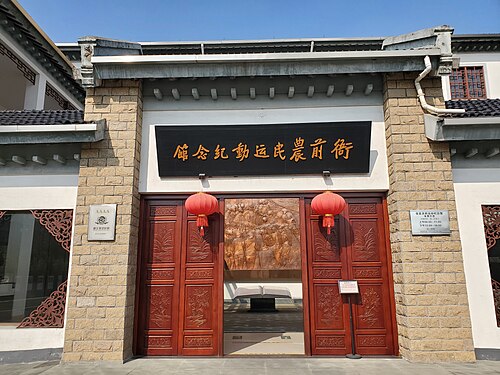 Early Peasant Movement in Zhejiang and Guangdong1921–1923
After its founding the Party began leading peasant movements, from the Yanqian Peasant Association in Zhejiang (1921) to Peng Pai's peasant associations in Haifeng, Guangdong (1922).
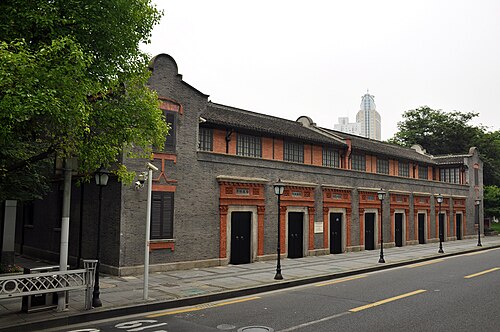 Second Party Congress and Democratic ProgramJuly 1922
The Party's Second Congress met in Shanghai in July 1922 and for the first time put forward a clear anti-imperialist, anti-feudal democratic revolution program.
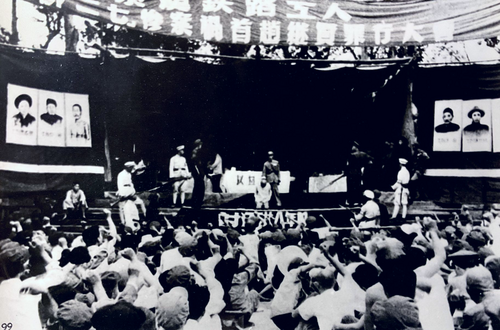 Beijing–Hankou Railway Strike, February 7 MassacreFebruary 1923
In February 1923 Beijing–Hankou Railway workers struck for a general union; Wu Peifu suppressed them by force in the “February 7 Massacre”, in which Lin Xiangqian and Shi Yang died heroically.
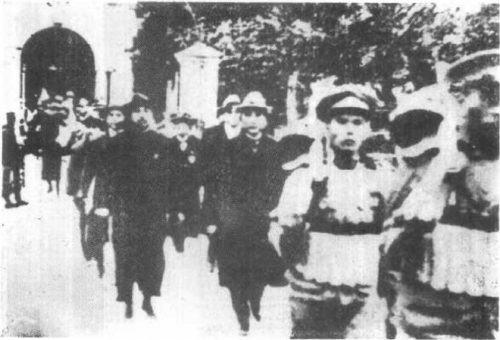 Kuomintang First Congress and First United FrontJanuary 1924
In January 1924 the Kuomintang First Congress effectively set the policies of allying with Russia and the Communists and aiding workers and peasants, forming the First United Front.
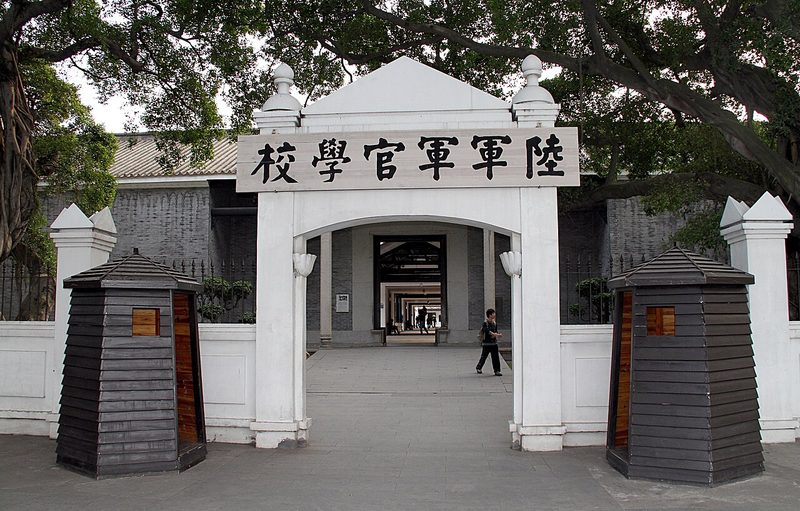 Founding of the Whampoa Military AcademyMay 1924
In May 1924, with Soviet and Communist help, Sun Yat-sen opened an army officers' academy at Whampoa, Guangzhou, with Chiang Kai-shek as president and Zhou Enlai heading political training.
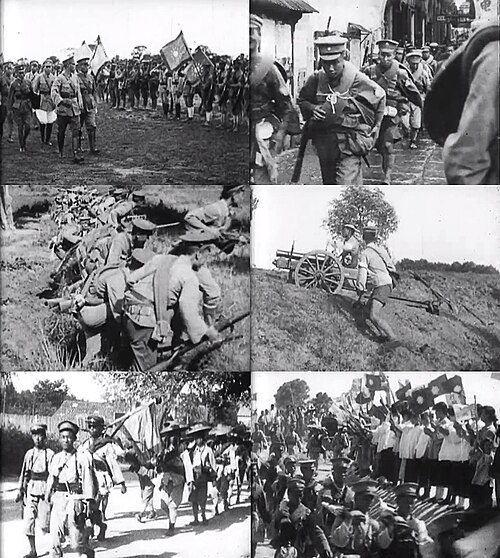 Northern ExpeditionFrom July 1926
In July 1926 the National Revolutionary Army marched north from Guangdong, defeated Wu Peifu and Sun Chuanfang and took Wuhan, Nanjing and Shanghai, extending revolutionary power to the Yangtze basin.
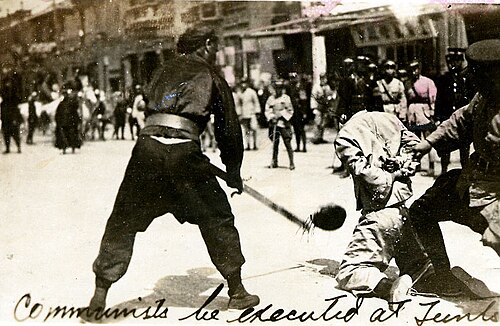 April 12 Coup and Failure of the Great RevolutionApril and July 1927
On 12 April 1927 Chiang Kai-shek launched a coup in Shanghai, massacring Communists and revolutionary masses; on 15 July Wang Jingwei split with the Communists and the Great Revolution failed.
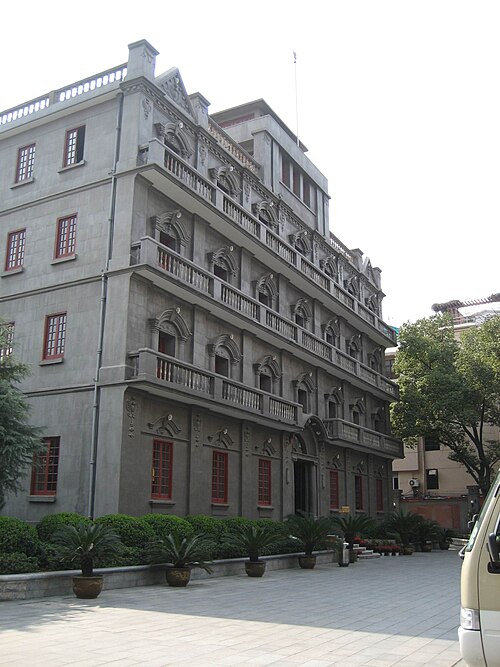 Nanchang Uprising1 August 1927
On 1 August 1927 Zhou Enlai, He Long, Ye Ting, Zhu De, Liu Bocheng and others led the Nanchang Uprising, firing the first shot in armed resistance to the Kuomintang reactionaries.
 August 7 Conference and Jinggangshan BaseAugust–October 1927
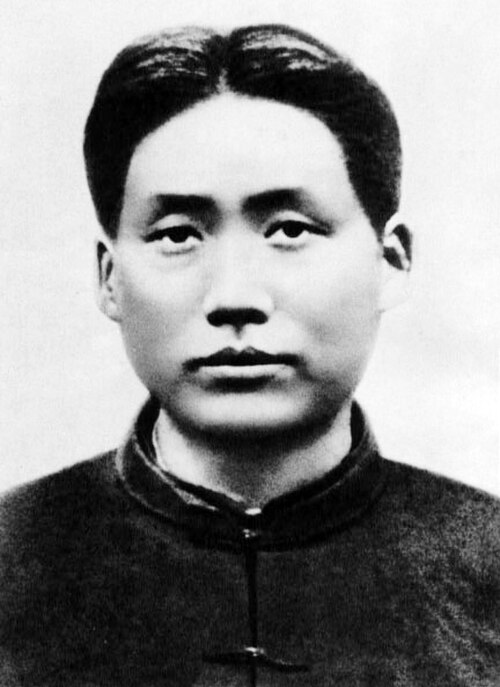
The August 7 Conference of 1927 set a policy of land revolution and armed resistance; after the Autumn Harvest Uprising Mao Zedong led his troops into Jinggangshan and built the first rural base.
 Jinggangshan Meeting and Armed Separatist RegimeApril 1928
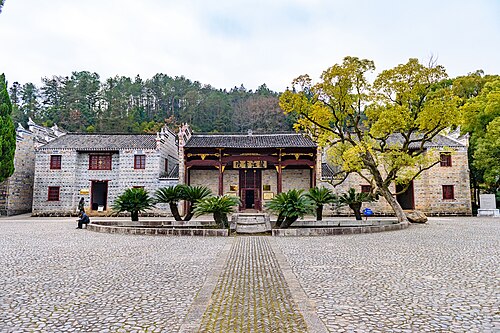
In April 1928 Zhu De and Chen Yi's troops joined Mao Zedong's at Jinggangshan to form the Fourth Red Army, and Mao summed up the idea of an “armed separatist regime of workers and peasants”.
 Northeast Flag Replacement and Nominal Unification1928
In 1928 the Northern Expedition entered Beijing, Zhang Zuolin was killed by a Japanese bomb, and in December Zhang Xueliang's “Northeast Flag Replacement” nominally unified China under Nanjing.
 Gutian ConferenceDecember 1929
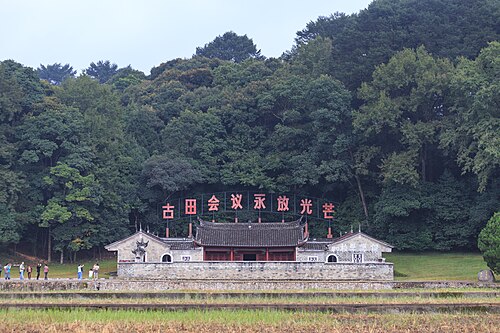
The Fourth Red Army's Ninth Party Congress met at Gutian, Fujian, in December 1929, establishing the principles of building the Party ideologically and the army politically.
 Mukden Incident18 September 1931
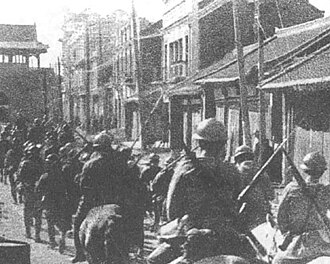
On 18 September 1931 Japanese troops staged the Liutiaohu Incident and attacked Shenyang; with no resistance ordered, all three northeastern provinces fell in under six months.
 Chinese Soviet Republic Provisional GovernmentWinter 1931
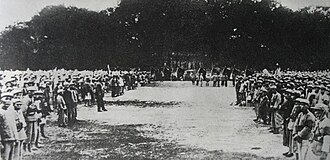
In November 1931 the First National Soviet Congress met at Ruijin and set up the Provisional Central Government of the Chinese Soviet Republic, with Mao Zedong as chairman.
 January 28 Incident and Founding of Manchukuo1932
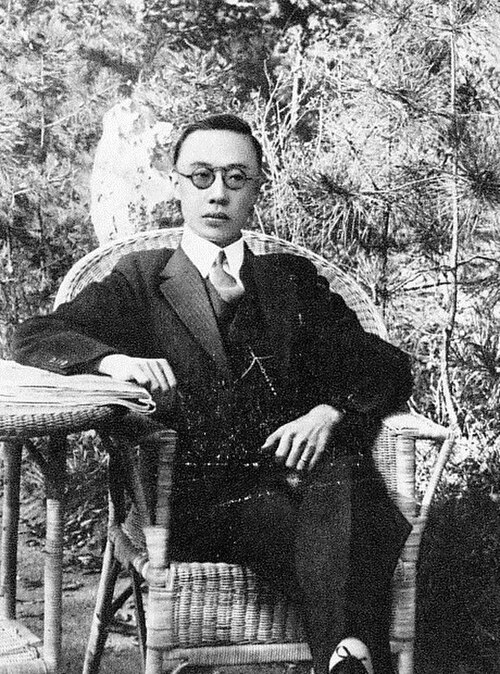
On 28 January 1932 Japanese troops attacked Shanghai and the 19th Route Army resisted, the “January 28 Incident”; in March Japan set up the puppet state of Manchukuo under Puyi.
 Start of the Long March and Xiang River BattleOctober 1934
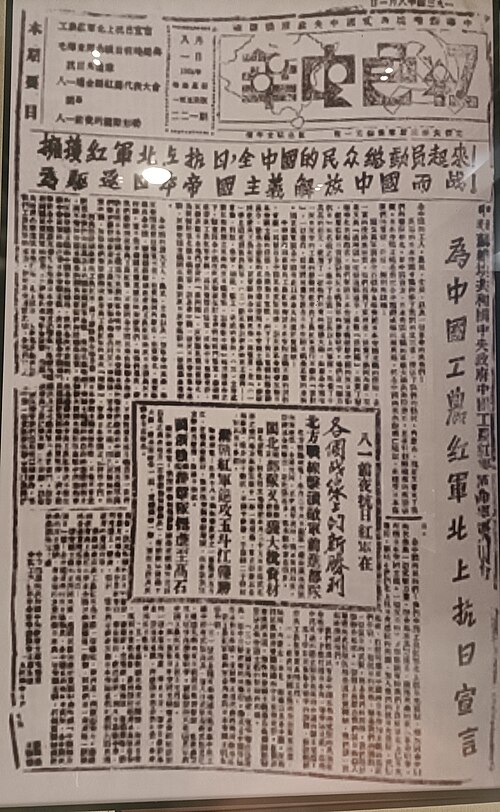
After the failure of the Fifth Encirclement Campaign the Central Red Army began the Long March in October 1934; at the Battle of the Xiang River it suffered heavy losses, falling to just over 30,000.
 Zunyi ConferenceJanuary 1935
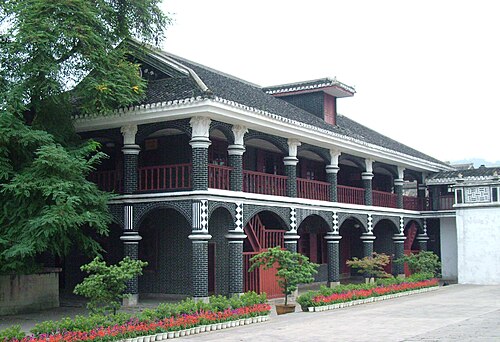
In January 1935 the Central Committee met at Zunyi and established Mao Zedong's leadership of the Party and Red Army, a turning point of life-and-death importance in Party history.
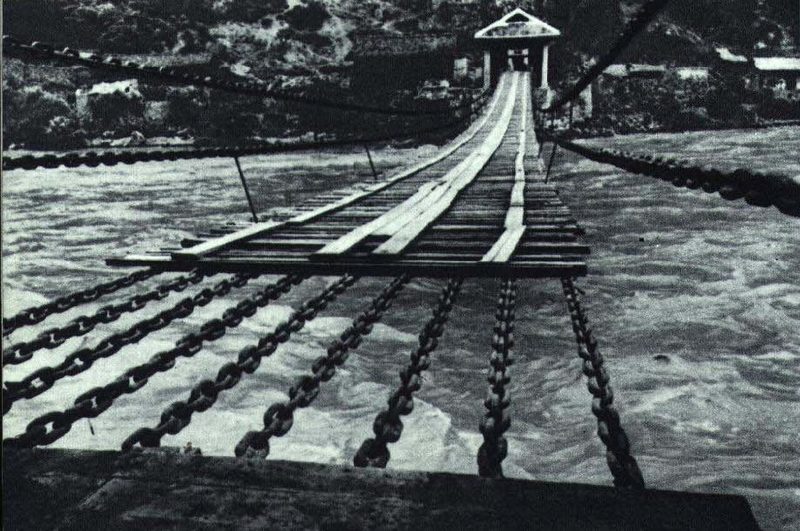 Four Crossings of the Chishui and Luding Bridge1935
After Zunyi, Mao Zedong directed the Red Army across the Chishui four times, the Jinsha and Dadu rivers and Luding Bridge, and over snow mountains and grasslands, shaking off its pursuers.
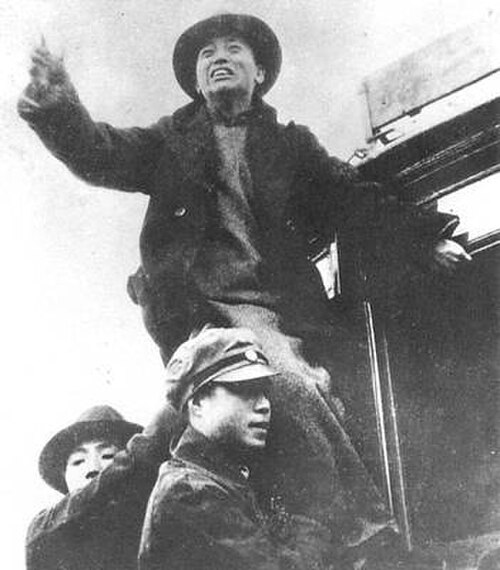 North China Incident and December 9th Movement1935
In 1935 Japan staged the North China Incident, promoting “autonomy” of five northern provinces; on 9 December Beiping students marched to resist Japan, raising a new national upsurge.
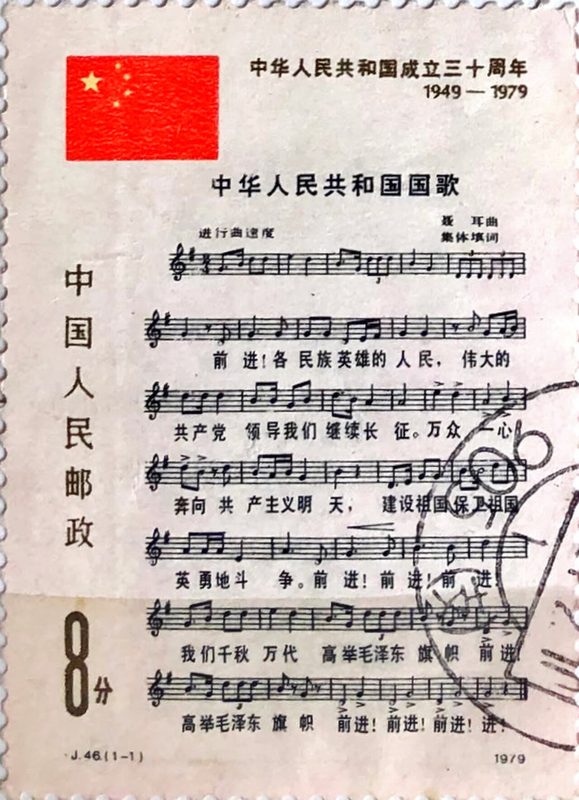 Nie Er Composes “March of the Volunteers”1935
In 1935 “March of the Volunteers”, words by Tian Han and music by Nie Er, was sung across China as a film theme song, and later became the national anthem of the People's Republic.
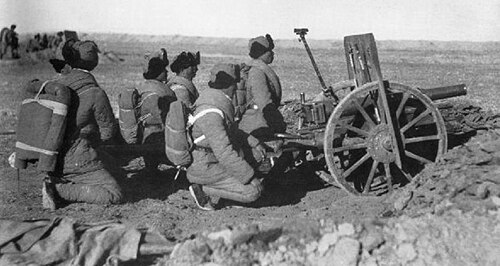 Xi'an Incident12 December 1936
On 12 December 1936 Zhang Xueliang and Yang Hucheng detained Chiang Kai-shek in Xi'an to press him to resist Japan; settled peacefully, it turned China from civil war to resistance.
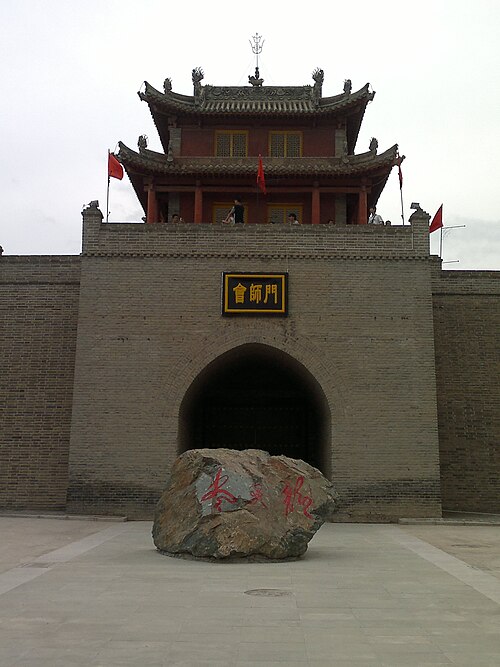 Three Red Army Forces Unite; Long March EndsOctober 1935–October 1936
In October 1935 the Central Red Army reached Wuqi in northern Shaanxi; in October 1936 the three main Red Army forces met in Gansu, ending the Long March.
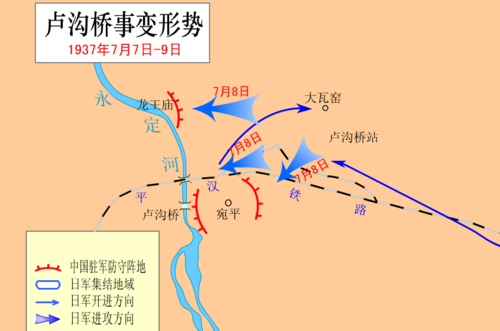 Marco Polo Bridge Incident7 July 1937
On 7 July 1937 Japanese troops, claiming a soldier had gone missing, attacked Wanping and the Marco Polo Bridge; Chinese defenders resisted, and the incident began China's all-out War of Resistance.
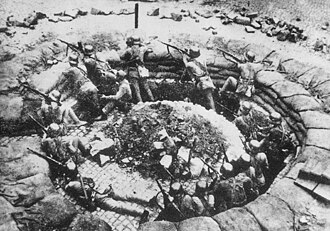 Battle of ShanghaiAugust–November 1937
On 13 August 1937 Japanese forces attacked Shanghai and Chinese troops fought back for three months, defeating Japan's boast of conquering China in three months; Shanghai fell in November.
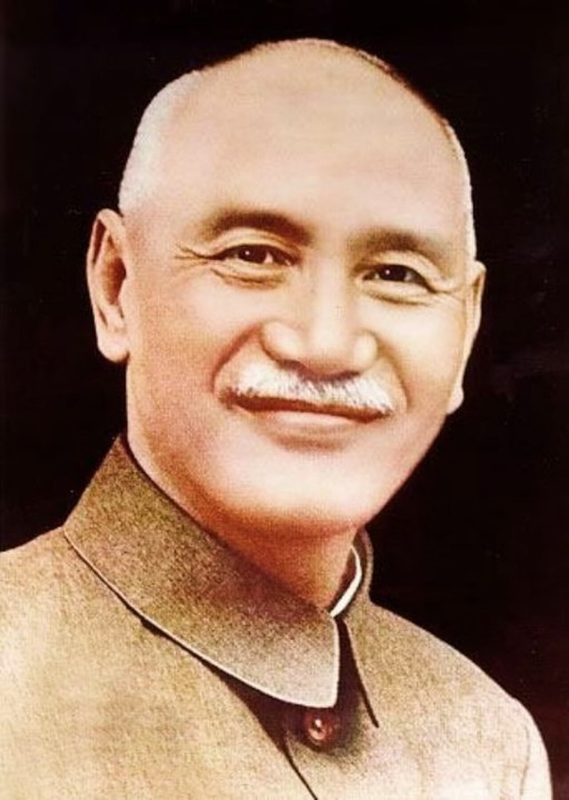 Second United Front EstablishedJuly–September 1937
After the Marco Polo Bridge Incident the Red Army was reorganized as the Eighth Route Army and New Fourth Army, and in September 1937 the Anti-Japanese National United Front was formally established.
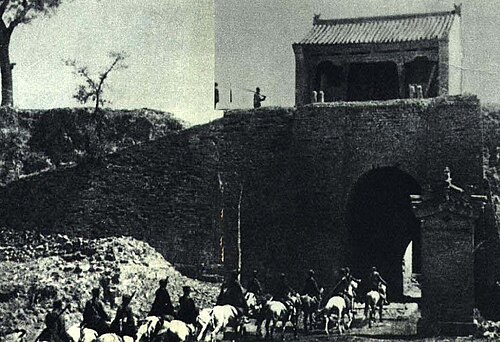 Battle of PingxingguanSeptember 1937
In September 1937 the Eighth Route Army's 115th Division ambushed Japanese troops at Pingxingguan, Shanxi, killing over a thousand; the first major Chinese victory since all-out resistance began.
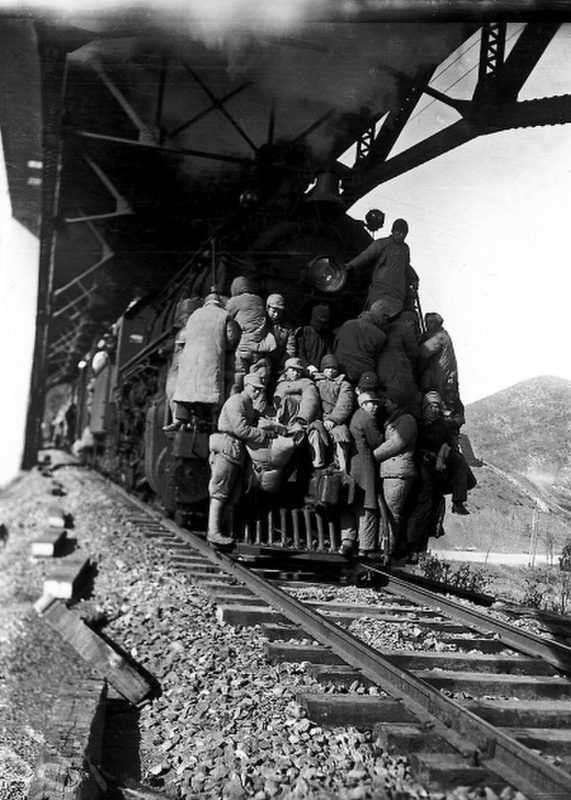 Mao Yisheng Completes the Qiantang River Bridge1937
In 1937 Mao Yisheng completed the Qiantang River Bridge, the first modern double-deck road-and-rail bridge designed and built by Chinese; it was later blown up to hinder the Japanese advance.
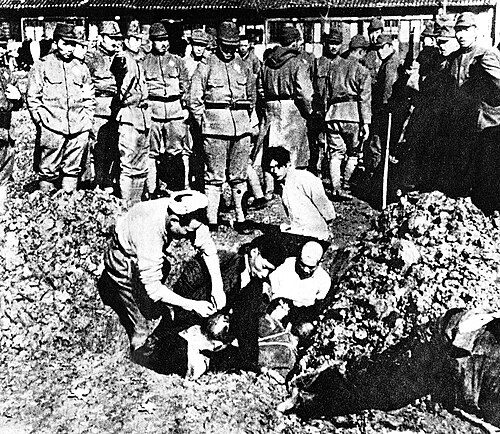 Nanjing MassacreFrom 13 December 1937
After Japanese troops took Nanjing in December 1937, over six weeks they killed more than 300,000 Chinese civilians and disarmed soldiers in appalling atrocities.
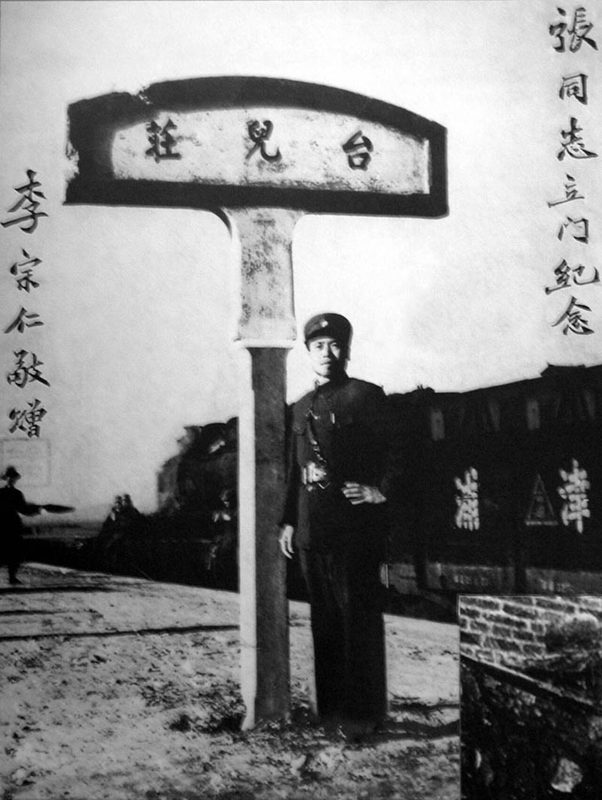 Battle of TaierzhuangMarch–April 1938
In March–April 1938 Li Zongren directed Chinese forces in fierce fighting at Taierzhuang, Shandong, killing over ten thousand Japanese troops, the largest victory on the front since the war began.
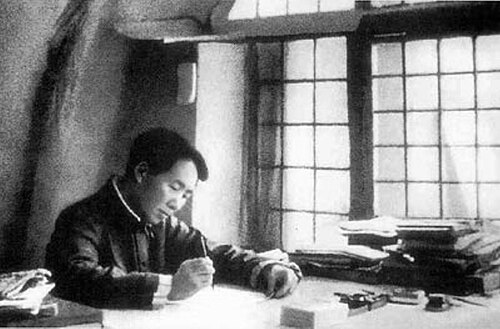 Mao Zedong Publishes On Protracted War1938
In May 1938 Mao Zedong published On Protracted War, refuting “defeatism” and “quick victory” theories and arguing that the war would be protracted and victory would belong to China.
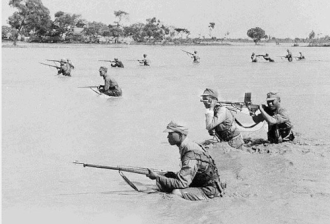 Huayuankou Dike BreachJune 1938
In June 1938, to halt the Japanese advance, the National Government breached the Yellow River dike at Huayuankou, slowing the Japanese but causing a vast disaster in the flooded zone.
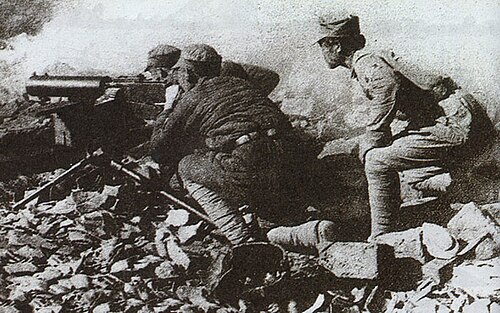 Battle of Wuhan and the Stalemate StageJune–October 1938
In 1938 about a million Chinese troops defended Wuhan for over four months, wearing down large Japanese forces; after Guangzhou and Wuhan fell, the war entered a stalemate stage.
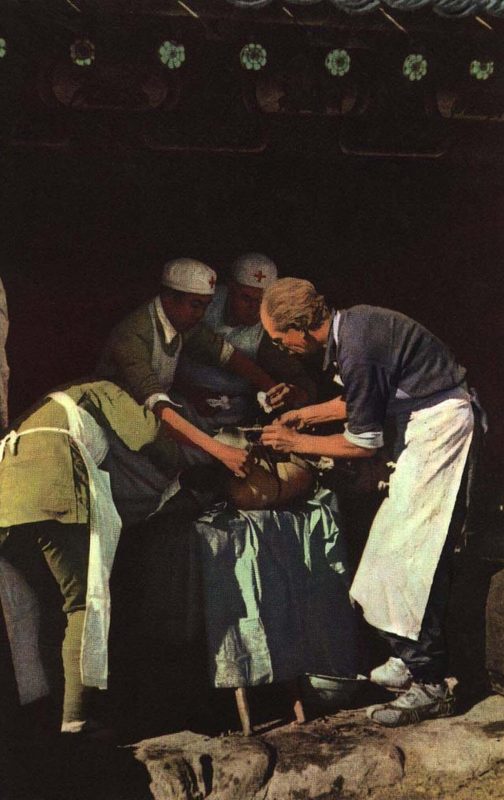 Bethune and Kotnis Aid ChinaFrom 1938
The Canadian doctor Norman Bethune and the Indian doctor Dwarkanath Kotnis came to China to treat wounded resisters and both died at their posts, embodying a great spirit of internationalism.
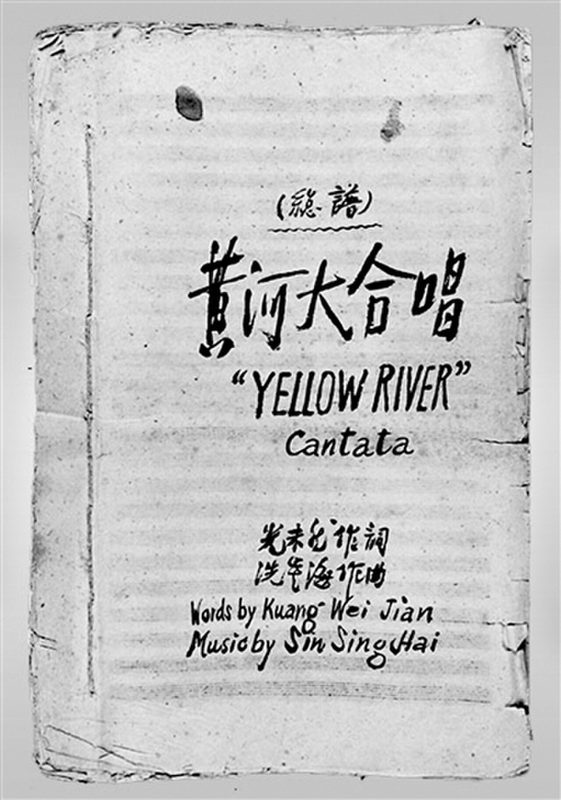 Xian Xinghai Composes the Yellow River Cantata1939
Written by Xian Xinghai in Yan'an in 1939 to lyrics by Guang Weiran, the Yellow River Cantata uses the river as a symbol of the Chinese nation and its unyielding resistance to Japan.
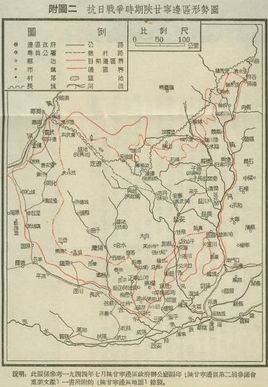 Anti-Japanese Base Areas Behind Enemy Lines1937–1940
The Eighth Route Army and New Fourth Army carried out guerrilla warfare behind enemy lines and set up many base areas such as Shanxi-Chahar-Hebei; by 1940 the rear became the main arena of resistance.
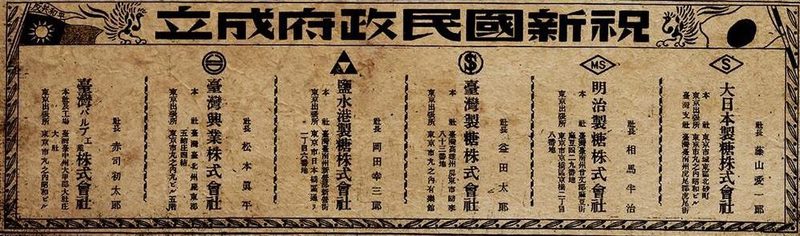 Wang Jingwei's Puppet National GovernmentMarch 1940
Kuomintang deputy leader Wang Jingwei defected to Japan in late 1938, and in March 1940 set up a Japanese-sponsored puppet National Government in Nanjing that served Japan's invasion.
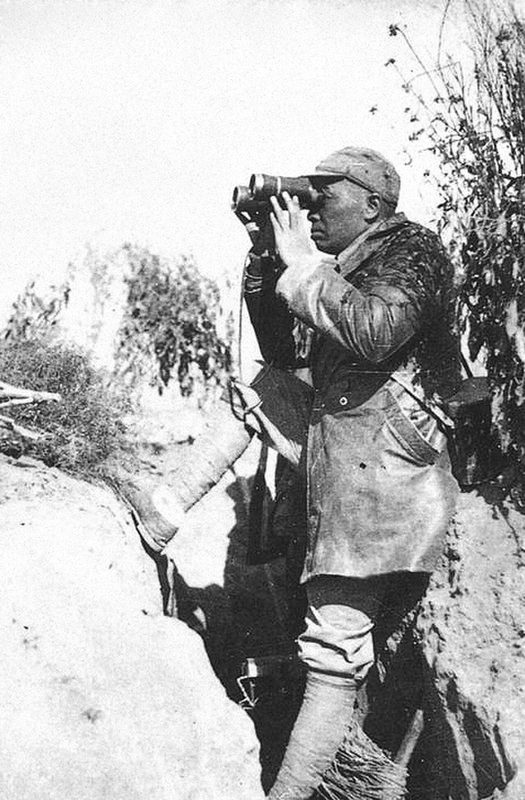 Hundred Regiments OffensiveAugust 1940–January 1941
From August 1940 to January 1941 Peng Dehuai led 105 Eighth Route Army regiments against Japanese lines of communication in North China, inflicting over 40,000 casualties.
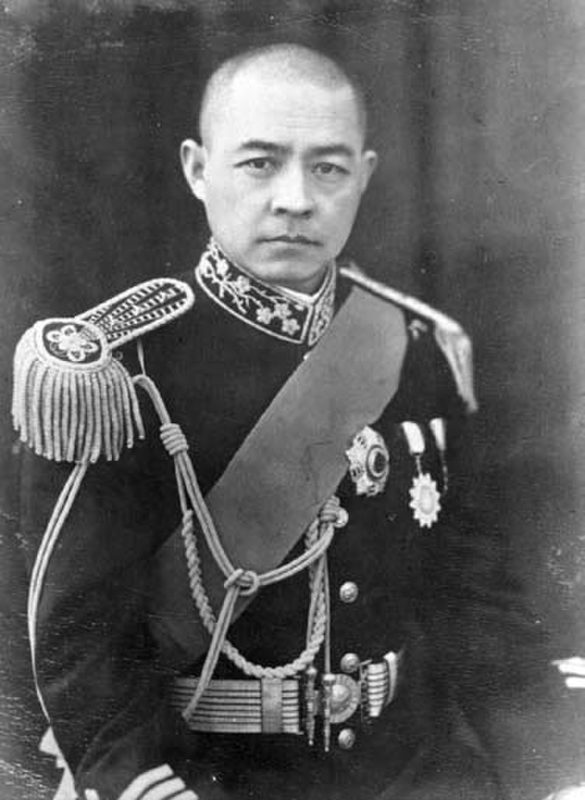 National Resistance: Zhang Zizhong and Zuo Quan Fall1940–1942
In the War of Resistance, all ethnic groups, parties and classes fought together, and commanders such as Zhang Zizhong of the 33rd Army Group and Zuo Quan of the Eighth Route Army died heroically.
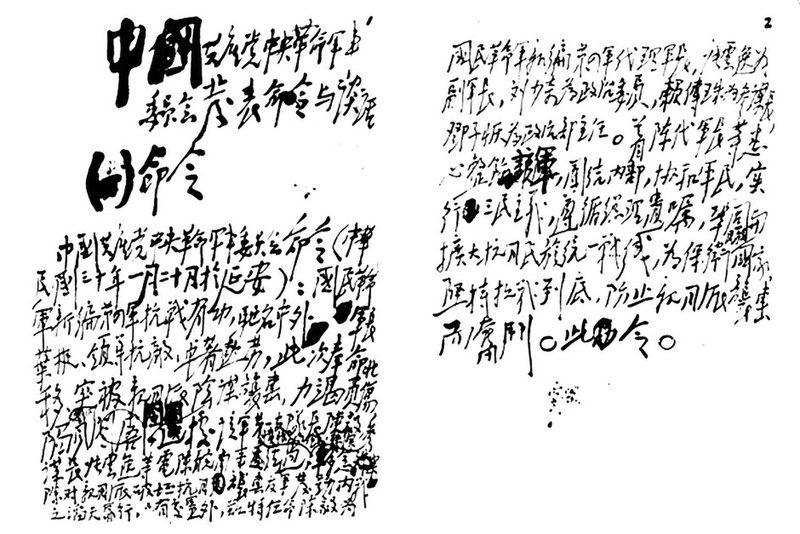 Southern Anhui IncidentJanuary 1941
In January 1941 Kuomintang hardliners ambushed and destroyed the New Fourth Army headquarters and its southern Anhui units at Maolin; Ye Ting was detained and Xiang Ying killed.
 Third Battle of ChangshaDecember 1941–January 1942
In late 1941 and early 1942 Xue Yue used the "Heaven Furnace" tactic to repel the Japanese at Changsha, the first major Allied victory after the outbreak of the Pacific War.
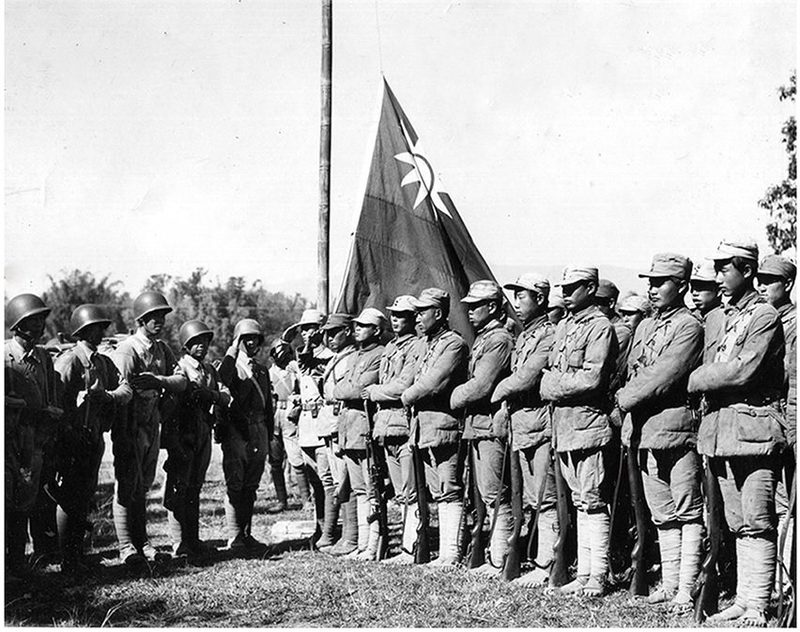 Chinese Expeditionary Force in Burma1942–1945
In 1942 the Chinese Expeditionary Force entered Burma and rescued British troops at Yenangyaung; it later fought in northern Burma and western Yunnan, reopening the road to India in 1945.
 Yan'an Forum on Literature and Art1942
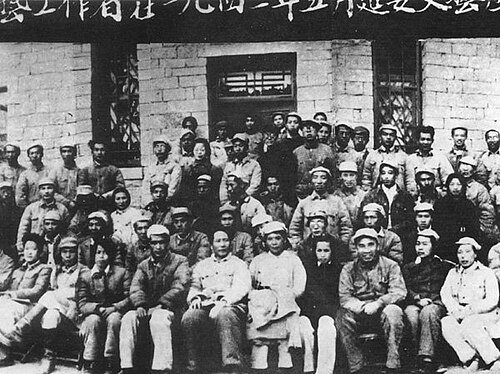
At the Yan'an Forum on Literature and Art in May 1942, Mao Zedong declared that art should serve the people, above all workers, peasants and soldiers, and art in the liberated areas flourished.
 Battle of Henan-Hunan-Guangxi1944
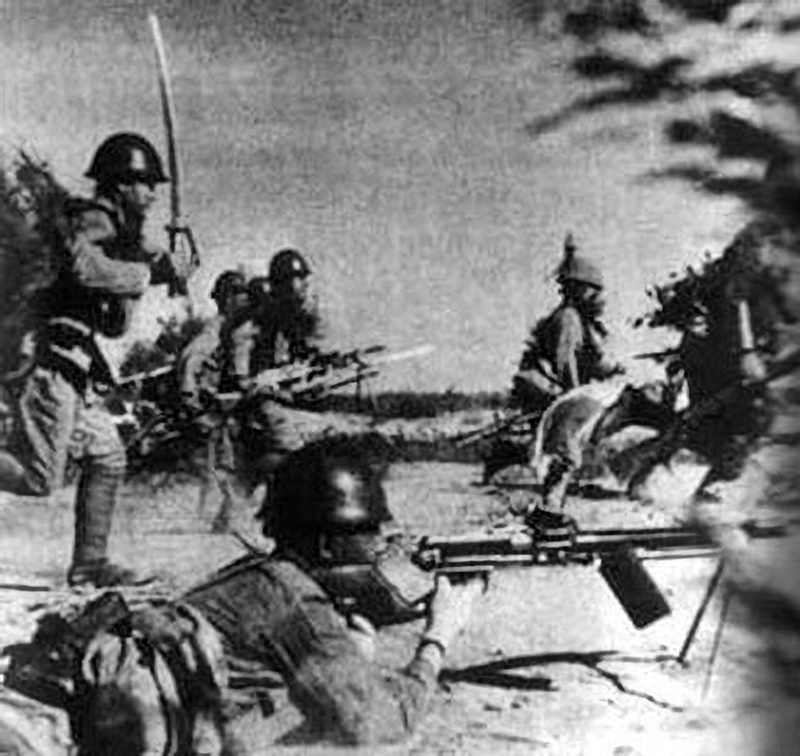
In 1944 Japan's Henan-Hunan-Guangxi campaign sought a continental rail and road link; Kuomintang forces collapsed, losing much of Henan, Hunan, Guangxi and Guangdong in eight months.
 Victory in the War of Resistance Against Japan15 August and 2 September 1945
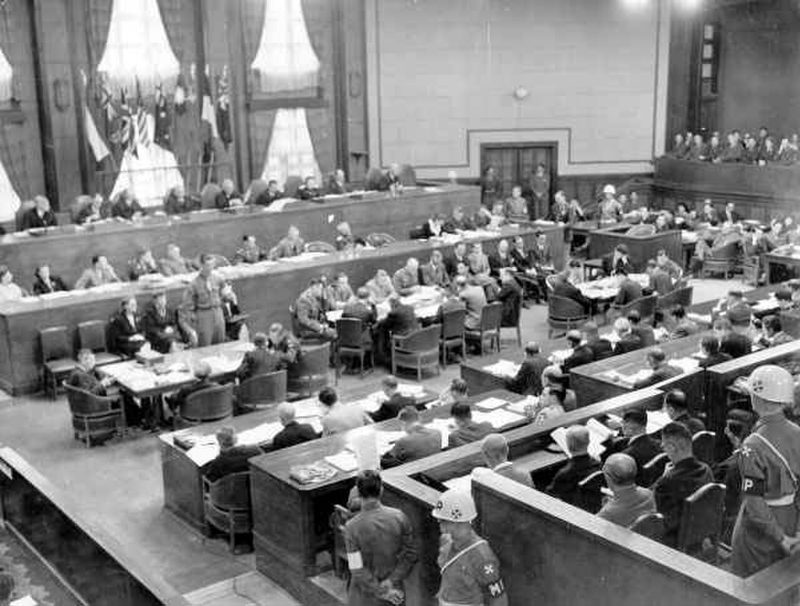
Japan announced unconditional surrender on 15 August 1945 and signed the instrument of surrender on 2 September, ending the war of resistance in victory; Taiwan was returned to China.
 Seventh National Congress of the CCPApril–June 1945
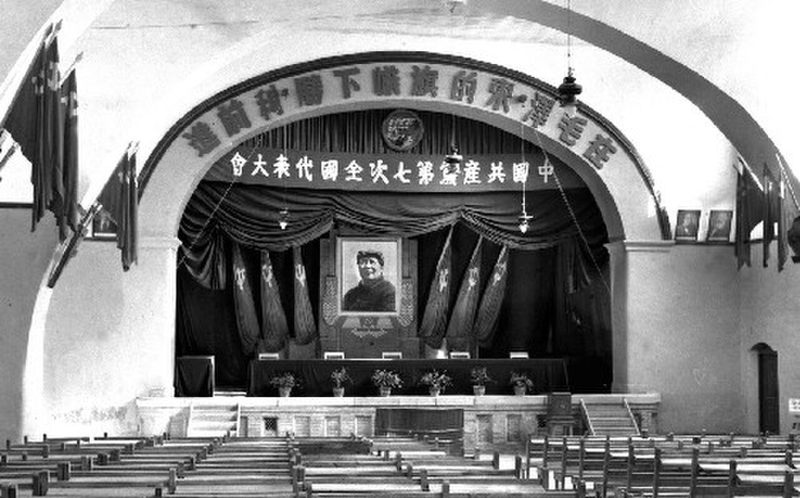
Meeting in Yan'an from April to June 1945, the CCP's Seventh National Congress made Mao Zedong Thought its guide and set the goal of defeating Japan and building a new China.
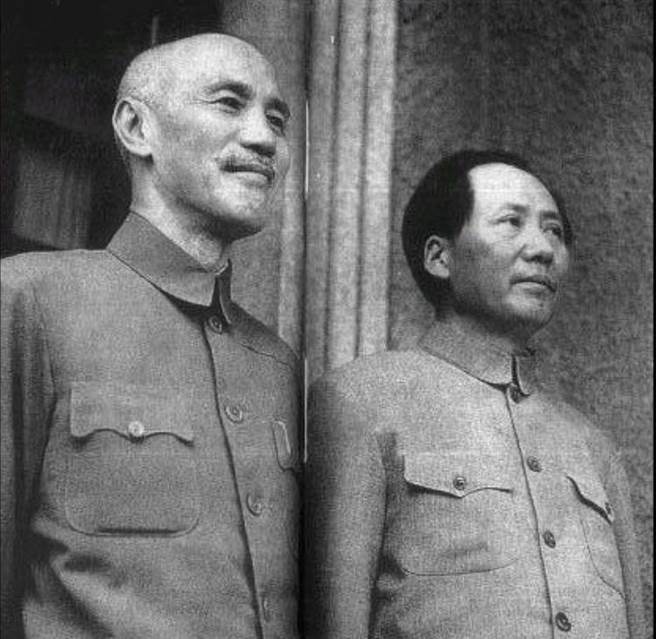 Chongqing Negotiations and the Double Tenth AgreementAugust–October 1945
In August 1945 Mao Zedong went to Chongqing at Chiang Kai-shek's invitation; on 10 October they signed the Double Tenth Agreement, with the Kuomintang accepting peaceful reconstruction.
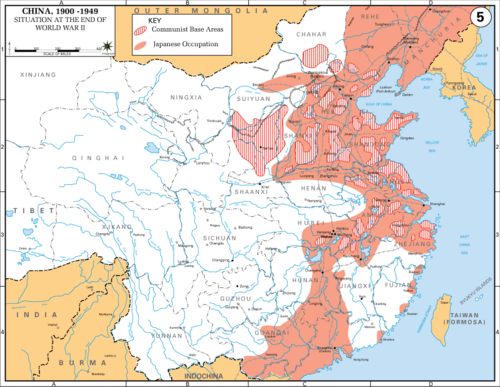 Outbreak of Full-Scale Civil WarJune 1946
In June 1946 the Kuomintang attacked the Central Plains Liberated Area, starting full-scale civil war; the People's Liberation Army fought an active defense and broke the general offensive.
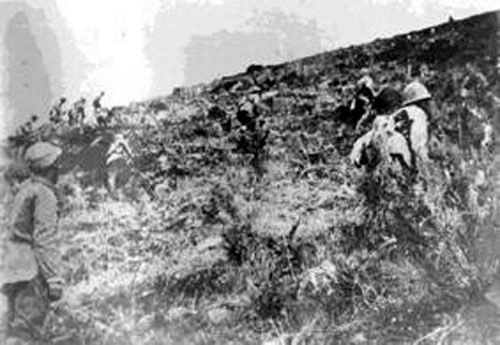 Crushing the Key-Point Offensive (Shaanbei and Menglianggu)March–May 1947
In 1947 the Kuomintang struck at northern Shaanxi and Shandong; Mao led the Central Committee through northern Shaanxi, and the East China Field Army destroyed the 74th Division at Menglianggu.
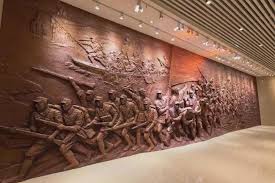 Liu-Deng Army Leaps to the Dabie MountainsSummer 1947
In summer 1947 Liu Bocheng and Deng Xiaoping led their field army across the Yellow River and a thousand li south into the Dabie Mountains, opening the Liberation Army's strategic offensive.
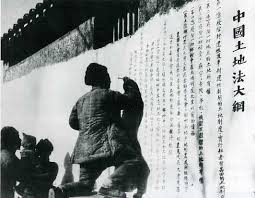 Outline Land Law of China and Land Reform1947
The 1947 Outline Land Law of China abolished feudal land exploitation and gave land to the tillers; peasants in the liberated areas received land and rallied to support the army.
 Regional Ethnic Autonomy (Inner Mongolia Autonomous Region)From May 1947
The Inner Mongolia Autonomous Government was founded in May 1947, China's first provincial-level ethnic autonomous area; regional ethnic autonomy later became a basic political system of the country.
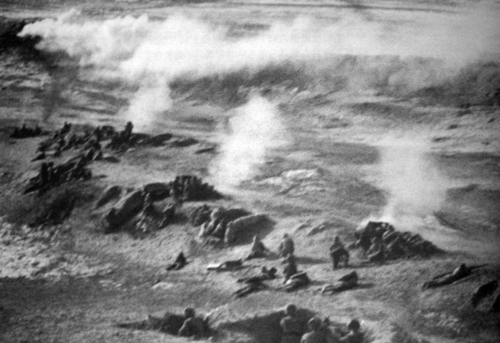 Liaoshen CampaignSeptember–November 1948
In the Liaoshen Campaign of September–November 1948, the Northeast Field Army took Jinzhou first to cut off retreat, destroyed over 470,000 enemy troops and liberated the whole Northeast.
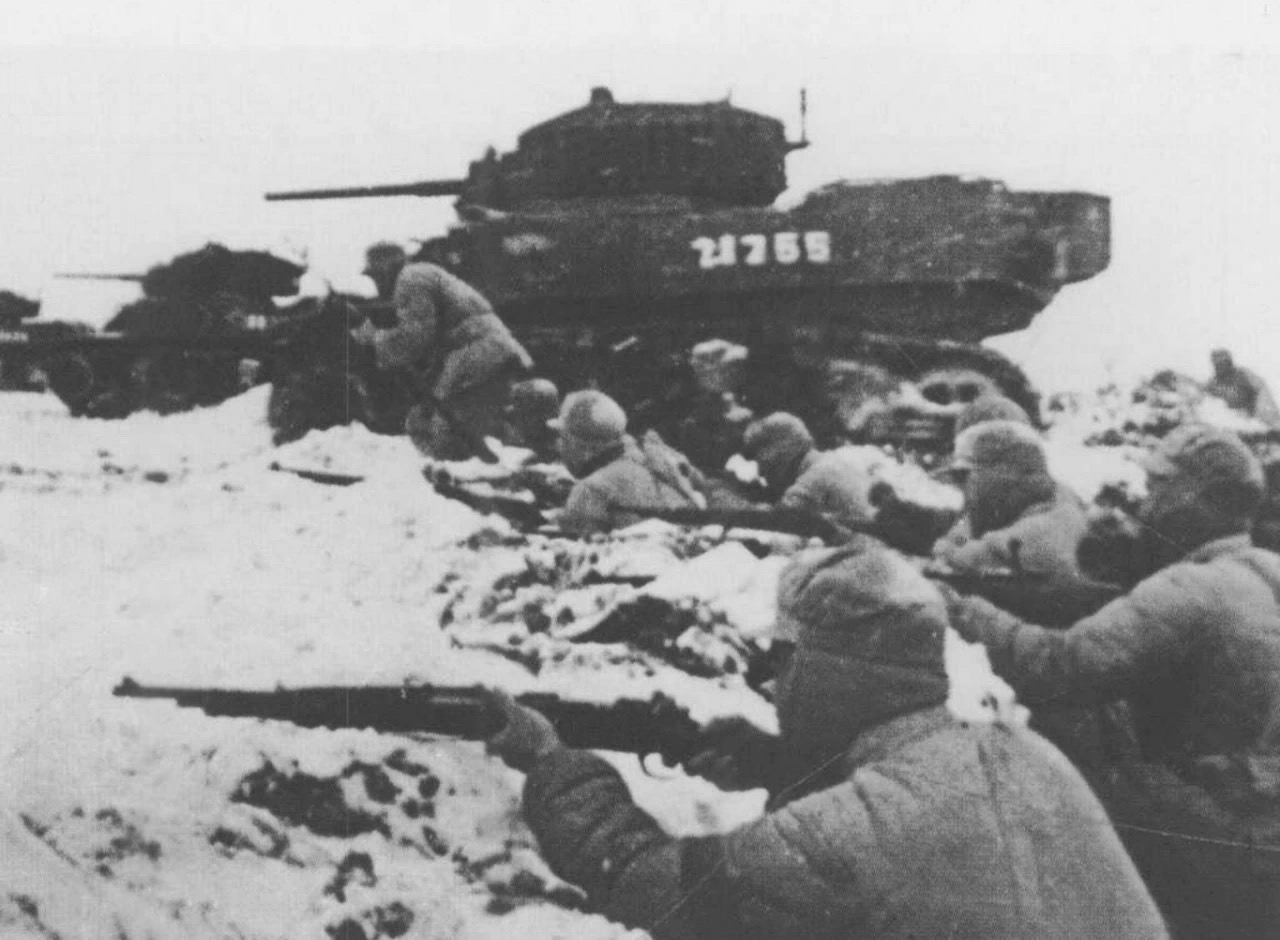 Huaihai CampaignNovember 1948–January 1949
In late 1948 the Central Plains and East China Field Armies fought the Huaihai Campaign, destroying over 550,000 enemy troops and liberating most of East China and the Central Plains.