QingAD 1644–1912
Qing: Timeline of Events (AD 1644–1912)
The last imperial dynasty, invaded by foreign powers in its final decades
View on the timelineEvents in this period
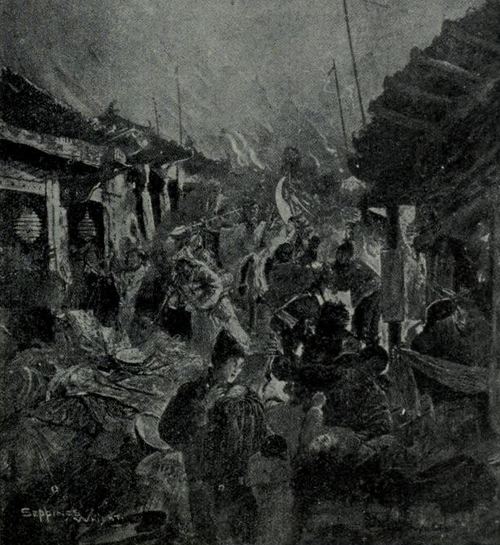 Li Zicheng Takes Beijing; the Ming Falls and the Qing Enters the Pass1644
In 1644 Li Zicheng founded the Shun and took Beijing, the Chongzhen Emperor hanged himself and the Ming fell; Wu Sangui let the Qing in, and the Qing made Beijing its capital.
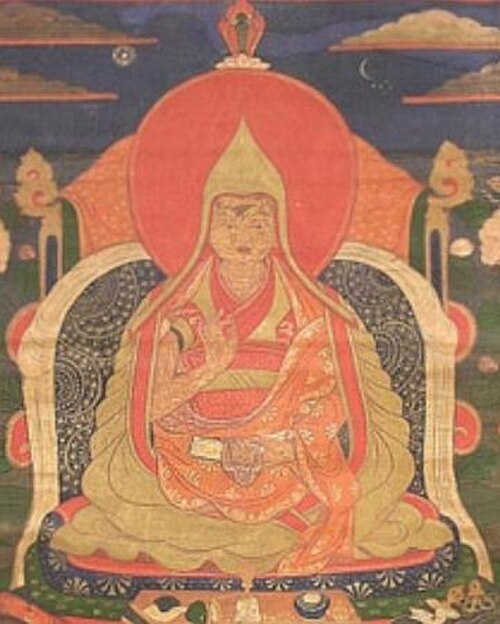 Investiture of the Dalai Lama and Panchen Erdeni1653, 1713
In 1653 the Shunzhi Emperor invested the Fifth Dalai Lama and in 1713 the Kangxi Emperor the Fifth Panchen Lama; later Dalai and Panchen Lamas needed central investiture.
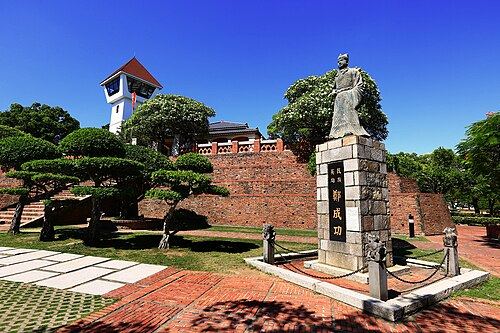 Koxinga Recovers Taiwan1661–1662
In 1661 Zheng Chenggong (Koxinga) sailed from Kinmen with 25,000 men; after an eight-month siege the Dutch surrendered in 1662 and Taiwan returned to Chinese rule.
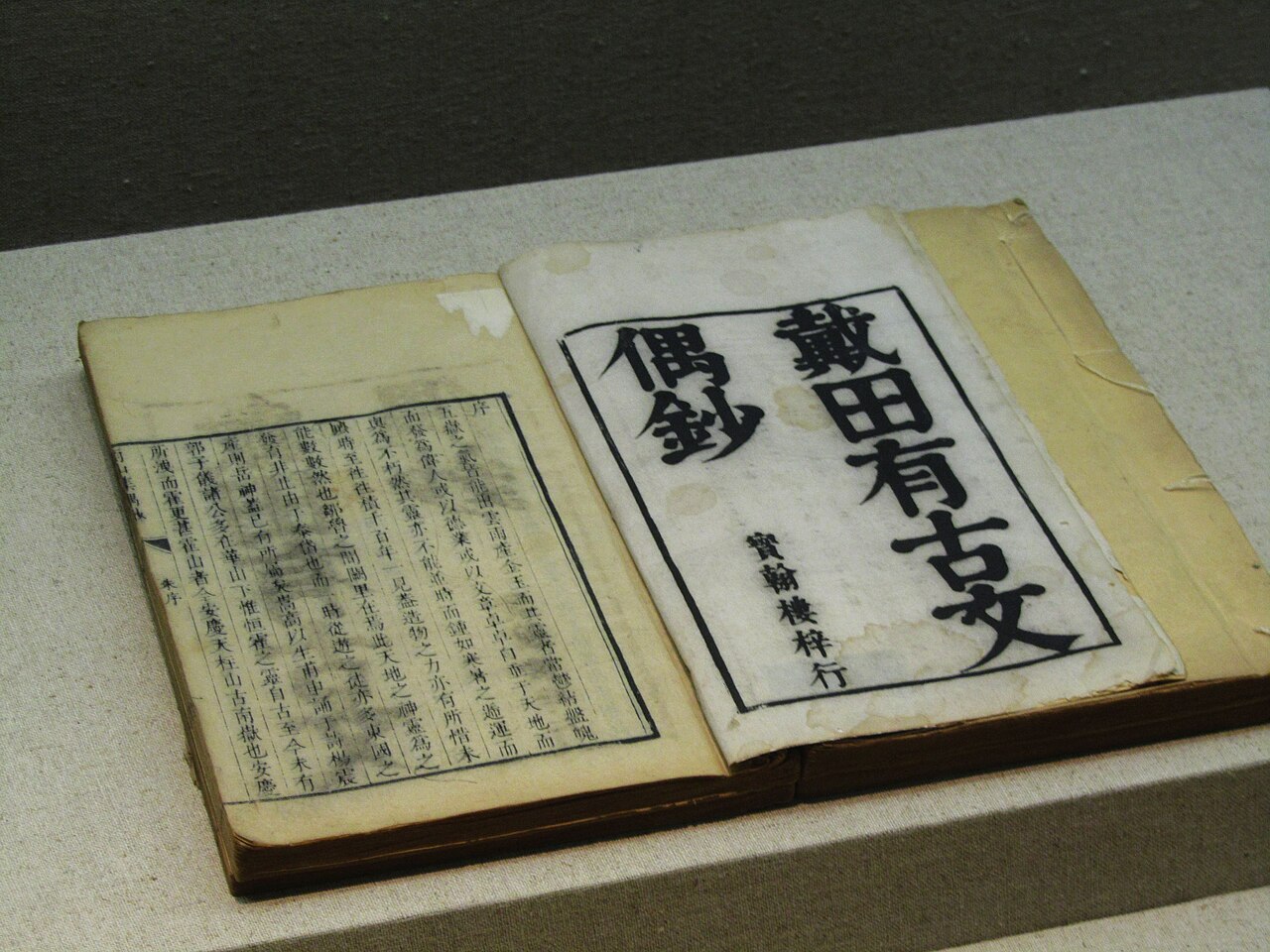 Literary Inquisitions and Cultural ControlReigns of Kangxi, Yongzheng and Qianlong
Under Kangxi, Yongzheng and Qianlong, literary inquisitions built charges from phrases in writings, and the Siku Quanshu project banned and destroyed many books, stifling thought.
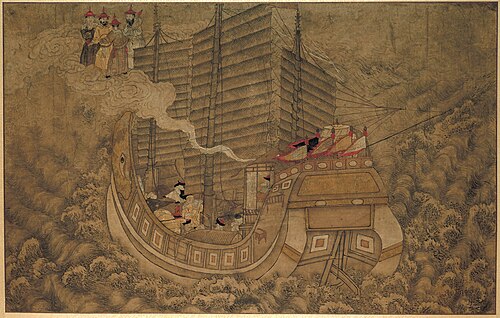 The Qing Unifies Taiwan and Sets Up Taiwan Prefecture1683–1684
In 1683 Shi Lang took Penghu and Zheng Keshuang surrendered, bringing Taiwan into the Qing realm; Taiwan Prefecture was set up in 1684 and Taiwan became a province in 1885.
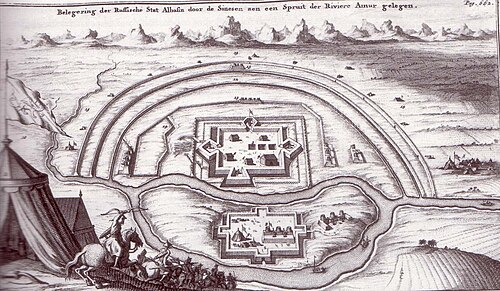 The Sieges of Albazin1685–1686
Tsarist Russia occupied Albazin in the Amur basin; in 1685 and 1686 the Kangxi Emperor had Qing troops besiege it, forcing Russia to agree to negotiate the eastern border.
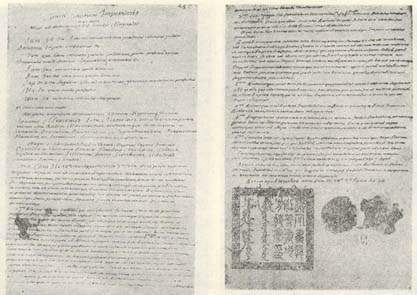 Sino-Russian Treaty of Nerchinsk1689
In 1689 China and Russia signed the Treaty of Nerchinsk after equal negotiation, fixing the eastern border and confirming the Heilongjiang and Ussuri basins, including Sakhalin, as Chinese.
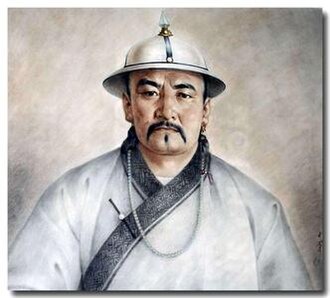 Kangxi Suppresses Galdan's RebellionReign of Kangxi
Galdan of the Dzungars rebelled with Russian backing; the Kangxi Emperor campaigned three times, crushing him at Ulan Butong and Zuunmod, and the northern frontier was secured.
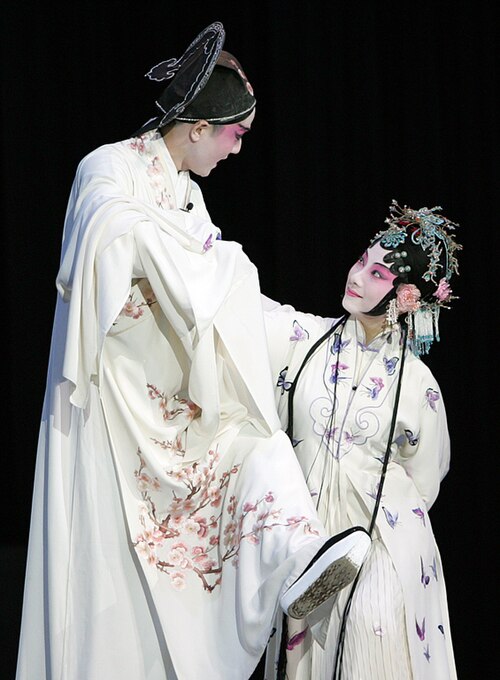 The Height of Kunqu (The Palace of Eternal Life, The Peach Blossom Fan)Early Qing
Kunqu reached its height in the early Qing; Hong Sheng's The Palace of Eternal Life and Kong Shangren's The Peach Blossom Fan, "Hong of the South, Kong of the North", are its masterpieces.
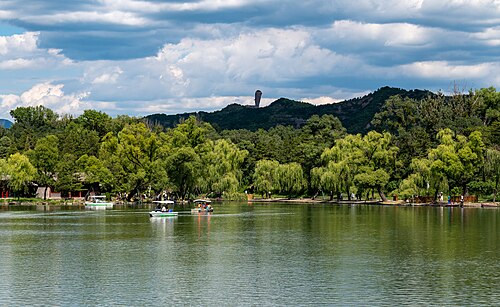 The Chengde Mountain ResortEarly Qing
The Qing built the Chengde Mountain Resort and the Eight Outer Temples, where emperors handled state affairs and received envoys and ethnic leaders, reflecting its policy of ethnic unity.
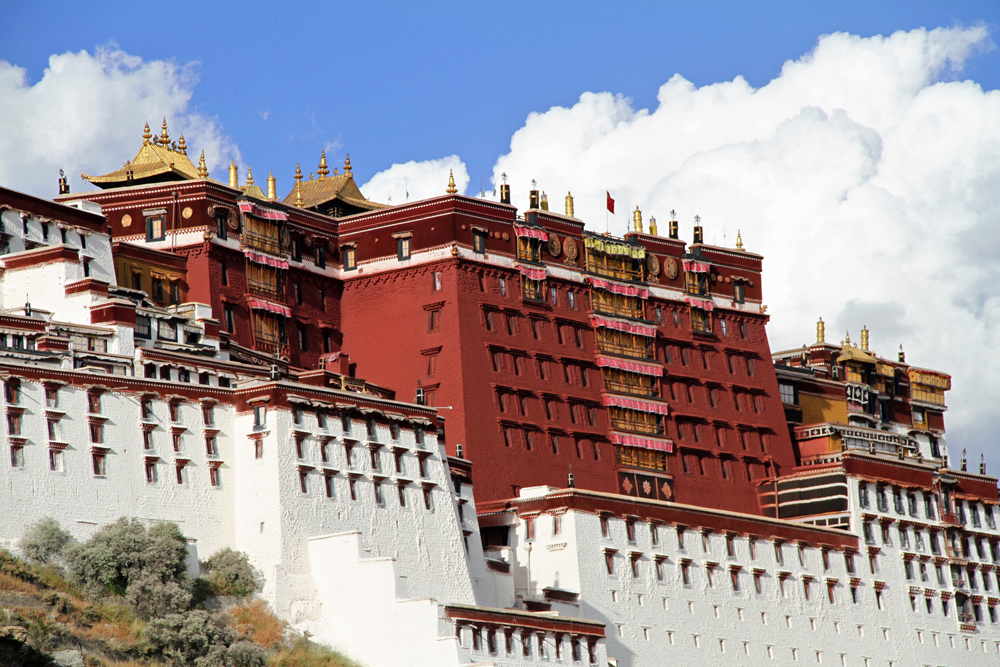 Establishment of the Imperial Residents in Tibet1727, 1751
In 1727 the Qing set up Imperial Residents in Tibet; in 1751 the Kashag was created, the Dalai Lama and the Residents jointly managing Tibet's religious and political affairs.
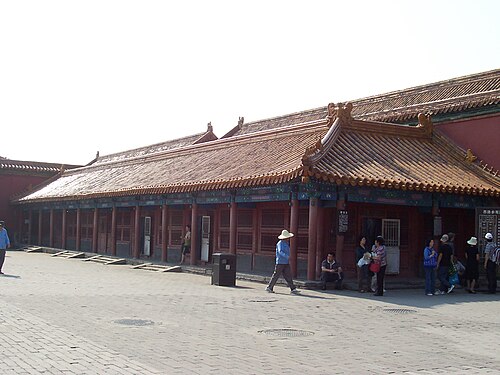 The Grand Council Is EstablishedYongzheng Reign
The Yongzheng-era Grand Council, set up for northwestern campaigns, became a permanent body whose ministers took down and relayed the emperor's edicts; autocracy reached its peak.
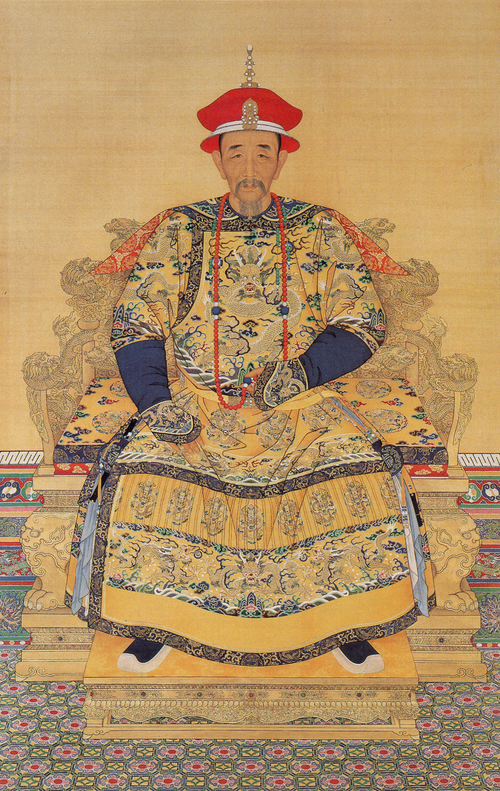 Early Qing Agriculture ("When Huguang Has a Harvest, the Realm Has Enough")Early Qing
The early Qing promoted land reclamation and merged the poll tax into the land tax; farmland grew, maize and sweet potato spread, and Huguang became the granary of China.
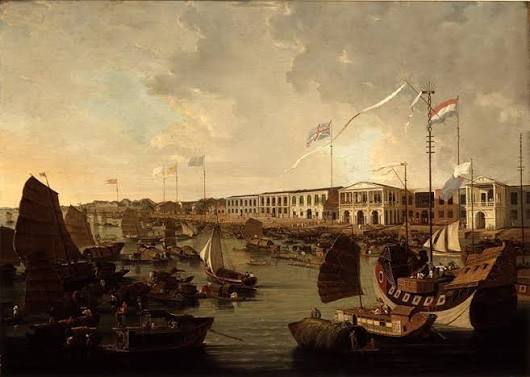 Closed-Door Policy and the Canton System1757
Under the Qing closed-door policy, the Qianlong Emperor ruled in 1757 that Western merchants could trade only at Guangzhou, through the licensed “Thirteen Hongs,” under tight restrictions.
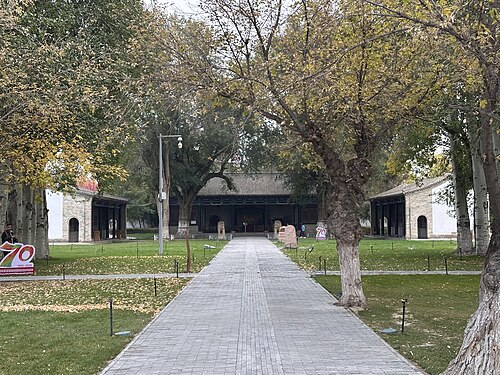 Pacifying the Khoja Revolt; General of Ili EstablishedQianlong era
Under the Qianlong Emperor the Qing crushed the Dzungars and the Khoja brothers’ revolt, unified Xinjiang, and in 1762 set up the General of Ili to govern the region, including Lake Balkhash.
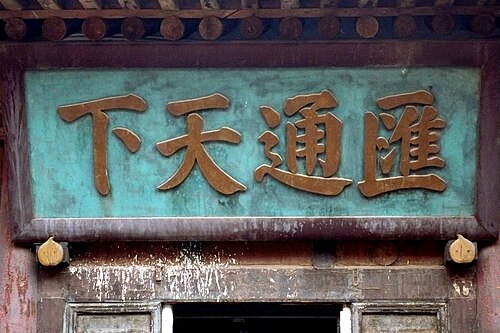 Flourishing Handicrafts and Commerce in the Early QingEarly Qing
In the early Qing, silk, cotton and porcelain industries thrived and larger workshops appeared; commerce boomed, and Shanxi merchants founded draft banks while merchant groups were active nationwide.
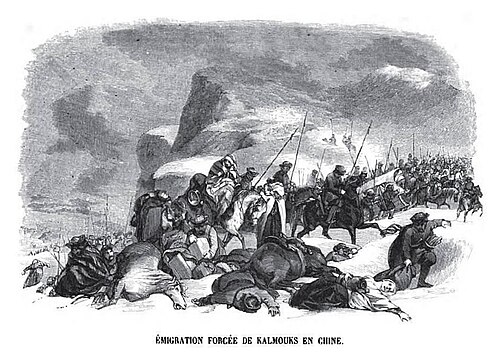 Return of the Torghut Mongols1771
In 1771 the Torghuts, who had migrated west to the Volga, could no longer bear Russian oppression and led by Ubashi made a perilous journey back east, where the Qing government resettled them.
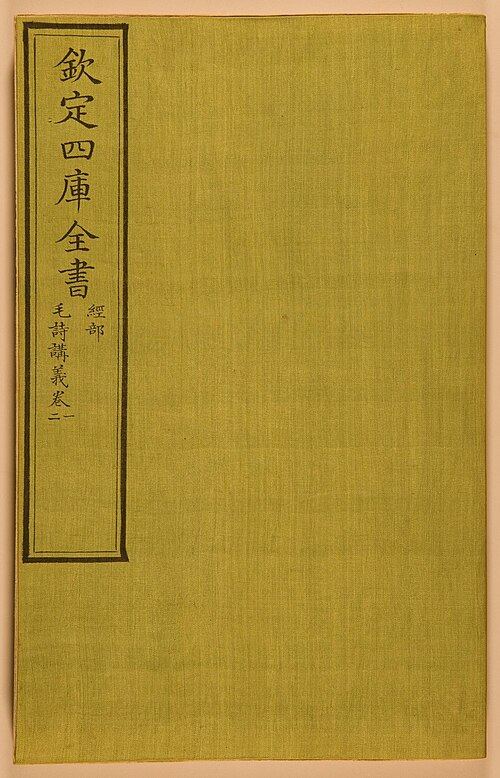 Compiling the Kangxi Dictionary and the Siku QuanshuKangxi to Qianlong era
From the Kangxi to Qianlong reigns, the Kangxi Dictionary with over 40,000 characters, the 10,000-volume Gujin Tushu Jicheng and the Siku Quanshu, China’s largest ancient collection, were compiled.
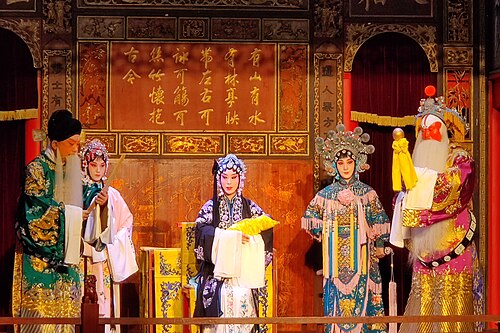 Anhui Troupes in Beijing and the Birth of Peking OperaFrom 1790
In 1790 the Sanqing and other Anhui troupes came to Beijing for the Qianlong Emperor’s birthday; absorbing Hanju, Kunqu and other forms, they gradually formed Peking Opera in the Daoguang era.
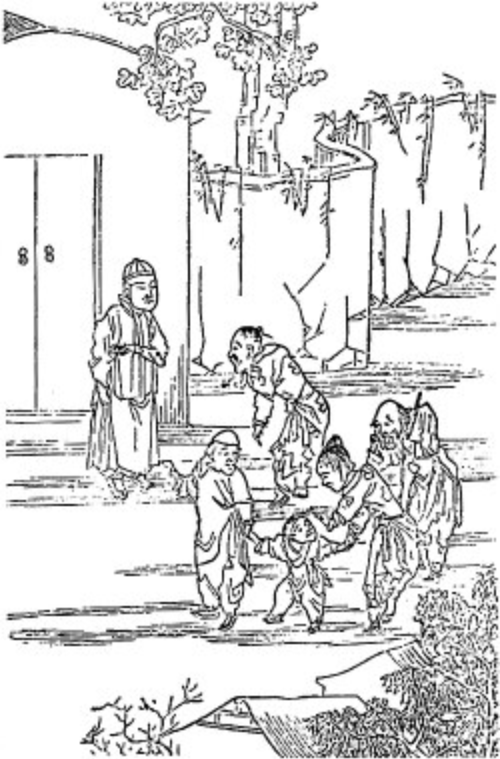 Population Reaches 300 MillionLate Qianlong reign
In the early Qing, social stability and economic growth made the population surge; by the end of the Qianlong reign it reached 300 million, about a third of the world’s total.
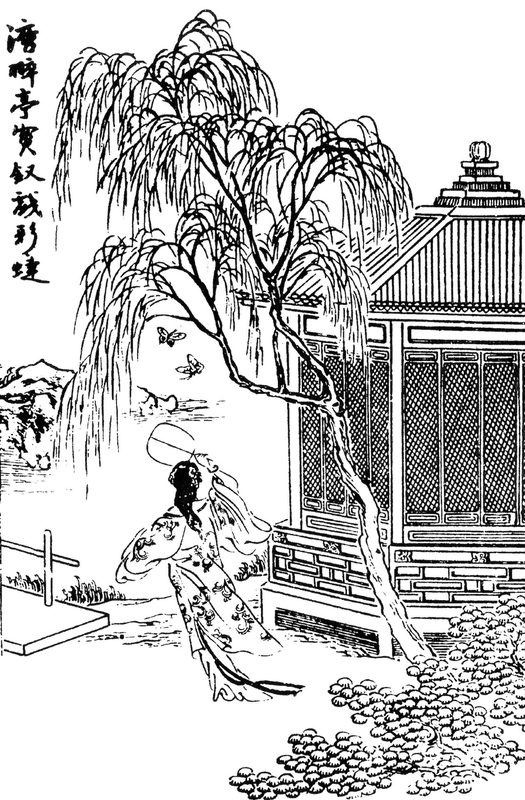 Cao Xueqin’s Dream of the Red ChamberLate Qianlong reign
Cao Xueqin’s novel Dream of the Red Chamber (first titled Story of the Stone) centers on the tragic love of Jia Baoyu and Lin Daiyu and is regarded as the peak of classical Chinese fiction.
 Imperially Approved Regulations for Tibet and the Golden Urn1793
In 1793 the Qing issued 29 articles setting the Amban on par with the Dalai and Panchen Lamas and requiring “Golden Urn” lot-drawing for the reincarnations of major lamas.
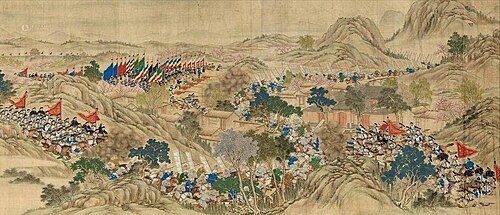 White Lotus Rebellion1796
The White Lotus uprising challenged Qing rule for years.
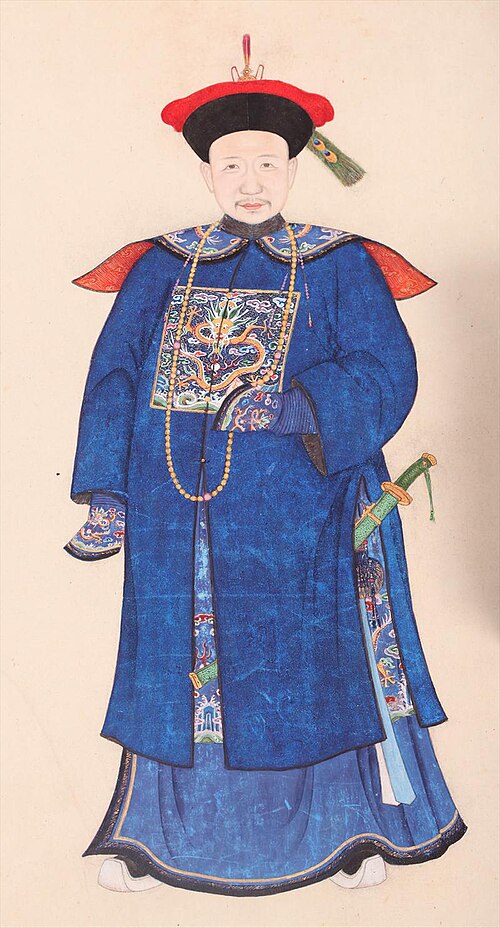 He Shen’s Fall and the Mid-Qing CrisisLate Qianlong–Jiaqing
Official corruption spread in the late Qianlong reign; in 1799 the Jiaqing Emperor had the powerful minister He Shen put to death and his property seized, and the Qing began to decline.
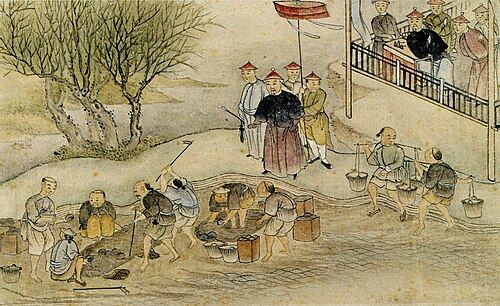 Lin Zexu Destroys Opium at Humen3–25 June 1839
In 1839 Imperial Commissioner Lin Zexu seized over two million jin of opium from British and American traffickers in Guangdong and destroyed it publicly on the Humen beach over 23 days.
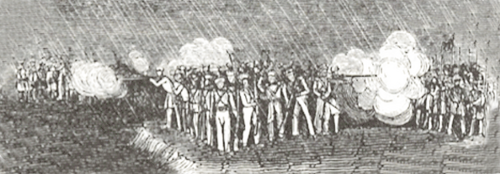 The Sanyuanli Resistance against the British30 May 1841
In 1841 British troops plundered the Sanyuanli area near Guangzhou; local villagers rose up and surrounded them at Niulangang, a large-scale spontaneous anti-aggression struggle in modern China.
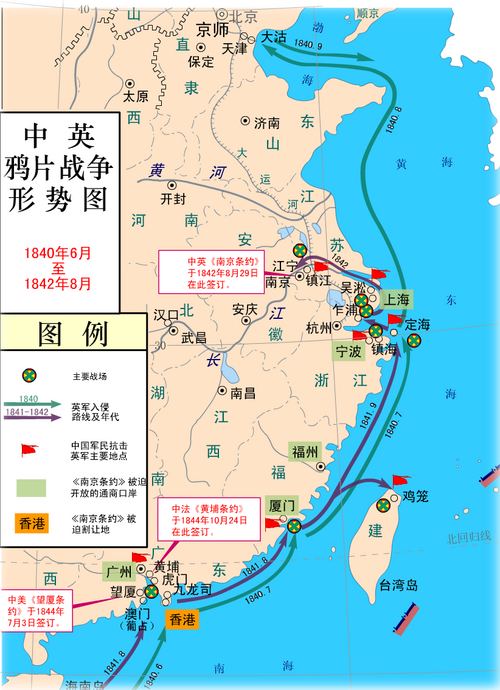 The Opium War and the Treaty of Nanjing1840–1842
Britain launched the Opium War in 1840; the Qing was defeated and in 1842 forced to sign the Treaty of Nanjing, the first unequal treaty of modern times, marking the start of modern Chinese history.
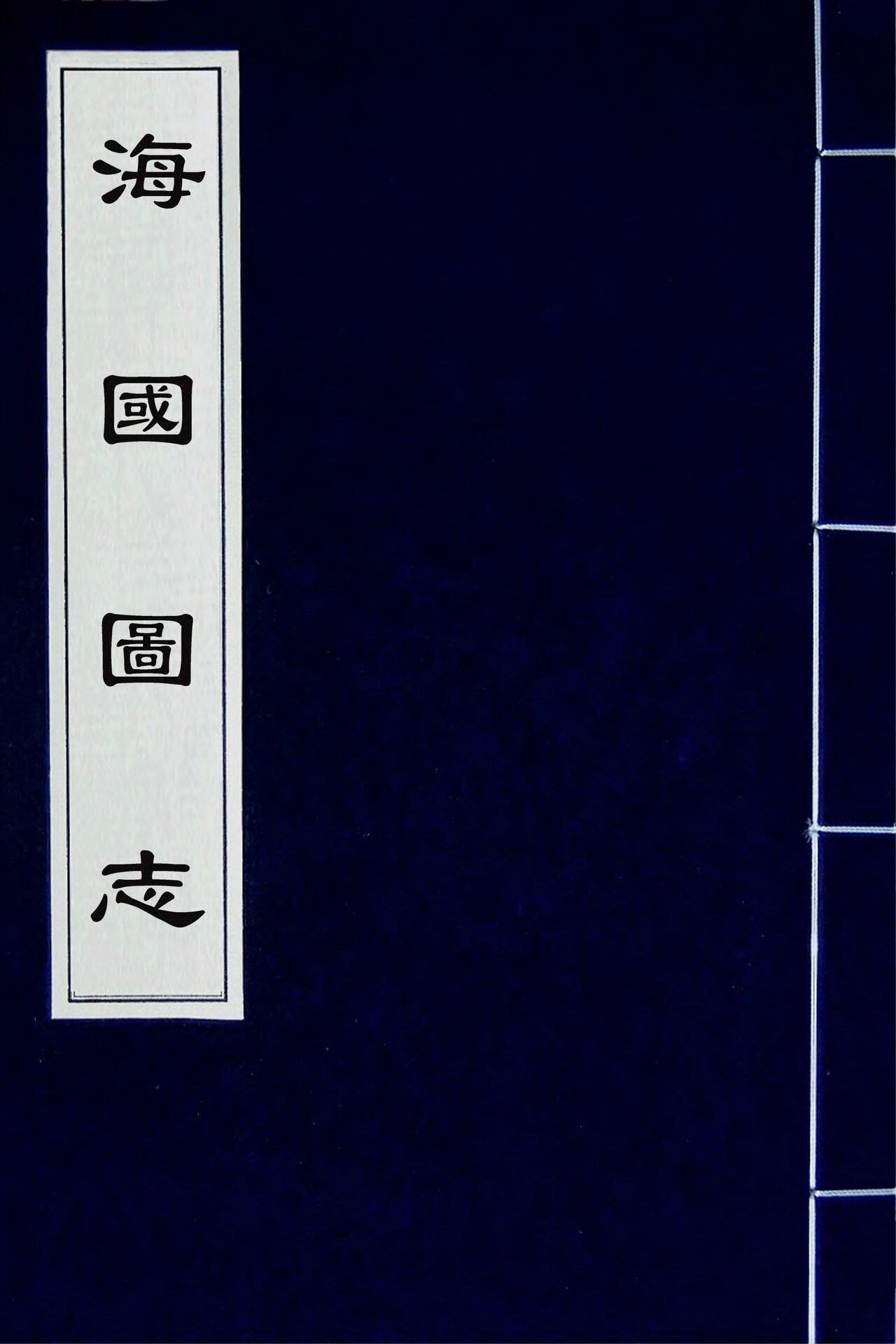 Wei Yuan’s Illustrated Treatise on the Maritime CountriesAfter the Opium War
After the Opium War, Wei Yuan built on Lin Zexu’s translations to compile the Illustrated Treatise on the Maritime Countries, urging China to “learn the barbarians’ skills to control them.”
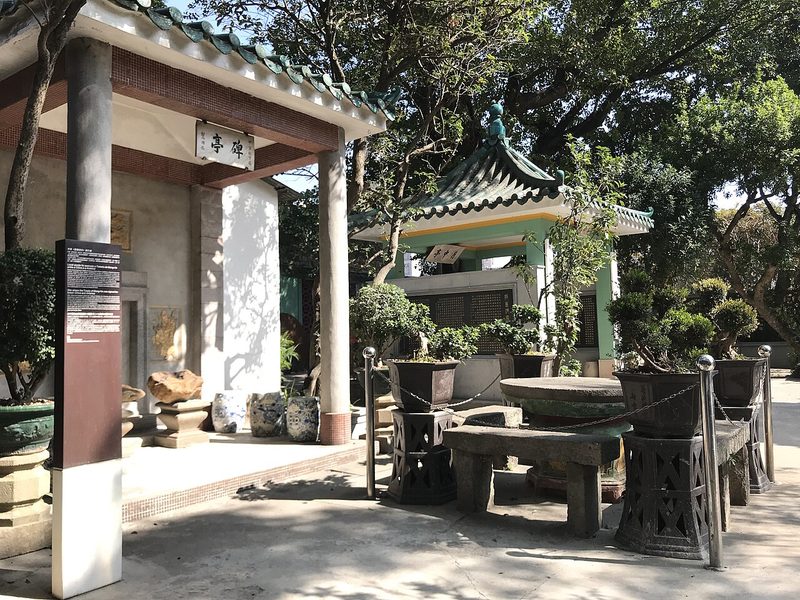 Treaties of the Bogue, Wanghia and Whampoa1843–1844
In 1843 Britain forced the Qing to sign the Treaty of the Bogue, and in 1844 the US and France extracted the Treaties of Wanghia and Whampoa, widening foreign powers’ privileges.
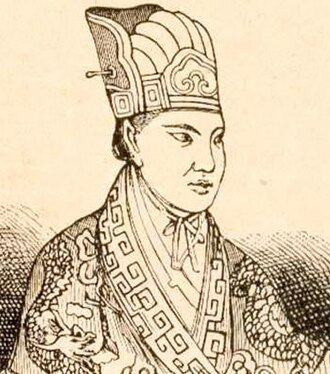 The Jintian Uprising and Founding of the Taiping Heavenly Kingdom11 January 1851
On 11 January 1851 Hong Xiuquan, founder of the God Worshippers’ Society, launched an uprising at Jintian village in Guiping, Guangxi, and proclaimed the Taiping Heavenly Kingdom.
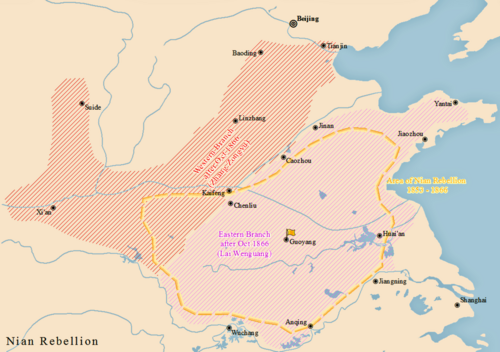 Nian Rebellion1851
The Nian Rebellion was a major Qing-era uprising.
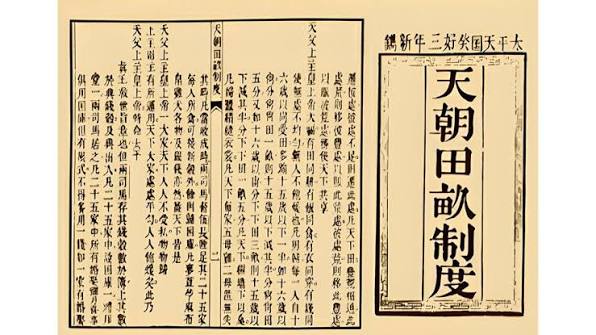 Taiping Capital at Tianjing and the Land System1853
In 1853 the Taipings took Nanjing and made it their capital, Tianjing, then issued the Land System of the Heavenly Dynasty, an ideal of shared land and food that was never put into practice.
 The Second Opium War and the Treaties of Tianjin1856–1858
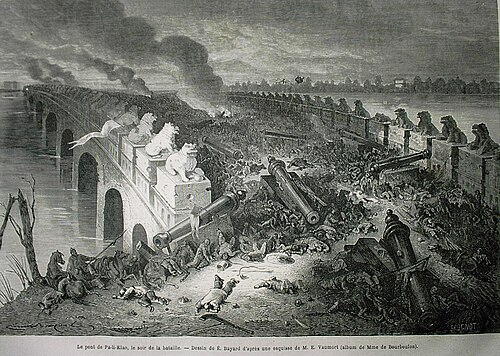
Using the Arrow incident and a French priest’s killing as pretexts, Britain and France began the Second Opium War in 1856, took the Dagu forts in 1858 and forced the Treaties of Tianjin on the Qing.
 The Tianjing IncidentAutumn 1856
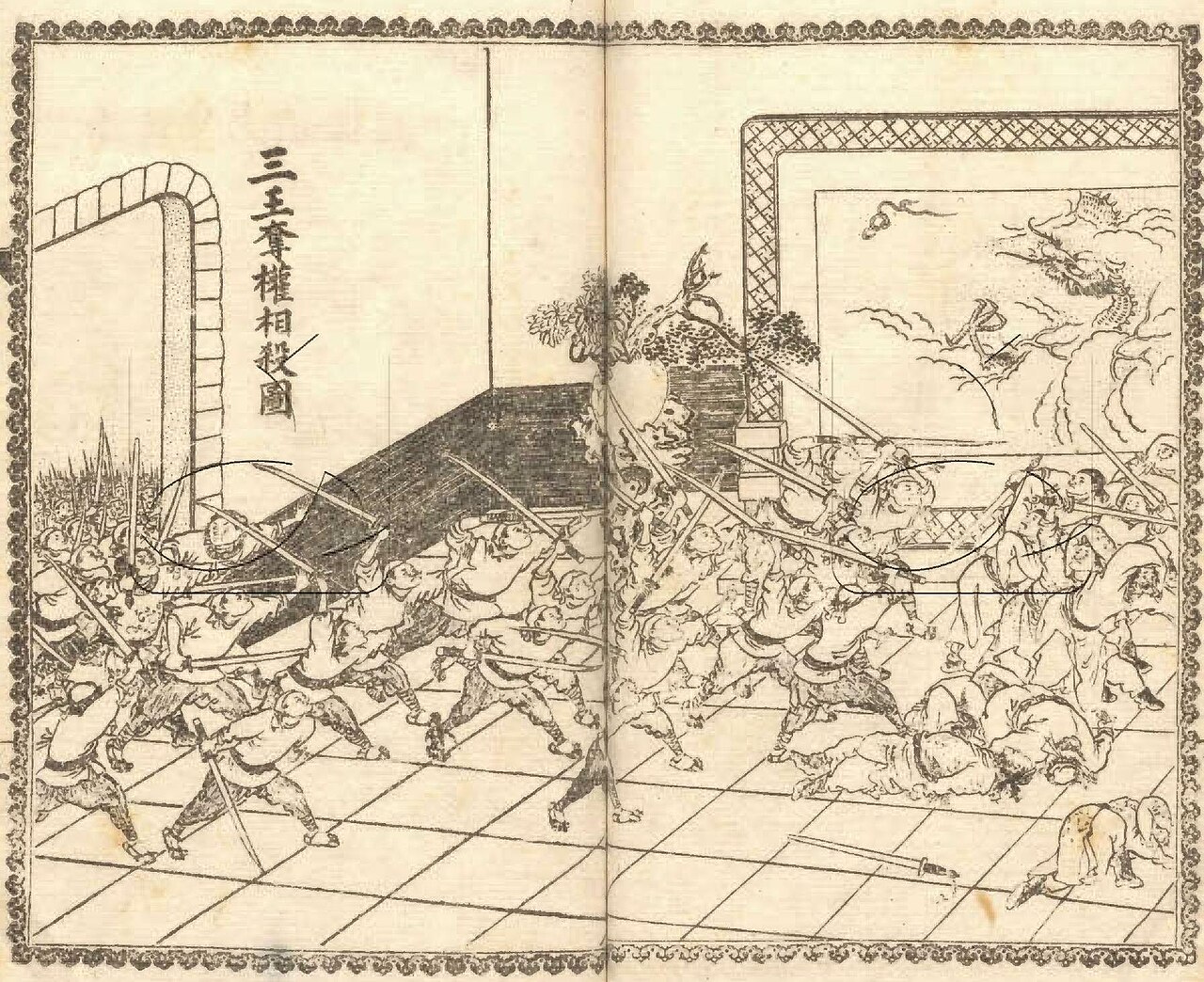
In 1856 the Taiping leaders turned on each other: Wei Changhui killed Yang Xiuqing, who sought the title “Ten Thousand Years,” and was then executed; Shi Dakai left in 1857 and the Taipings declined.
 Tsarist Russia Seizes China’s Northern Territory1858–1881
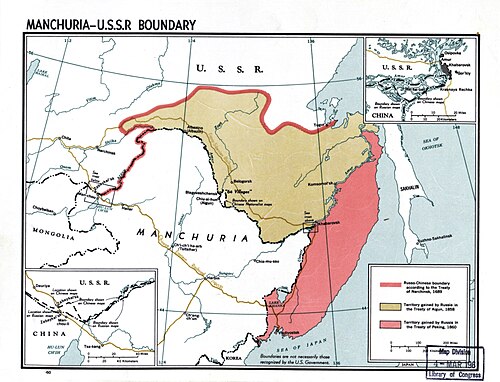
From 1858 to 1881, tsarist Russia seized over 1.5 million square kilometers of Chinese territory in the Northeast and Northwest through unequal treaties such as the Treaties of Aigun and Beijing.
 Hong Rengan and A New Treatise on Aids to Administration1859
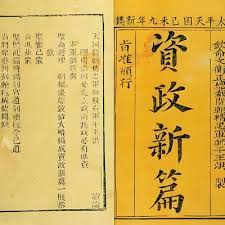
In 1859 the Shield King Hong Rengan wrote A New Treatise on Aids to Administration, urging China to learn from the West and build modern industry, its first plan for capitalist development.
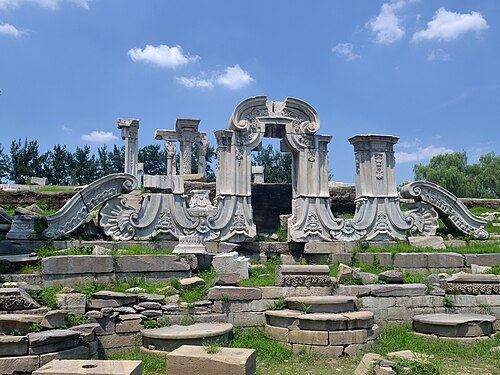 The Burning of the Yuanmingyuan and the Convention of Beijing1860
In 1860 Anglo-French forces entered Beijing and looted and burned the Yuanmingyuan; the Qing was forced to sign the Convention of Beijing, ceding the Kowloon district to Britain.
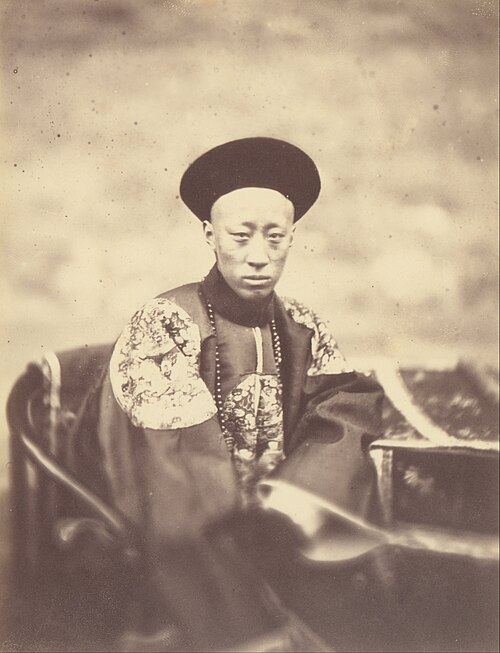 The Self-Strengthening Movement1860s–mid-1890s
From the 1860s to the 1890s, reformers seeking “self-strengthening” and wealth brought in Western technology, built modern arsenals and civilian enterprises, and founded a new navy.
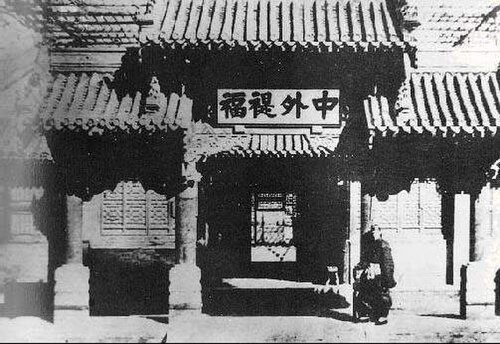 Establishing the Zongli Yamen1861
In 1861 the Qing set up the Zongli Yamen under Prince Gong Yixin to handle foreign affairs, trade and customs, the first dedicated foreign affairs body of modern China.
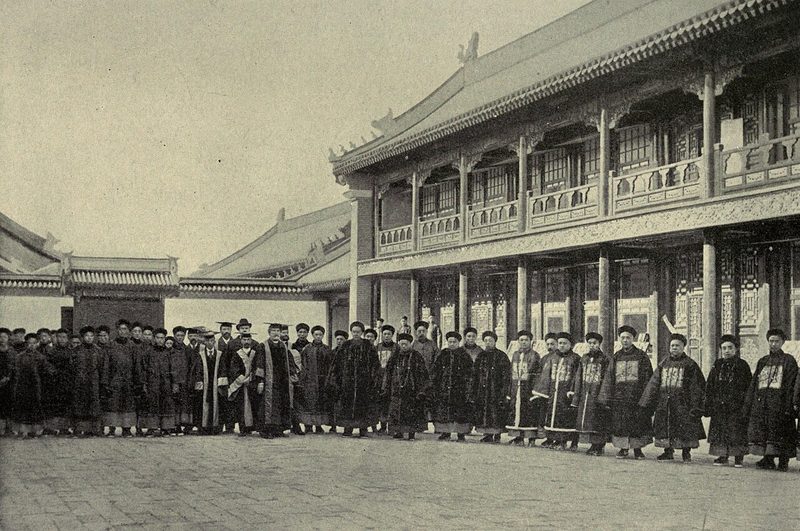 Founding of the Tongwen Guan1862
In 1862 the Qing opened the Tongwen Guan (School of Combined Learning) in Beijing to train interpreters, later adding astronomy and mathematics; it was China’s first state-run modern school.
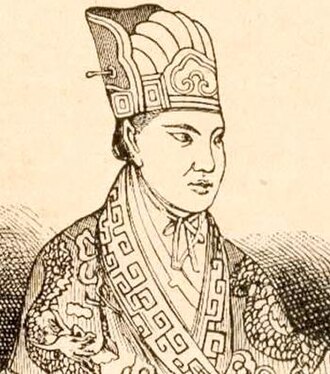 The Fall of Tianjing and the Defeat of the Taiping1860–1864
After 1860 the Taiping briefly built bases in Jiangsu and Zhejiang but were crushed by combined Chinese and foreign forces; in 1864 the Hunan Army took Tianjing and the Taiping movement failed.
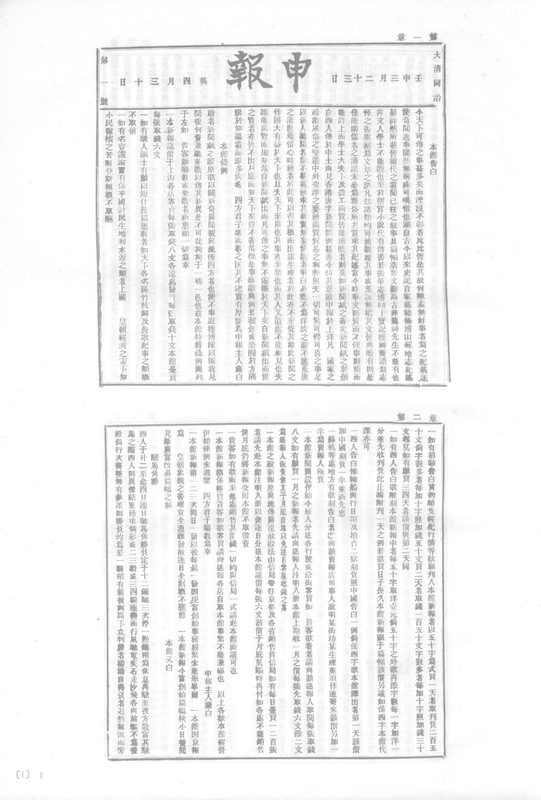 Founding of Shen Bao1872
Founded in Shanghai in 1872 by British merchant Ernest Major and later run by Chinese owners until 1949, Shen Bao was one of modern China’s longest-running and most influential newspapers.
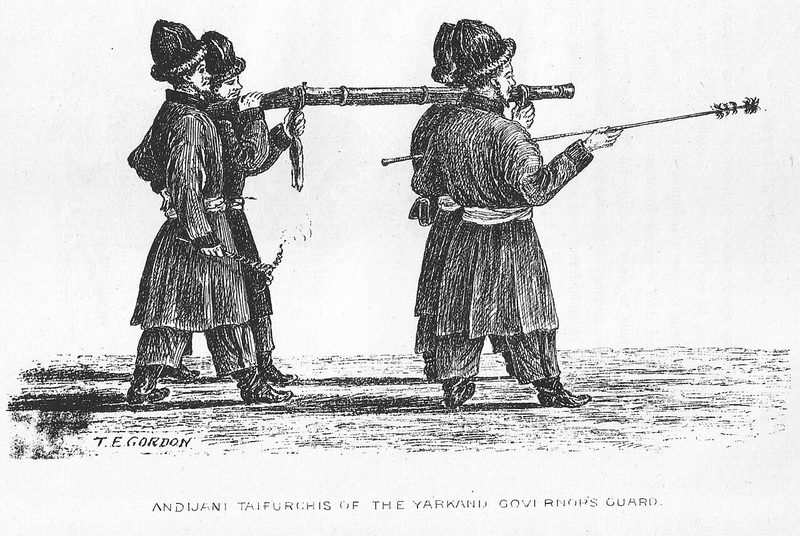 Zuo Zongtang Recovers Xinjiang1875–1884
After Yakub Beg seized Xinjiang, Zuo Zongtang took charge of its military affairs in 1875, recovered all of Xinjiang except Ili by 1878, and Xinjiang became a province in 1884.
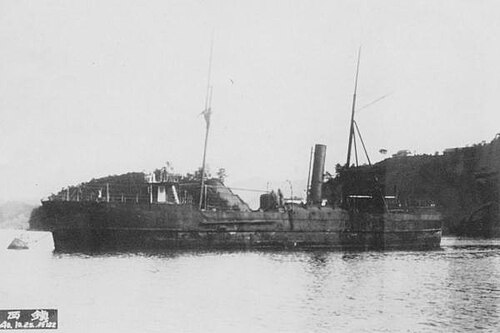 Building the Beiyang Fleet and Taiwan Province1880s
In the 1880s the Qing built a new-style navy, with the Beiyang Fleet formally established in 1888; Taiwan became a province in 1885, with Liu Mingchuan as its first governor.
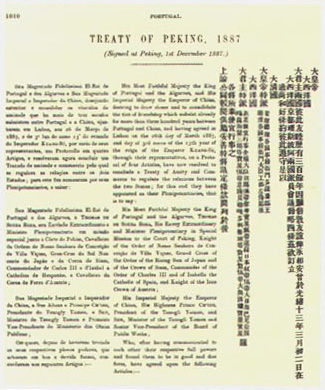 Portugal Gradually Takes Over Macao1844–1887
After the Opium War Portugal gradually took control of Macao, and in 1887 forced the Qing into a treaty granting Portugal “perpetual occupation and government” of Macao.
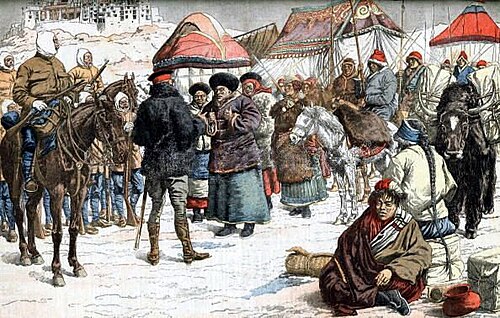 British and Russian Designs on Tibet; Two British Invasions1870–1909
In the late 19th century Britain and Russia vied for Tibet; Britain invaded in 1888 and 1903, and Tibetan troops and people fought bravely at Lungthur and Gyantse.
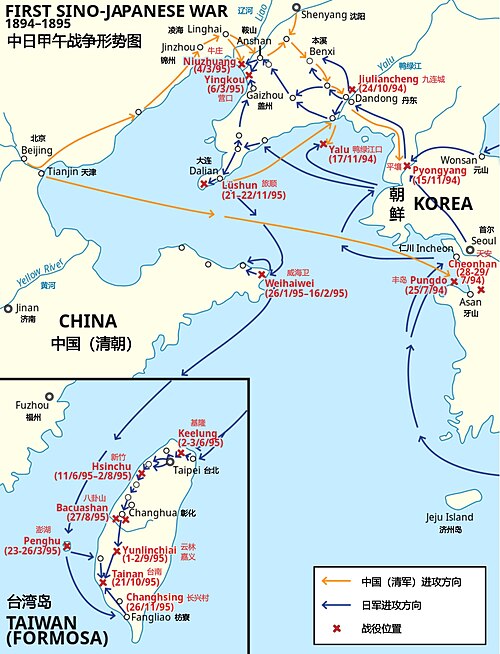 The First Sino-Japanese War1894–1895
Japan provoked the First Sino-Japanese War in 1894; the Beiyang Fleet was mauled in the Battle of the Yellow Sea, where Deng Shichang died, and destroyed when Weihaiwei fell in 1895.
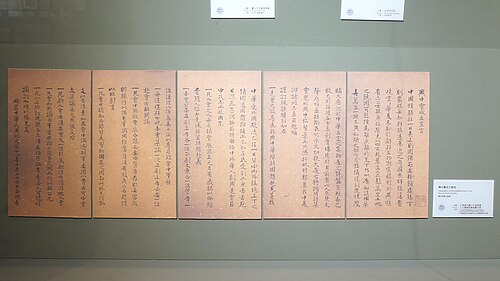 Sun Yat-sen Founds the Revive China SocietyNovember 1894
In November 1894 Sun Yat-sen founded the Revive China Society in Honolulu, pledging to “expel the Tartars, restore China, and establish a united government”; it was China’s first revolutionary group.
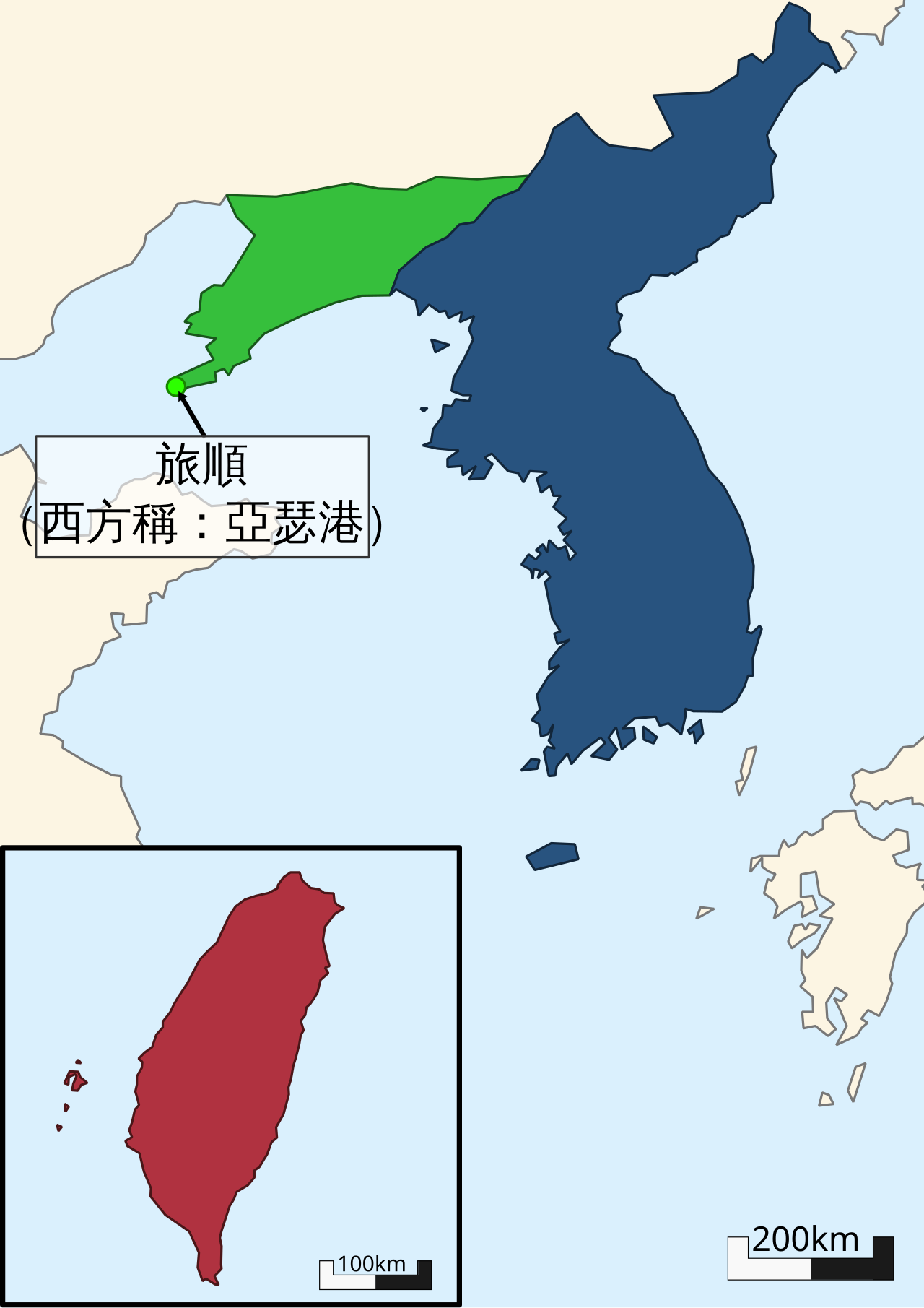 The Treaty of ShimonosekiSpring 1895
In 1895 the Qing was forced into the Treaty of Shimonoseki, ceding Liaodong, Taiwan and Penghu, paying 200 million taels of silver and letting Japan open factories at treaty ports.
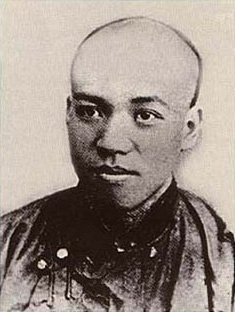 The Petition of the Examination Candidates (Gongche Shangshu)Spring 1895
When the Treaty of Shimonoseki became known in 1895, Kang Youwei led examination candidates in Beijing to petition the emperor to reject it and reform, launching the reform movement.
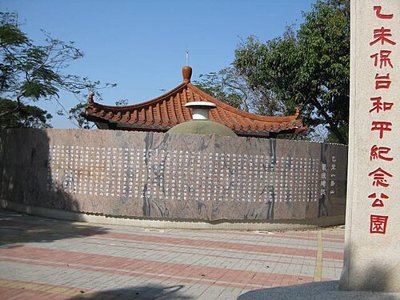 Taiwan’s Armed Resistance against JapanMay–October 1895
After the Qing ceded Taiwan in 1895, troops and civilians under Liu Yongfu, Xu Xiang and others resisted Japan for nearly five months in over a hundred battles, dealing the invaders heavy blows.
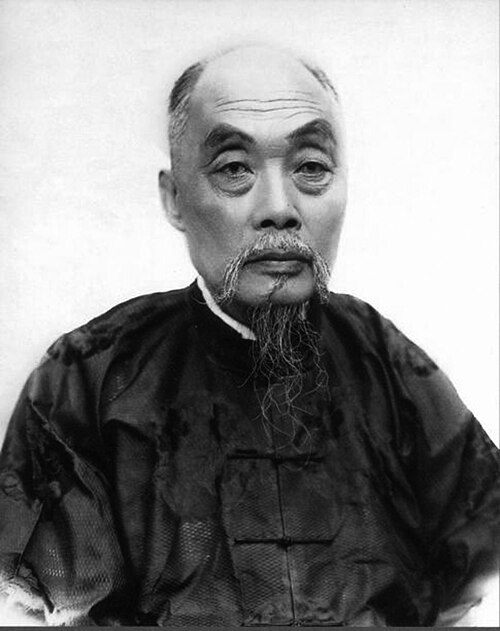 Zhang Jian Founds Dasheng Cotton Mill and “Saving the Nation through Industry”After the Sino-Japanese War
After the war the top-ranked scholar Zhang Jian gave up office to found the Dasheng Cotton Mill in Nantong, along with other firms and schools, a leader of “saving the nation through industry.”
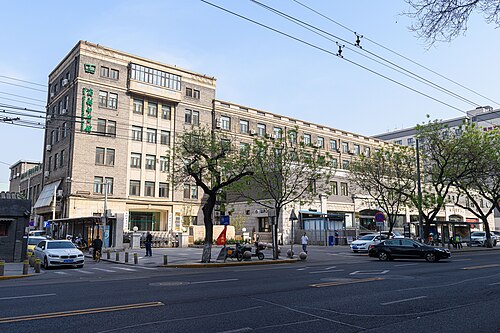 Founding of the Commercial Press1897
In 1897 Xia Ruifang, Bao Xianchang and others founded the Commercial Press in Shanghai, publishing many textbooks, dictionaries and scholarly works and becoming modern China’s largest publisher.
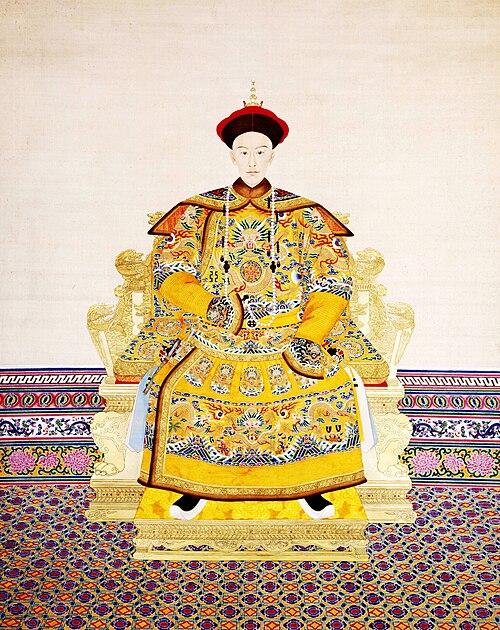 The Hundred Days’ Reform11 June–21 September 1898
In 1898 the Guangxu Emperor decreed a program of reform; after 103 days Empress Dowager Cixi staged a coup in September, the Six Gentlemen were executed, and the reform ended.
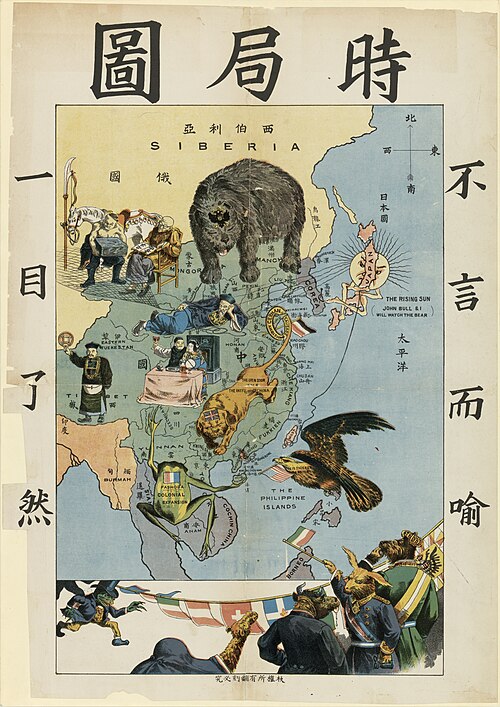 The Scramble for Concessions and the Open Door Policy1897–1899
After the Sino-Japanese War the powers seized leased territories and spheres of influence in a scramble to carve up China; in 1899 the US called for an “Open Door” of equal access.
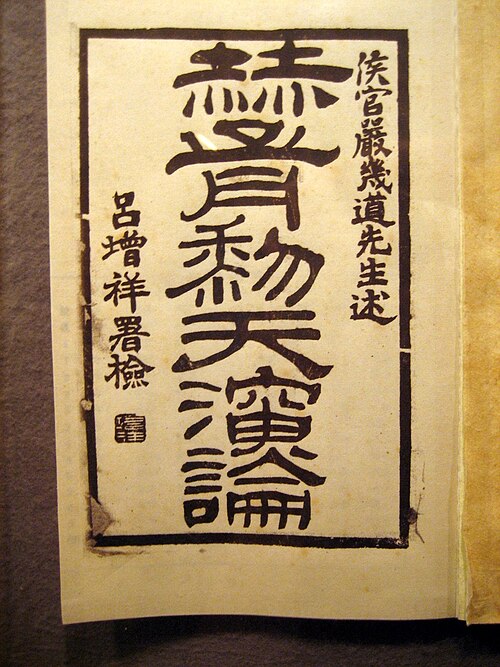 Yan Fu Translates Evolution and Ethics1898
In 1898 Yan Fu published his translation Tianyan Lun (Evolution and Ethics), spreading the ideas of “survival of the fittest” and urging the nation to save itself, influencing a generation of Chinese.
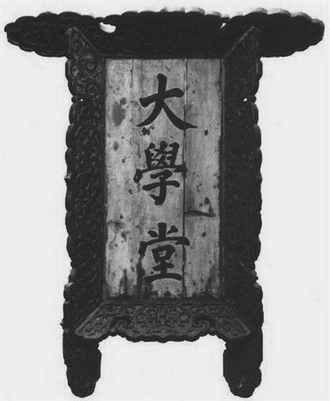 Founding of the Imperial University of Peking1898
Founded during the 1898 reform, the Imperial University of Peking was modern China’s first national university and its top education authority, and the forerunner of Peking University.
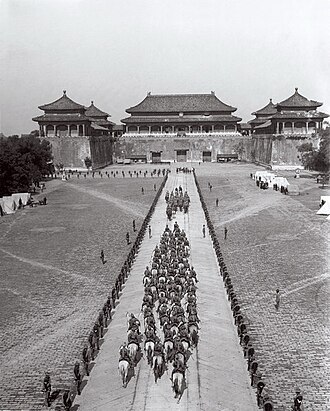 The Eight-Power Allied Invasion1900
In 1900 eight powers (Britain, the US, Russia, Japan, France, Germany, Italy, Austria) took Tianjin and Beijing; Cixi fled with the emperor to Xi’an while the allies looted the capital.
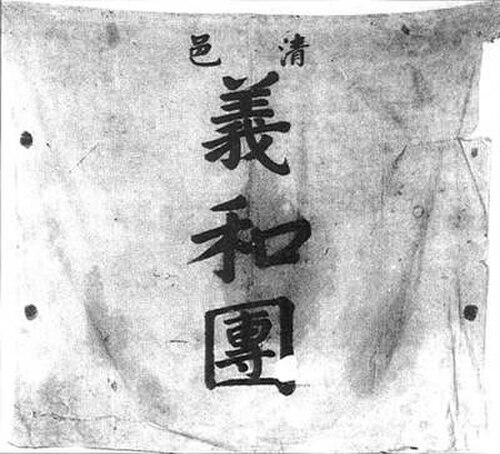 The Boxer MovementLate 19th century–1900
The Boxers rose in Shandong and Zhili with the slogan “support the Qing, destroy the foreigners,” entered Beijing and Tianjin in 1900 to fight the powers, and were crushed by combined forces.
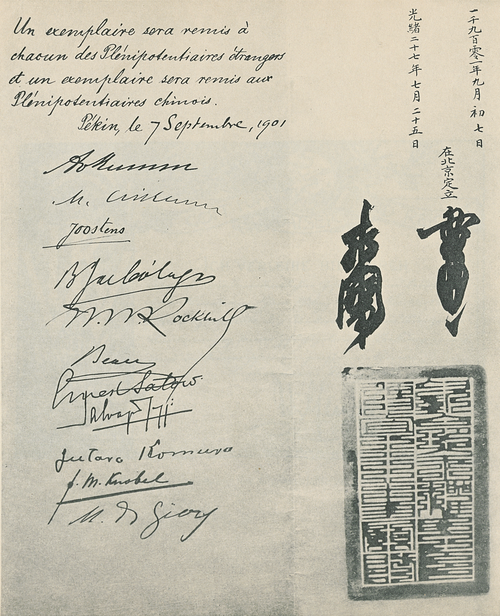 The Boxer ProtocolSeptember 1901
In 1901 the Qing was forced to sign the Boxer Protocol with eleven countries, paying 450 million taels of silver and fixing a legation quarter, and China became fully semi-colonial and semi-feudal.
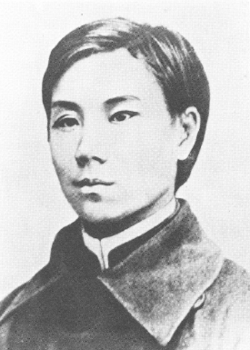 Spread of Revolutionary Ideas (The Revolutionary Army, Turn Your Head Around)Early 20th century
In the early 1900s Zou Rong’s The Revolutionary Army, Chen Tianhua’s Turn Your Head Around and Zhang Binglin’s polemics against Kang Youwei spread calls to overthrow the Qing.
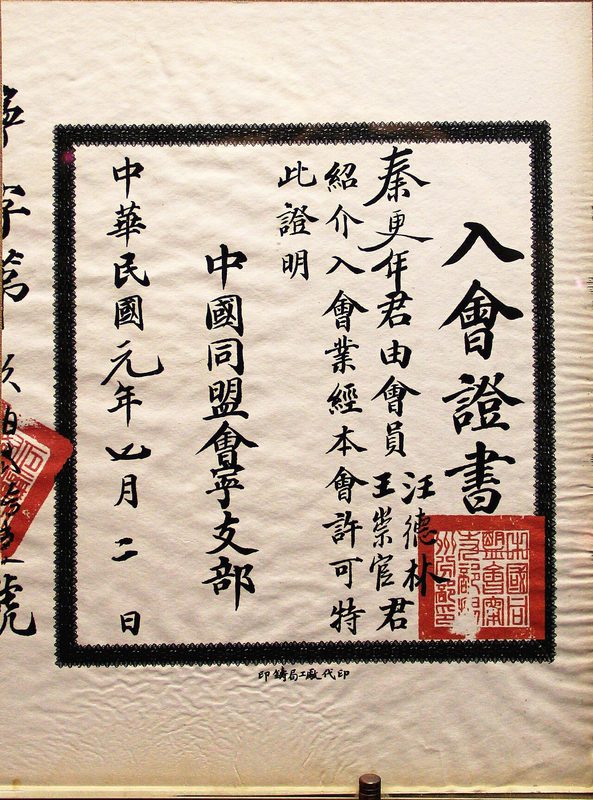 The Tongmenghui and the Three Principles of the PeopleAugust 1905
In 1905 Sun Yat-sen merged the Revive China Society and other groups in Tokyo into the Tongmenghui, China’s first national revolutionary party, built on his Three Principles of the People.
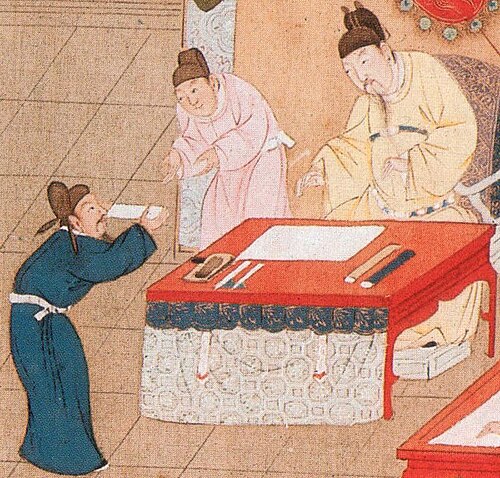 Abolition of the Imperial Examinations1901–1905
The late-Qing “New Policies” reformed education; in 1905 the Qing announced the end of the examinations from the next year, abolishing the 1,300-year-old system as new-style schools grew rapidly.
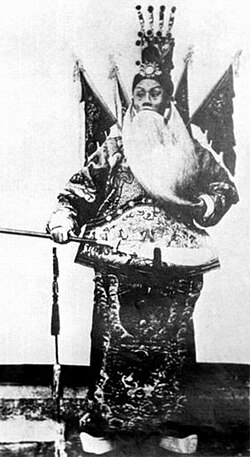 China’s First Film, Dingjun Mountain1905
In 1905 the Fengtai Photography Studio in Beijing filmed scenes from the Peking Opera Dingjun Mountain starring Tan Xinpei, the first film made by Chinese, marking the birth of Chinese cinema.
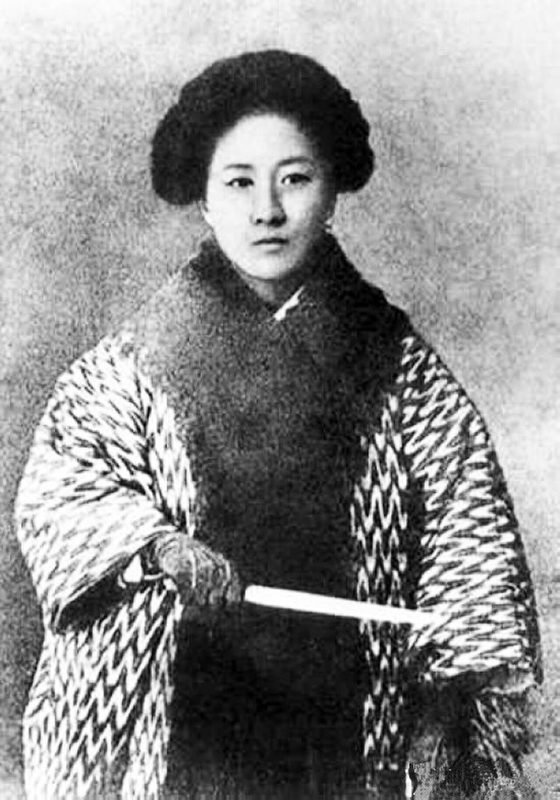 The Ping-Liu-Li Uprising and the Uprisings of Xu Xilin and Qiu Jin1906–1907
In 1906 Tongmenghui members launched the Ping-Liu-Li Uprising; in 1907 Xu Xilin of the Restoration Society assassinated Governor Enming in Anqing and Qiu Jin was captured and executed in Shaoxing.
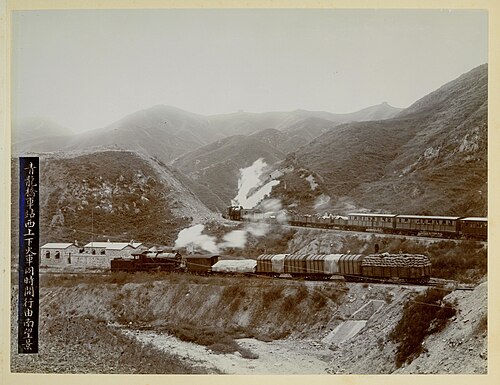 Zhan Tianyou Builds the Beijing–Zhangjiakou Railway1905–1909
In 1905 the Qing decided to build the Beijing–Zhangjiakou Railway itself with Zhan Tianyou as chief engineer; using methods such as the zigzag line, it opened two years ahead of schedule in 1909.
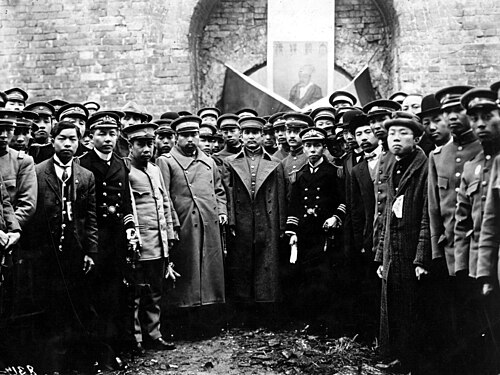 Wuchang Uprising and the Xinhai Revolution10 October 1911
On 10 October 1911 revolutionaries in the Hubei New Army launched the Wuchang Uprising; provinces declared independence one after another and Qing rule swiftly collapsed.
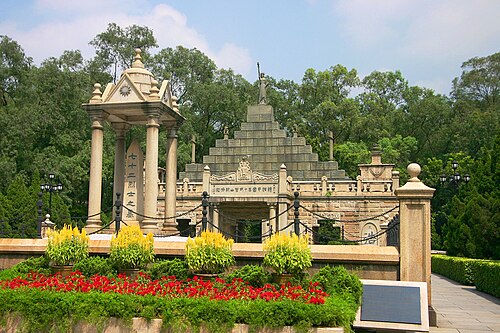 Huanghuagang UprisingApril 1911
In April 1911 Huang Xing led revolutionaries in an uprising at Guangzhou, storming the Viceroy's office before being overwhelmed; 72 martyrs' remains were later buried together at Huanghuagang.