JinAD 266–420
Kumārajīva Leads a Translation Bureau in Chang’an
401–413 CE
Kumārajīva led Buddhist scripture translations in Chang’an.
View on the timeline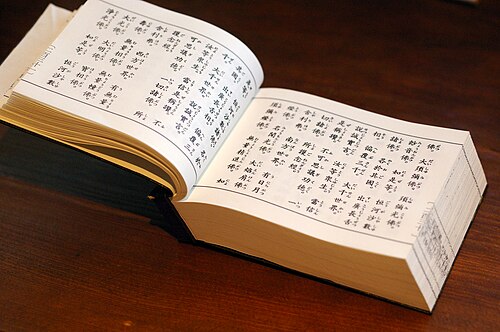
Image: tamakisono · CC BY 2.0 · Original
Kumārajīva was a Buddhist monk and translator from Kucha who became one of the most influential translators of Buddhist texts into Chinese. During the Later Qin reign of Yao Xing, he was brought to Chang’an and supported in organizing a translation community. This work was collaborative: Kumārajīva explained source texts, while disciples and assistants recorded, discussed, revised, and polished Chinese versions. The team produced influential translations of works including the Madhyamaka treatises, the Lotus Sutra, and the Amitabha Sutra, shaping Chinese understandings of Madhyamaka philosophy, Tiantai thought, and Pure Land devotion. Their prose was often concise and idiomatic, and many translated terms became standard in Chinese Buddhist literature. Translation nevertheless involved interpretation and choices suited to Chinese language and intellectual contexts; it was not a mechanical word-for-word process. The Chang’an enterprise joined court sponsorship, transregional movement of scholars, and monastic collaboration. Catalogues and later records do not always agree about translators, assistants, or dates for each text, so individual attributions require attention to the documentary evidence. The bureau’s legacy lies in both its texts and its model of organized scholarly translation.
References
Text and images from Wikipedia are used under CC BY-SA and their respective licenses