MingAD 1368–1644
Twelve-tone equal temperament
1596
Zhu Zaiyu developed a precise twelve-tone tuning system.
View on the timeline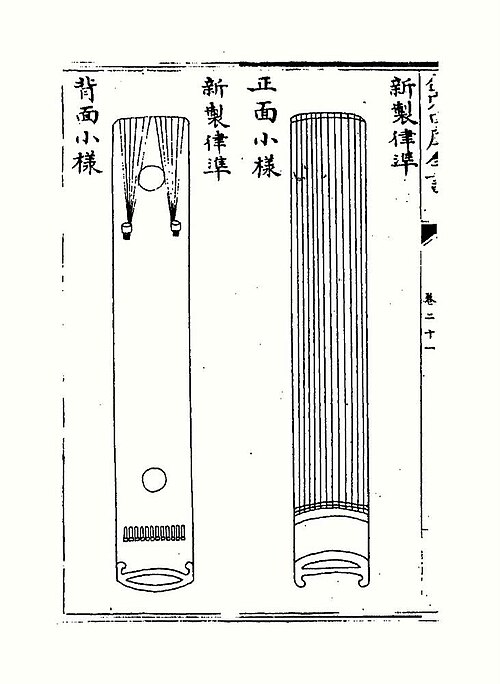
Image: Prince Zhu Zaiyu · Public domain · Original
Twelve-tone equal temperament divides the octave into twelve semitones with an identical frequency ratio between each adjacent pair. In sixteenth-century China, the Ming scholar Zhu Zaiyu used mathematical calculations in works including the Lülü Jingyi and related treatises to derive the intervals by repeated root extraction, addressing the tuning problem that the traditional circle of fifths does not close exactly. Equal spacing makes it possible for instruments to change keys while preserving consistent interval relationships. Zhu’s work demonstrates the close connection among mathematics, music theory, and practical instrument tuning in late imperial China. It is often cited as a major achievement in the global history of tuning systems. The distinction between mathematical proposal, theoretical discussion, and widespread musical adoption matters: a precise calculation does not prove that all musicians or court ensembles immediately used the system. Related ideas also developed in Europe, and claims of influence or priority require documentary evidence. Zhu’s calculations remain notable for their sophistication, while the broader history involves multiple traditions and a long transition from theory to practice.
References
Text and images from Wikipedia are used under CC BY-SA and their respective licenses