MingAD 1368–1644
Tang Xianzu's The Peony Pavilion
Late Ming
The late Ming dramatist Tang Xianzu wrote The Peony Pavilion, whose love story of Du Liniang and Liu Mengmei criticizes feudal propriety; it is a Kunqu classic.
View on the timeline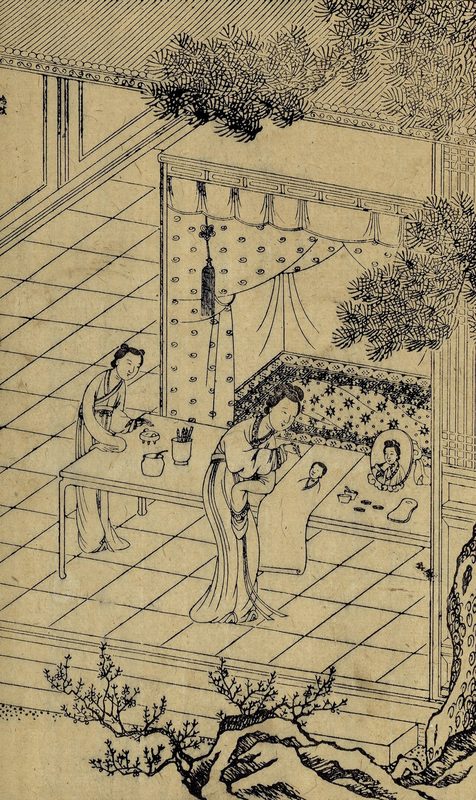
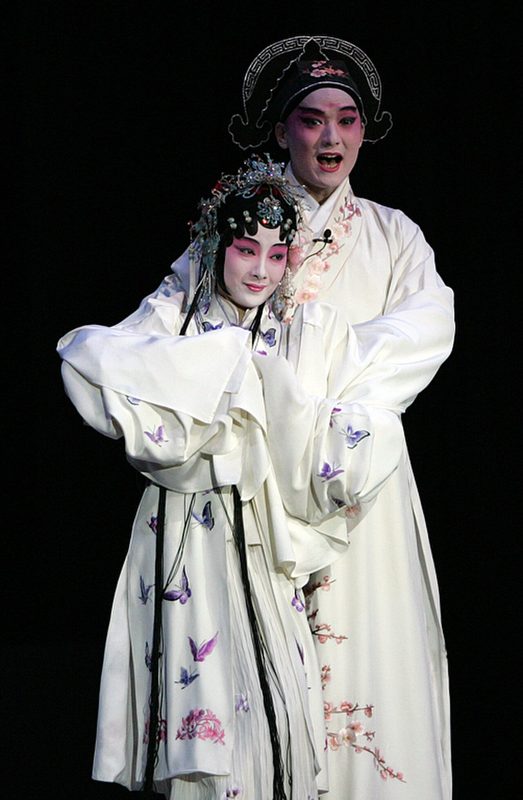
Under the Ming, opera developed further and became an important cultural activity for people in town and country. In the Jiajing reign, Wei Liangfu and others refined the Kunshan tune into the smooth, delicate "water-polished style"; Kunqu gradually spread across the country and became the most influential form of drama in the Ming and Qing. Tang Xianzu (1550–1616), courtesy name Yireng, art name Ruoshi, was from Linchuan, Jiangxi, the most celebrated dramatist of the late Ming. He passed the jinshi examination in his thirties but was demoted to Xuwen, Guangdong, for criticizing the government, later became magistrate of Suichang, Zhejiang, and in 1598 resigned and returned home to devote himself to writing plays. His masterpiece is The Peony Pavilion, also called The Soul's Return, which with Zichai Ji, Nanke Ji and Handan Ji forms the "Four Dreams of Linchuan". It tells how Du Liniang, daughter of the governor of Nan'an, falls in love in a dream with the scholar Liu Mengmei after a stroll in the garden and, on waking, dies of lovesickness; Liu later finds her self-portrait, her spirit meets him and she is restored to life, and the two finally marry. The play's idea that "love arises from one knows not where, yet grows ever deeper; the living may die for it, and the dead may live again" forcefully criticizes the feudal norms that bind human nature and celebrates young people's pursuit of freedom in love and individual liberation. Its lyrics are flowing and beautiful and its inner portrayal of characters delicate, and scenes such as "Strolling in the Garden" and "Startled Dream" are still staged today. Tang Xianzu died in the same year, 1616, as the English dramatist Shakespeare, and is called the "Shakespeare of the East".
References
Text and images from Wikipedia are used under CC BY-SA and their respective licenses