Western Han202 BC–AD 8
Nanyue
204 BCE
Nanyue was an ancient kingdom in southern China.
View on the timeline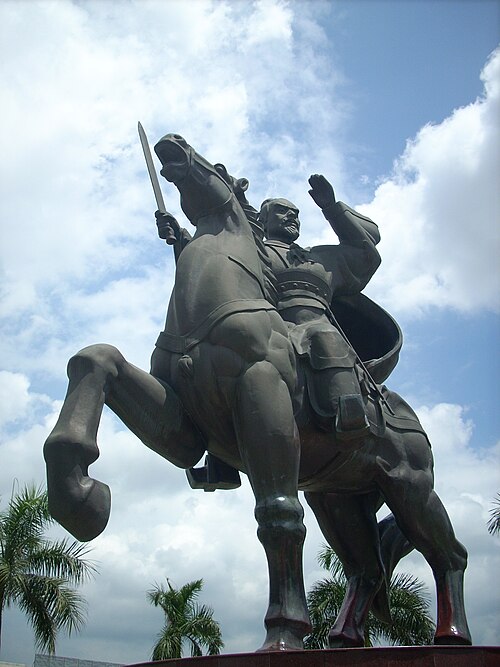
Image: Boris1601050607 · CC BY-SA 3.0 · Original
Nanyue was a kingdom founded by Zhao Tuo after the collapse of Qin authority in the south. From about 204 to 111 BCE, it ruled territory centered on present-day Guangdong and Guangxi and extending into northern Vietnam, with its capital at Panyu. Qin conquest had introduced commanderies and settlers into Lingnan; after the Qin empire fell, Zhao Tuo built a regional state that negotiated with the early Han court and at times asserted imperial status. Nanyue’s rulers used elements of Chinese administration and elite culture while governing communities with diverse local traditions. Tombs, seals, weapons, and everyday objects show that cultural interaction was reciprocal and adapted to regional circumstances rather than a simple one-way transmission. Relations with Han alternated between accommodation and tension. In 111 BCE, Han forces conquered Nanyue and incorporated its territory into the imperial commandery system. The boundaries and degree of central control varied, and the kingdom’s population cannot be reduced to a single ethnic identity. Nanyue is important for understanding how early empires expanded through diplomacy, local rule, migration, and eventually military force.
References
Text and images from Wikipedia are used under CC BY-SA and their respective licenses