Xiac. 2070–1600 BC
Qijia culture
2000 BCE
The Qijia culture flourished in northwest China.
View on the timeline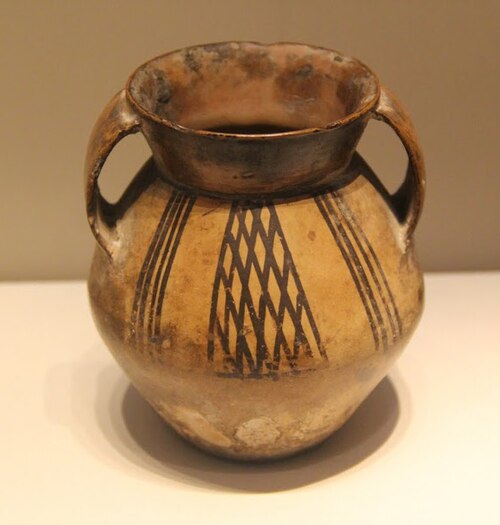
Image: Prof. Gary Lee Todd · CC BY-SA 4.0 · Original
The Qijia culture developed in the upper Yellow River region, mainly across present-day Gansu and northeastern Qinghai, from roughly 2400 to 1900 BCE. It is named after the Qijiaping site and followed earlier Majiayao communities while forming its own regional traditions. Archaeological settlements and cemeteries contain pottery, stone tools, evidence of millet cultivation, animal husbandry, and textile production, suggesting a mixed and increasingly settled economy. Burials were often located near habitation areas; differences in grave goods and burial arrangements provide evidence for changing social relationships and possible status distinctions. Copper objects, including early mirrors and ornaments, are important for studying the transition toward bronze use in northwestern China. Their presence does not mean that bronze production was already widespread or that every community had entered a fully developed Bronze Age. Researchers compare metal composition, production traces, and chronology to assess technological links with neighboring regions and the Eurasian steppe. Qijia material culture thus illuminates both local continuity and long-distance interaction, while caution is needed when turning archaeological patterns into claims about a single ethnic or political identity.
References
Text and images from Wikipedia are used under CC BY-SA and their respective licenses