Xiac. 2070–1600 BC
Erlitou Site
Late Xia
The Erlitou site in Yanshi, Henan, matches the late Xia capital; its palaces, bronze ritual vessels and turquoise dragon are key to the search for Xia culture.
View on the timeline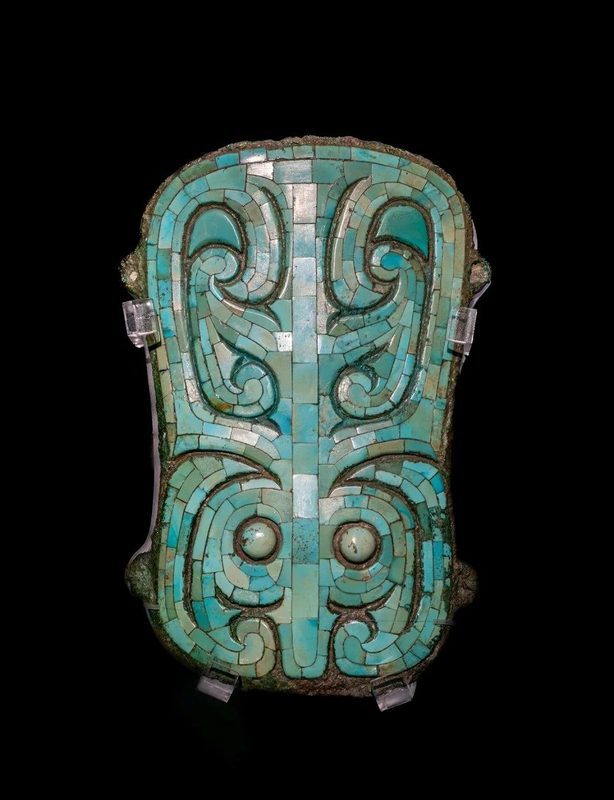
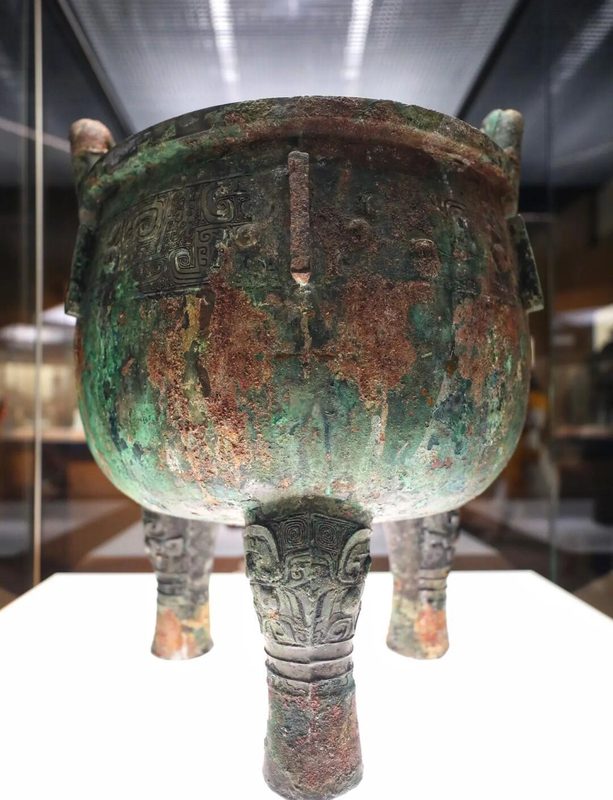
The Erlitou site lies at Erlitou village, Zhai Town, Yanshi District, Luoyang, Henan. Discovered in 1959 by the archaeologist Xu Xusheng while surveying the “Xia ruins,” it covers about 3 million square meters and dates to about 1750–1530 BC, corresponding to the late Xia, so many scholars take it to be a late Xia capital. At its center is a palace enclosure of about 100,000 square meters containing several large rammed-earth palace foundations laid out in an orderly plan, the earliest example of the central axial symmetry of ancient Chinese palace architecture; outside the enclosure is a crisscross network of roads, including the earliest cart ruts known. The site includes aristocratic graves, commoners' residential areas and cemeteries, and workshops for bronze casting, bone working and turquoise working, reflecting clear class divisions. Erlitou yielded sets of bronze wine vessels such as the jue, jia and he, and bronze plaques with turquoise-inlaid animal faces. The bronze ding found here is considered the earliest bronze ritual vessel found in China. In 2002 archaeologists found in an aristocratic tomb a large dragon-shaped object made of more than 2,000 turquoise pieces, hailed as a “super national treasure” and the “Chinese dragon.” Erlitou is a key site for exploring Xia culture and the formation of China's early state, and an Erlitou Xia Capital Site Museum now stands there. The Erlitou culture, centered on western Henan and southern Shanxi, influenced areas as far as the Yangtze and the northwest, reflecting the strong reach of Central Plains dynastic civilization, which leads some scholars to call Erlitou the “earliest China.”
References
Text and images from Wikipedia are used under CC BY-SA and their respective licenses