People's Republic of China1949–present
China–Japan Diplomatic Normalization
1972
In September 1972 Japanese Prime Minister Kakuei Tanaka visited China, and the two countries issued a joint communiqué normalizing relations; many other countries then established ties with China.
View on the timeline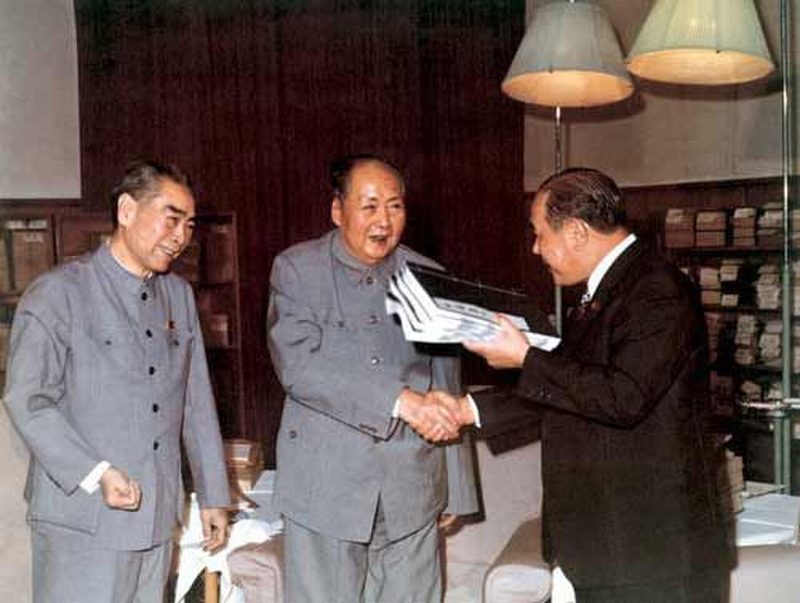
After the Second World War, Japan followed the United States in opposing the new China and maintained so-called “diplomatic relations” with the Taiwan authorities, so China and Japan long had no formal diplomatic ties. From the 1950s the two countries developed non-governmental trade and cultural exchanges, and in 1962 they signed the Memorandum on Long-Term Comprehensive Trade. After Nixon’s visit to China, calls in Japan to restore Japan–China relations grew louder. In July 1972 Kakuei Tanaka became Japan’s prime minister, and in September he visited China at its invitation. On 29 September the two governments issued the China–Japan Joint Communiqué, ending the abnormal state of affairs that had existed between them and establishing diplomatic relations. Japan expressed its keen awareness of its responsibility for the serious damage its wartime actions had caused the Chinese people and its deep self-reproach; it recognized the government of the People’s Republic of China as the sole legal government of China and fully understood and respected China’s position that Taiwan is an inalienable part of its territory. China declared that, for the sake of friendship between the two peoples, it renounced its demand for war reparations from Japan. Normalization opened a new era in relations. To mark it, China gave Japan a pair of giant pandas, Kang Kang and Lan Lan. In 1978 the two countries signed the Treaty of Peace and Friendship, and Deng Xiaoping visited Japan. Around the time of normalization many countries established relations with China, and by the late 1970s more than one hundred had done so.
References
Text and images from Wikipedia are used under CC BY-SA and their respective licenses