People's Republic of China1949–present
Second Plenary Session of the Seventh CCP Central Committee
March 1949
The Second Plenary Session of the Seventh Central Committee met at Xibaipo in March 1949, shifting the Party's focus from the countryside to the cities, and Mao Zedong set out the "Two Musts."
View on the timeline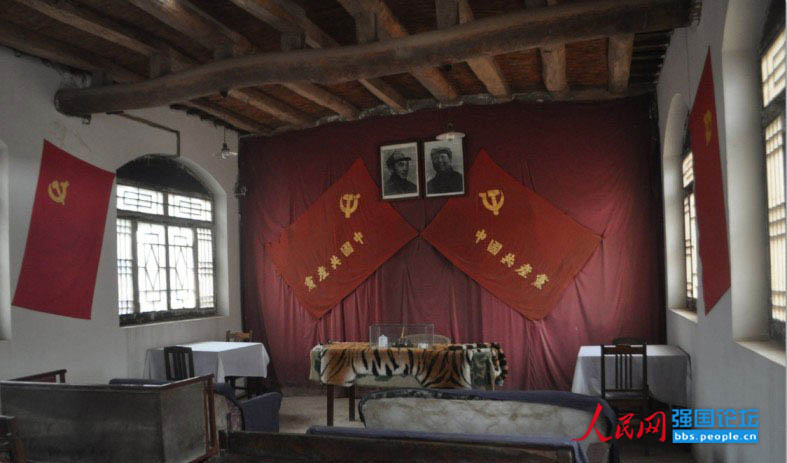
After the three great campaigns, nationwide liberation was a foregone conclusion. To meet the final victory of the people's war and prepare for the founding of a new China, the Party Central Committee held the Second Plenary Session of the Seventh Central Committee at Xibaipo in Pingshan County, Hebei, from 5 to 13 March 1949. Mao Zedong gave an important report, and the session set the basic policies the Party should adopt in politics, economics and foreign affairs after nationwide victory. It decided that the focus of the Party's work would shift from the countryside to the cities, and that urban work must center on production and construction. The session also put forward foreign policy principles such as "starting anew" and "cleaning the house before inviting guests." In his report Mao warned the whole Party: "Winning nationwide victory is only the first step in a long march of ten thousand li." He asked that "comrades must be made to keep on being modest, prudent and free from arrogance and rashness in their work style, and to keep on with the style of plain living and hard struggle," the "Two Musts." To guard against a personality cult, on Mao's proposal the session also resolved to forbid celebrating the birthdays of Party leaders and to forbid naming places, streets and enterprises after them. On 23 March the Central Committee left Xibaipo for Beiping. Mao called the trip "going to the capital to take the examination" and said, "We must not be like Li Zicheng." The plenary session prepared the founding of New China politically and ideologically, and the "Two Musts" became a fine tradition of the Communist Party.
References
Text and images from Wikipedia are used under CC BY-SA and their respective licenses