Republic of ChinaAD 1912–1949
Chinese Expeditionary Force in Burma
1942–1945
In 1942 the Chinese Expeditionary Force entered Burma and rescued British troops at Yenangyaung; it later fought in northern Burma and western Yunnan, reopening the road to India in 1945.
View on the timeline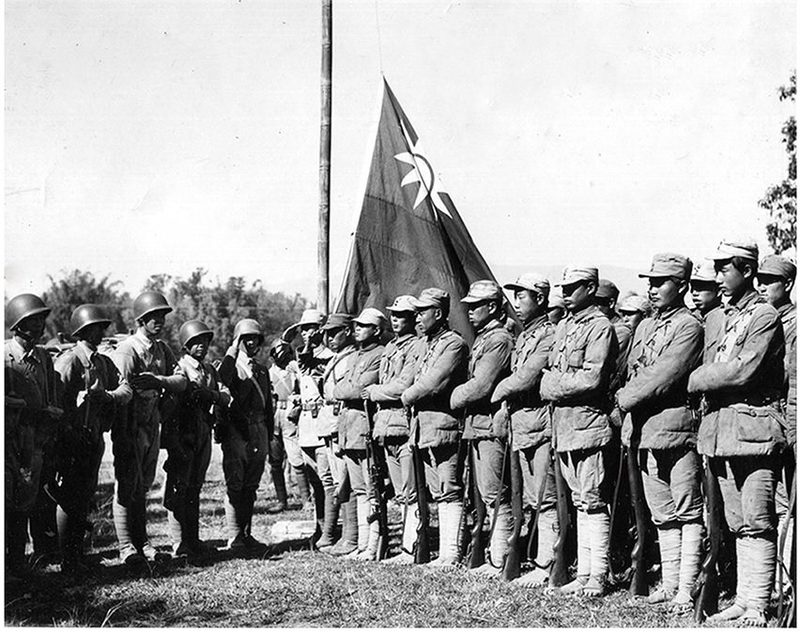
After the outbreak of the Pacific War, the Japanese army attacked British Burma, intending to cut the Burma Road, China's most important international supply line. To defend it and support the British, China formed the Chinese Expeditionary Force in early 1942, and 100,000 men under Du Yuming and others entered Burma, the first time Chinese troops fought abroad. Dai Anlan, commander of the 200th Division, fought the Japanese for twelve days at Toungoo against forces several times his own and inflicted heavy losses. In April the British 1st Division was surrounded by the Japanese at Yenangyaung, and the 113th Regiment of the Expeditionary Force's 38th Division, under division commander Sun Liren, went to its rescue, drove off the Japanese, and saved more than 7,000 British soldiers along with hundreds of foreign missionaries and journalists. However, the British were reluctant to fight, the Chinese and British lacked coordination, and the Japanese outflanked them, so the Expeditionary Force suffered a setback and was forced to retreat. Dai Anlan was gravely wounded while leading a breakout and died soon after. Part of the force withdrew to India, and part crossed the Hukawng wilderness (Yeren Mountains) back into China. The troops in India were trained with American help and formed the Chinese Army in India. In October 1943 the Chinese Army in India launched an offensive in northern Burma, and in May 1944 the Expeditionary Force began a counteroffensive in western Yunnan, retaking Tengchong, Longling and other places. In January 1945 the two forces met at Mangyou, reopening the Sino-Indian road (Stilwell Road). The campaign was a model of military cooperation between China and its allies, committing over 400,000 troops and suffering nearly 200,000 casualties, and made a major contribution to victory in the world anti-fascist war. The National Martyrs' Cemetery in Tengchong, Yunnan, holds the remains of fallen Expeditionary Force soldiers.
References
Text and images from Wikipedia are used under CC BY-SA and their respective licenses