Republic of ChinaAD 1912–1949
Third Battle of Changsha
December 1941–January 1942
In late 1941 and early 1942 Xue Yue used the "Heaven Furnace" tactic to repel the Japanese at Changsha, the first major Allied victory after the outbreak of the Pacific War.
View on the timeline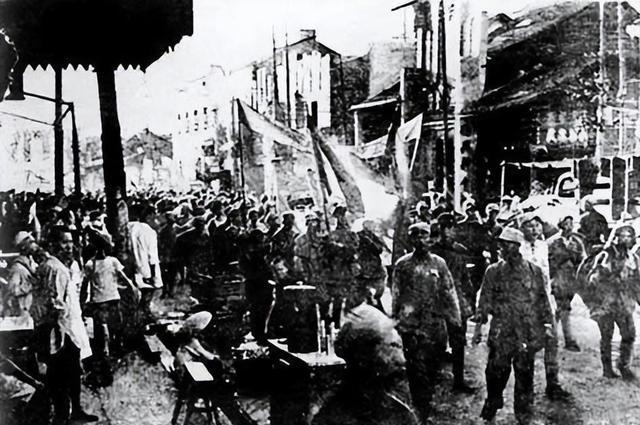
After the War of Resistance reached its strategic stalemate, the Japanese army launched two battles of Changsha, in September 1939 and September 1941, trying to take the city, and failed both times. In December 1941 Japan attacked Pearl Harbor, the Pacific War broke out, and China formally declared war on Japan. To support its attack on Hong Kong and to pin down Chinese forces that might go south to aid the British, the Japanese 11th Army massed over 100,000 troops for a third attack on Changsha. Xue Yue, commander of the 9th War Area, directed the Chinese forces in the "Heaven Furnace" tactic: set up deep defensive positions in the expected battle zone, resist step by step to lure the enemy in, and once the Japanese reached the city, counterattack from all sides so as to melt them like a furnace. Chinese troops blocked the advance layer by layer along the Xinqiang and Miluo Rivers. In early January 1942 the Japanese reached the outskirts of Changsha, where Li Yutang, commander of the 10th Army, directed the garrison in a stubborn defense from fortifications and fierce fighting with the Japanese. Chinese forces outside then closed in from all sides, the Japanese were caught front and rear and forced to retreat, and the Chinese pursued with heavy Japanese casualties. It was the first great Allied victory since the outbreak of the Pacific War; at the time British and American forces were suffering repeated defeats in the Pacific, and Hong Kong, Manila and Singapore had fallen one after another. The victory at Changsha lifted Allied morale and drew high praise from international opinion; The Times of London commented: "Amid the dark clouds over the Far East, only the sky above Changsha shines with brilliance." In 1944 the Japanese attacked Changsha a fourth time in the Battle of Henan-Hunan-Guangxi, and the city fell.
References
Text and images from Wikipedia are used under CC BY-SA and their respective licenses