Republic of ChinaAD 1912–1949
Hundred Regiments Offensive
August 1940–January 1941
From August 1940 to January 1941 Peng Dehuai led 105 Eighth Route Army regiments against Japanese lines of communication in North China, inflicting over 40,000 casualties.
View on the timeline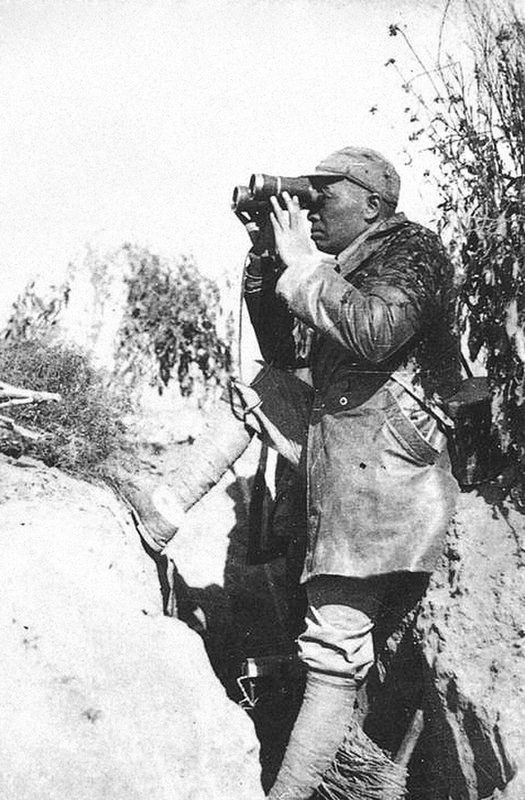
After the War of Resistance entered its stalemate phase, the Japanese army sought to destroy the base areas by adopting a "cage policy" in North China, using railways as pillars, roads as chains and blockhouses as locks to blockade and gradually encroach on them. To break the cage policy and raise the nation's confidence in resistance, from August 1940 to January 1941 Peng Dehuai, deputy commander of the Eighth Route Army, directed a large-scale offensive in North China, centered on sabotaging the Zhengtai Railway and attacking Japanese-held communications lines and strongpoints across the region. Because 105 regiments and over 200,000 men took part, it became known as the "Hundred Regiments Offensive." During the campaign the Eighth Route Army fought more than 1,800 engagements, killed, wounded or captured over 40,000 Japanese and puppet troops, destroyed more than 400 kilometers of railway and over 1,500 kilometers of highway, took nearly 3,000 strongpoints, and captured large quantities of weapons and supplies. In battles such as those at Niangziguan and Guanjianao, Eighth Route Army soldiers fought heroically and suffered heavy losses. During the fighting, soldiers rescued two Japanese girls from the battlefield, and Nie Rongzhen sent them back to a Japanese post, an act long remembered. The offensive was the largest and longest campaign the Eighth Route Army fought in North China during the war. It dealt a heavy blow to the cage policy, lifted the nation's confidence, raised the standing of the Communist Party and the Eighth Route Army, effectively supported operations on the main front, and exposed as a lie the Kuomintang hardliners' slander that the Eighth Route Army "roamed but did not fight."
References
Text and images from Wikipedia are used under CC BY-SA and their respective licenses