Republic of ChinaAD 1912–1949
Wang Jingwei's Puppet National Government
March 1940
Kuomintang deputy leader Wang Jingwei defected to Japan in late 1938, and in March 1940 set up a Japanese-sponsored puppet National Government in Nanjing that served Japan's invasion.
View on the timeline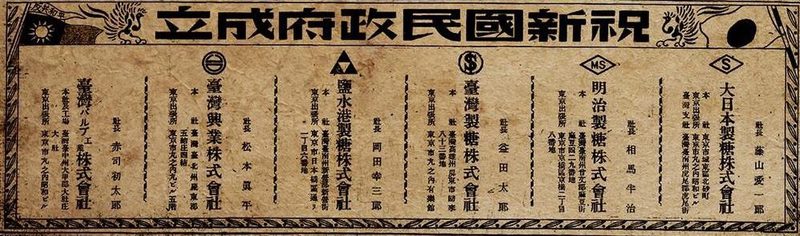
After the fall of Guangzhou and Wuhan, Japan, with its front overextended, short of troops and strained at home, changed its strategy toward China, tempting the National Government with political overtures and fostering collaborator regimes. In November 1938 Japanese Prime Minister Konoe Fumimaro issued a statement proposing the "construction of a new order in East Asia" to lure the National Government into abandoning resistance. Within the Kuomintang, a pro-Japanese faction formed around deputy leader Wang Jingwei. In December 1938 Wang secretly left Chongqing, fled through Kunming to Hanoi in Vietnam, and soon issued the "Yan telegram," openly endorsing the Konoe statement and advocating "peace talks" with Japan, a public act of defection and betrayal. The Kuomintang promptly expelled Wang from the party and stripped him of all posts. In 1939 Wang reached Shanghai and secretly signed with Japan the Outline for Adjusting New Japan-China Relations, which sold off national sovereignty. On 30 March 1940, under Japanese sponsorship, Wang set up a puppet "National Government" in Nanjing, with himself as "acting chairman" and "president of the Executive Yuan." It later signed the Japan-China Basic Treaty with Japan, recognizing the puppet state of Manchukuo and agreeing to Japanese troops being stationed in China. The Wang regime obeyed Japan completely, cooperated with the Japanese army in "rural pacification" campaigns against the base areas, suppressed anti-Japanese forces and helped Japan plunder China's resources. Wang Jingwei died of illness in Nagoya, Japan, in November 1944. After Japan surrendered in 1945 the regime collapsed; leading collaborators such as Chen Gongbo, Chu Minyi and Liang Hongzhi were sentenced to death, and Zhou Fohai's death sentence was commuted to life imprisonment.
References
Text and images from Wikipedia are used under CC BY-SA and their respective licenses