Republic of ChinaAD 1912–1949
Anti-Japanese Base Areas Behind Enemy Lines
1937–1940
The Eighth Route Army and New Fourth Army carried out guerrilla warfare behind enemy lines and set up many base areas such as Shanxi-Chahar-Hebei; by 1940 the rear became the main arena of resistance.
View on the timeline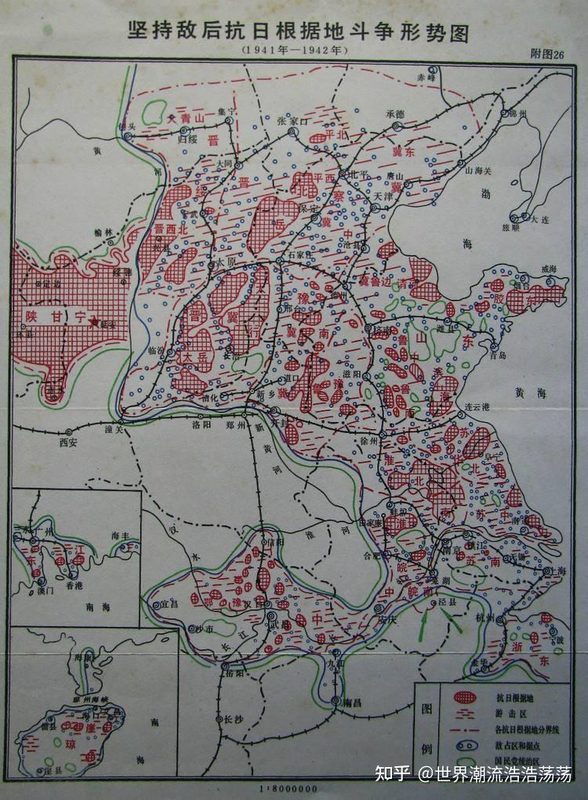
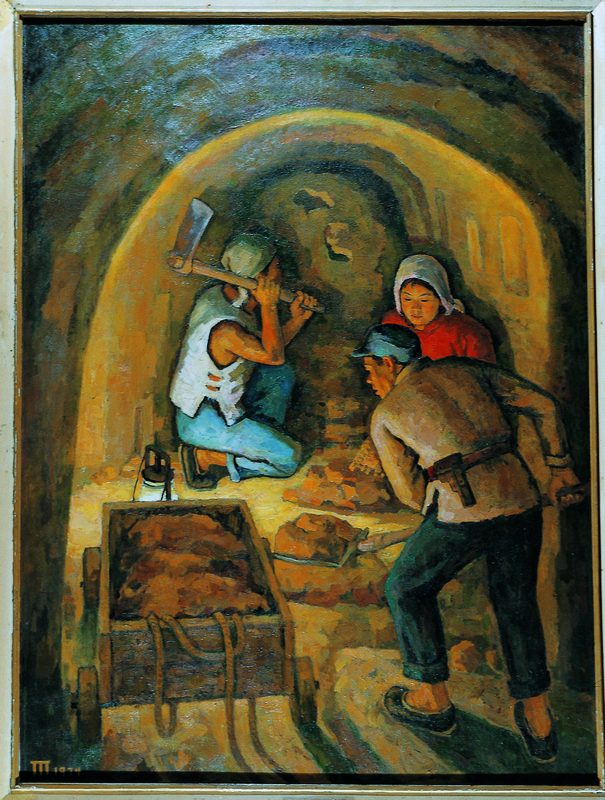
After the full-scale War of Resistance began, the anti-Japanese forces led by the Chinese Communist Party, including the Eighth Route Army and the New Fourth Army, pushed into the enemy's rear and waged guerrilla war. In November 1937 part of the Eighth Route Army's 115th Division, led by Nie Rongzhen, established the Shanxi-Chahar-Hebei base area centered on Mount Wutai, the first anti-Japanese base area the Party created behind enemy lines. The Eighth Route Army then created the Shanxi-Suiyuan, Shanxi-Hebei-Shandong-Henan and Shandong base areas, while the New Fourth Army built the southern Jiangsu, central Anhui and northern Jiangsu base areas in central China. By 1940 more than ten base areas had been set up in North, Central and South China, and the Eighth Route Army and New Fourth Army had grown to nearly 500,000 men. The base areas practiced the "three-thirds system" of government, in which Communists, left-wing progressives and moderates each held one third of the seats, uniting people of all strata against Japan. Soldiers and civilians developed tunnel warfare, mine warfare and other guerrilla tactics to strike at Japanese and puppet forces. In 1941–1942 the Japanese army launched fierce "mopping-up" campaigns against the base areas, applying the "three alls policy" of burning all, killing all and looting all, and the bases faced severe hardship. To overcome it, the base areas launched a production campaign, and the Eighth Route Army's 359th Brigade under Wang Zhen moved into Nanniwan and turned the desolate land into "a southern Jiangnan of northern Shaanxi." The battlefield behind enemy lines tied down and fought most of the Japanese forces in China and nearly all the puppet troops, and gradually became the main battlefield of the war. By the time of victory, the liberated areas covered nearly one million square kilometers and had a population of nearly 100 million.
References
Text and images from Wikipedia are used under CC BY-SA and their respective licenses