Republic of ChinaAD 1912–1949
Xian Xinghai Composes the Yellow River Cantata
1939
Written by Xian Xinghai in Yan'an in 1939 to lyrics by Guang Weiran, the Yellow River Cantata uses the river as a symbol of the Chinese nation and its unyielding resistance to Japan.
View on the timeline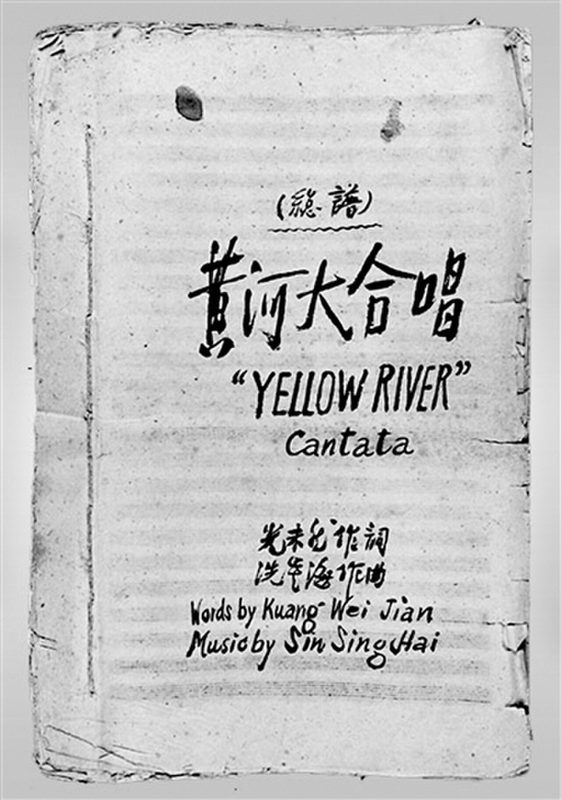
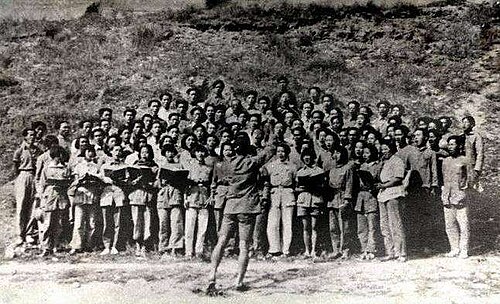
Xian Xinghai (1905–1945) had ancestral roots in Panyu, Guangdong, and was born in Macao. He loved music from childhood. In 1929 he went to Paris on a work-study program to study composition and later entered the Paris Conservatoire. After returning to China in 1935 he threw himself into the anti-Japanese national salvation movement and wrote many songs for the cause, including Song of the National Salvation Army and On the Taihang Mountains. In 1938 he came to Yan'an, where he served as head of the music department of the Lu Xun Academy of Arts, and the next year he joined the Chinese Communist Party. In early 1939 the poet Guang Weiran crossed the Yellow River with an anti-Japanese theater troupe and wrote the long poem Yellow River Chant. Deeply moved on hearing it, Xian Xinghai, though ill, set it to music in six days in a cave dwelling in Yan'an. The Yellow River Cantata premiered on 13 April 1939 in the main hall of the Shaanbei Public School in Yan'an to a powerful response, and Mao Zedong applauded warmly after watching it. The cantata has eight movements, including Song of the Yellow River Boatmen, Ode to the Yellow River and Defend the Yellow River. It portrays the majesty of the river and the suffering and resistance of the people on its banks, celebrates the long history and great spirit of the Chinese nation, and issues the call to arms "Defend our homeland! Defend the Yellow River! Defend North China! Defend all of China!" It spread quickly across the country and became an enduring work that lifted the people's fighting spirit during the War of Resistance. In 1940 Xian Xinghai went to the Soviet Union to compose music for a documentary, but was stranded there when the Soviet-German war broke out. He died of illness in Moscow in October 1945 at only 40. Mao Zedong wrote an inscription of mourning: "In mourning for Comrade Xian Xinghai, the people's musician."
References
Text and images from Wikipedia are used under CC BY-SA and their respective licenses