Republic of ChinaAD 1912–1949
Battle of Taierzhuang
March–April 1938
In March–April 1938 Li Zongren directed Chinese forces in fierce fighting at Taierzhuang, Shandong, killing over ten thousand Japanese troops, the largest victory on the front since the war began.
View on the timeline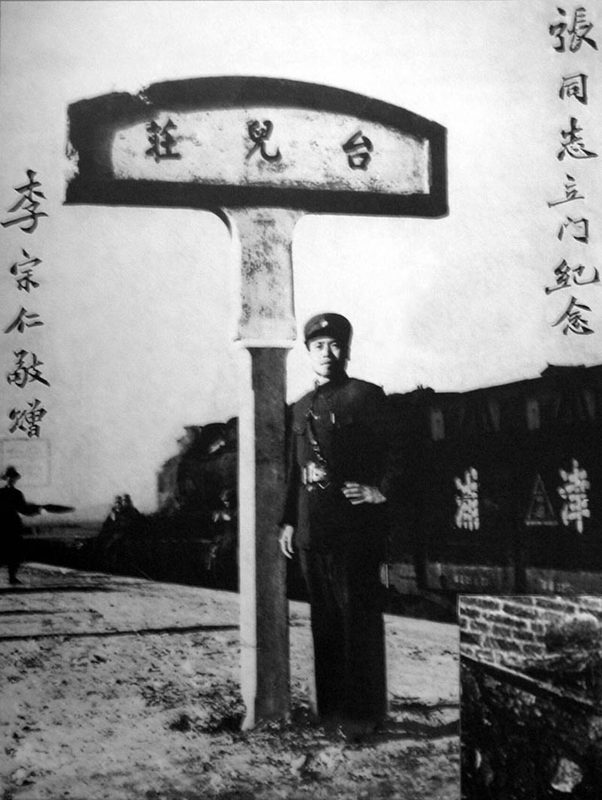
After taking Nanjing, Japan sought to open the Tianjin–Pukou Railway and link its northern and southern battlefields by pincer attack on Xuzhou from north and south. In March 1938 the Seya Detachment of the Japanese 10th Division advanced south along the Tianjin–Pukou line while part of the Fifth Division moved west along the Jiaozhou–Jinan line, intending to meet at Taierzhuang and then attack Xuzhou. Taierzhuang, on the north bank of the Grand Canal in southern Shandong, was the gateway to Xuzhou and of great strategic importance. Li Zongren, commander of the Fifth War Zone, directed Chinese forces to meet the Japanese there. Earlier, Chinese troops had blocked part of the Fifth Division at Linyi, and at Tengxian Wang Mingzhang, commander of the Sichuan Army's 122nd Division, held the county seat to the death and died heroically, buying time for the victory. In late March the Japanese attacked Taierzhuang fiercely, and Sun Lianzhong's Second Army Group defended it in fierce street fighting, the two sides contesting every house in the town in extremely brutal combat. Division commander Chi Fengcheng led stubborn resistance and organized suicide squads for night raids. While the defenders held on, Tang Enbo's army corps struck from outside and cut off the Japanese retreat; in early April the Chinese counterattacked along the whole front, the Japanese suffered heavy losses and the remnants broke out and fled. Chinese forces killed over ten thousand Japanese troops, winning the biggest victory on the frontal front since the nationwide resistance began, blunting Japanese arrogance and raising the nation's confidence. Afterwards Japan massed large forces to surround Xuzhou, and the Chinese withdrew, losing the city in May.
References
Text and images from Wikipedia are used under CC BY-SA and their respective licenses