Republic of ChinaAD 1912–1949
Mao Yisheng Completes the Qiantang River Bridge
1937
In 1937 Mao Yisheng completed the Qiantang River Bridge, the first modern double-deck road-and-rail bridge designed and built by Chinese; it was later blown up to hinder the Japanese advance.
View on the timeline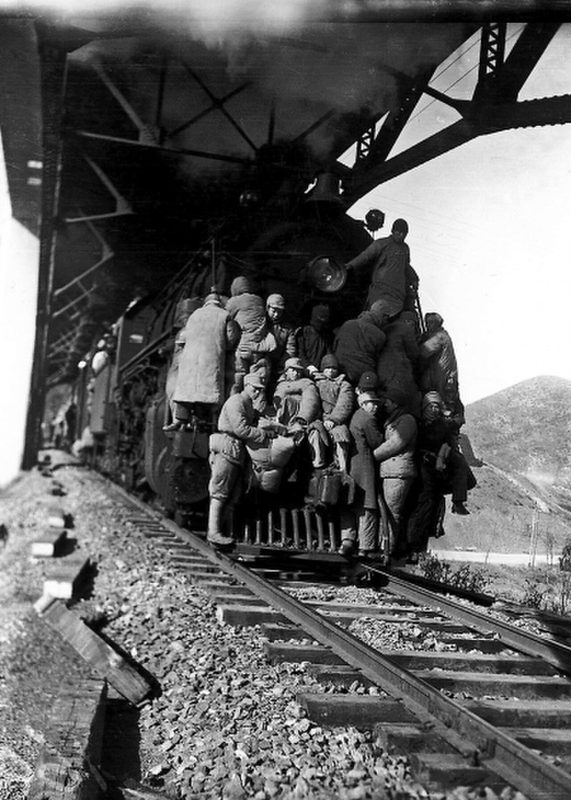
In the 1930s China urgently needed a bridge over the Qiantang River to link the Zhejiang–Jiangxi and Shanghai–Hangzhou railways. Nearly all large bridges in China had then been designed and built by foreigners, and the Qiantang's swift current, deep quicksand and tidal bore made bridge-building extremely hard; a popular saying held that “building a bridge over the Qiantang cannot be done”. The noted bridge engineer Mao Yisheng was appointed director of the bridge project office, in charge of design and construction. Mao Yisheng (1896–1989), from Zhenjiang, Jiangsu, earned a doctorate in engineering in the United States. During construction he drove piles with the “water-jet method”, using high-pressure water to wash away sand so that wooden piles sank to the riverbed; built piers on the riverbed with the “caisson method”; and erected steel girders by the “floating method”, using the rise and fall of the tide, overcoming many difficulties. In September 1937 the Qiantang River Bridge opened to traffic. It was the first modern double-deck road-and-rail bridge designed and built by Chinese, 1,453 meters long, with the road above and the railway below. In December 1937, as Japanese troops closed in on Hangzhou, Mao was ordered to blow up the bridge, only 89 days after it opened, to stop the Japanese advance south; in grief he wrote: “If we are sure to win the war, this bridge will surely be rebuilt.” After the war he oversaw its repair, and it reopened in full in 1953. The bridge is a milestone in Chinese bridge-building and showed the wisdom and strength of Chinese engineers. Mao later also took part in building the Wuhan Yangtze River Bridge and is hailed as the “father of modern Chinese bridges”.
References
Text and images from Wikipedia are used under CC BY-SA and their respective licenses