Republic of ChinaAD 1912–1949
Battle of Pingxingguan
September 1937
In September 1937 the Eighth Route Army's 115th Division ambushed Japanese troops at Pingxingguan, Shanxi, killing over a thousand; the first major Chinese victory since all-out resistance began.
View on the timeline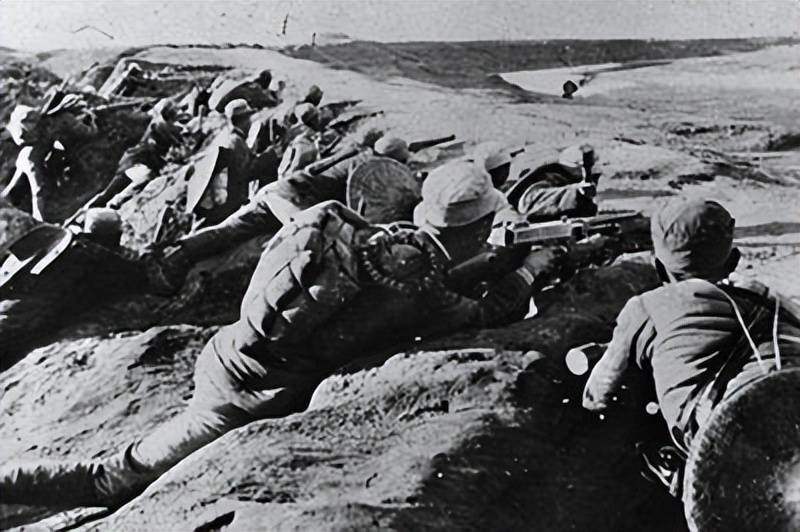
After being reorganized as the Eighth Route Army, the Red Army went quickly to the North China front, fighting alongside Kuomintang forces on the frontal battlefield while also penetrating behind enemy lines to wage guerrilla war widely. In September 1937 the elite Itagaki Division (Fifth Division) of the Japanese army advanced into Shanxi, seeking to break through the Inner Great Wall line and take Taiyuan. The National Government's Second War Zone organized the Pingxingguan campaign, and the Eighth Route Army was ordered to cooperate. The 115th Division, under division commander Lin Biao and deputy commander Nie Rongzhen, laid an ambush on the steep ground on both sides of the road northeast of Pingxingguan. In the early morning of 25 September, the rear units and supply convoy of the Fifth Division's 21st Brigade entered the ambush zone and the Eighth Route Army suddenly attacked. It was the first major Chinese victory since the nationwide resistance began; it broke the myth that the Japanese army was invincible, lifted the spirits of soldiers and civilians and raised the prestige of the Communist Party and the Eighth Route Army. Afterwards the 120th Division ambushed Japanese troops at Yanmenguan and the 129th Division raided Yangmingbao airfield at night, burning over twenty Japanese aircraft and effectively supporting the Battle of Xinkou on the frontal front. In the Battle of Xinkou, Ninth Army commander Hao Mengling and other generals died heroically, a successful example of two-party cooperation against Japan. In November Taiyuan fell, regular warfare in North China, mainly by Kuomintang troops, essentially ended, and guerrilla warfare, led chiefly by the Communist Eighth Route Army, became primary.
References
Text and images from Wikipedia are used under CC BY-SA and their respective licenses