Republic of ChinaAD 1912–1949
North China Incident and December 9th Movement
1935
In 1935 Japan staged the North China Incident, promoting “autonomy” of five northern provinces; on 9 December Beiping students marched to resist Japan, raising a new national upsurge.
View on the timeline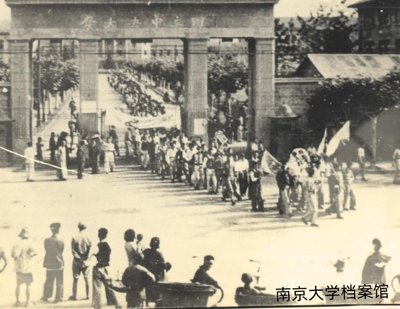
After occupying the Northeast, Japan reached out for North China. In January 1933 Japanese troops took Shanhaiguan, then Rehe, and attacked the passes of the Great Wall. Chinese troops resisted and fought the Japanese along the Great Wall at Xifengkou, Gubeikou and elsewhere. In May the National Government signed the Tanggu Truce with Japan, in effect acquiescing in Japan's occupation of the Northeast and Rehe. In 1935 Japan stepped up its aggression in North China, extracting most of the sovereignty in Hebei and Chahar through the He–Umezu and Qin–Doihara agreements and promoting “autonomy of the five northern provinces” in an attempt to split North China off as a second “Northeast”, the “North China Incident”. In November Japan installed the collaborator Yin Rugeng to set up the “East Hebei Anti-Communist Autonomous Council” in Tongxian. The Chinese nation faced an unprecedented crisis of survival: “The whole of North China has no room left for a quiet desk.” On 9 December 1935, under the leadership of the Party's Beiping temporary work committee, several thousand students from Beiping universities and middle schools marched in demonstration, shouting “Down with Japanese imperialism” and “Stop the civil war and unite against foreign aggression”. The December 9th Movement drew responses across the country, raising a new national upsurge of resistance to Japan. In the same year the Party issued the August 1st Declaration calling for an end to civil war and united resistance; in December the Central Committee held the Wayaobao Conference, setting the policy of building an anti-Japanese national united front. The movement advanced the awakening of the Chinese nation and marked a new stage in the anti-Japanese national salvation movement.
References
Text and images from Wikipedia are used under CC BY-SA and their respective licenses