Republic of ChinaAD 1912–1949
Nie Er Composes “March of the Volunteers”
1935
In 1935 “March of the Volunteers”, words by Tian Han and music by Nie Er, was sung across China as a film theme song, and later became the national anthem of the People's Republic.
View on the timeline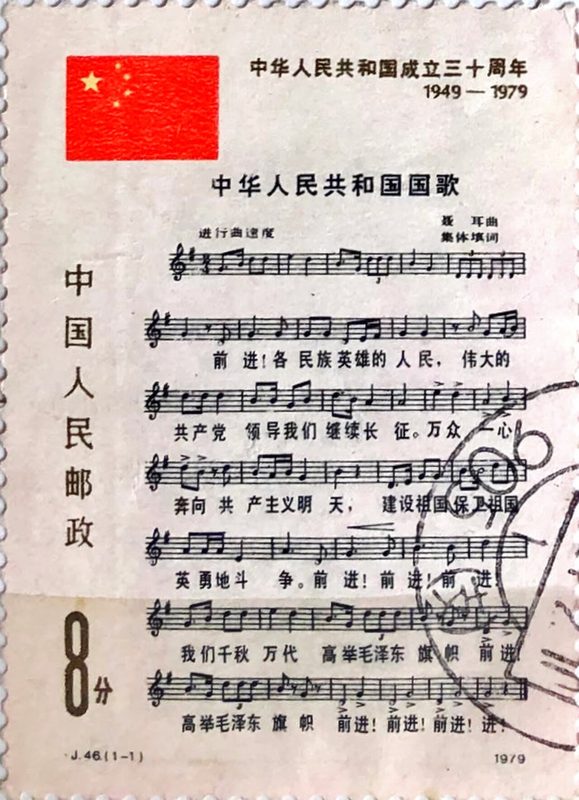
After the Mukden Incident the Chinese nation faced a grave crisis; encouraged by the Communist Party, revolutionary art and literature flourished, and left-wing artists produced many works on resisting Japan and saving the nation. Nie Er (1912–1935), original name Nie Shouxin, was born in Kunming, Yunnan, loved music from childhood, went to Shanghai in 1930, joined left-wing musical activities and in 1933 joined the Communist Party. He composed over thirty songs including “Graduation Song” and “Song of the Newspaper Boy”. In 1934 the playwright Tian Han wrote the lyrics for the theme song of the film Children of Troubled Times, and was soon arrested by the Kuomintang authorities. In early 1935 Nie volunteered to set the song to music. The film was released in May 1935, and its theme song “March of the Volunteers”, with its opening “Arise! You who refuse to be slaves! With our flesh and blood, let us build our new Great Wall”, expressed in a stirring, majestic melody the Chinese nation's unyielding spirit of resistance. It spread quickly across the country and became a bugle call of the resistance movement. In July 1935 Nie drowned while swimming off the coast at Fujisawa, Japan, aged only 23. During the War of Resistance the song was sung widely at home and abroad, inspiring the Chinese people's heroic resistance. In September 1949 the first plenary session of the Chinese People's Political Consultative Conference decided that, until a national anthem was formally adopted, “March of the Volunteers” would serve as the anthem; in 1982 the National People's Congress formally confirmed it, in 2004 it was written into the Constitution, and in 2017 the NPC Standing Committee passed the National Anthem Law. Nie Er's tomb is at Xishan, Kunming, Yunnan.
References
Text and images from Wikipedia are used under CC BY-SA and their respective licenses