Republic of ChinaAD 1912–1949
Zunyi Conference
January 1935
In January 1935 the Central Committee met at Zunyi and established Mao Zedong's leadership of the Party and Red Army, a turning point of life-and-death importance in Party history.
View on the timeline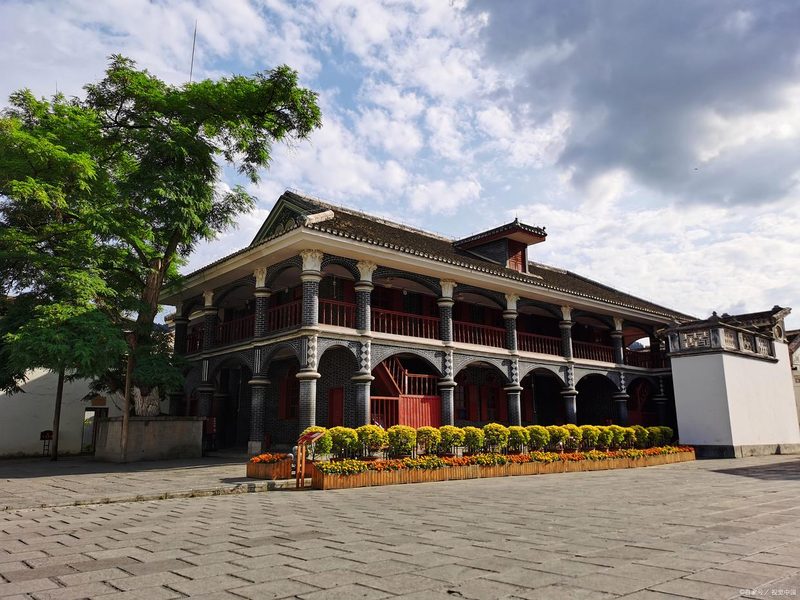
After the Battle of the Xiang River, Bo Gu, Otto Braun and others still insisted on joining the Second and Sixth Army Groups in western Hunan, though the enemy had massed heavy forces on the way. At this critical moment Mao Zedong proposed changing the original plan and marching into Guizhou, where Kuomintang control was weak. In December 1934 the Central Committee held meetings at Tongdao, Hunan, and Liping, Guizhou, and accepted his proposal. In January 1935 the Red Army forced a crossing of the Wu River and took Zunyi. From 15 to 17 January 1935 the Central Committee held an enlarged Politburo meeting at Zunyi, the “Zunyi Conference”. It dealt with the decisive military and organizational questions of the time, criticized the military errors of Bo Gu and Otto Braun, affirmed Mao's correct military views, elected Mao to the Politburo Standing Committee and removed Bo and Braun from supreme military command. Afterwards Zhang Wentian replaced Bo as the Party's top responsible person, and soon a new three-man military command group of Mao Zedong, Zhou Enlai and Wang Jiaxiang was formed. At an extremely critical juncture the conference saved the Party, the Red Army and the Chinese revolution, and in effect established Mao's leadership of the Party Central Committee and the Red Army. It was the first time the Party independently applied the basic principles of Marxism to resolve its own line, policies and tactics, marking its passage from infancy to maturity and a turning point of life-and-death importance in Party history. After Zunyi the Red Army, under Mao and others, moved toward victory. The conference site in Zunyi, Guizhou, is a nationally protected historic site.
References
Text and images from Wikipedia are used under CC BY-SA and their respective licenses