Republic of ChinaAD 1912–1949
January 28 Incident and Founding of Manchukuo
1932
On 28 January 1932 Japanese troops attacked Shanghai and the 19th Route Army resisted, the “January 28 Incident”; in March Japan set up the puppet state of Manchukuo under Puyi.
View on the timeline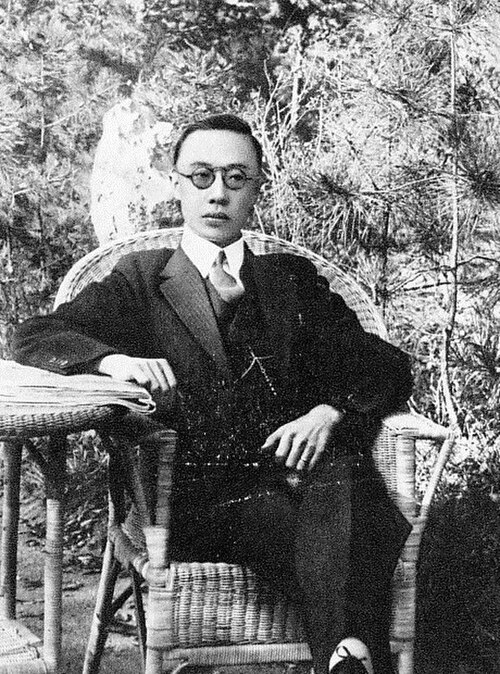
After the Mukden Incident, Japan stirred up trouble in Shanghai to divert international attention from its occupation of the Northeast. On the night of 28 January 1932 Japanese troops attacked Zhabei in Shanghai, the January 28 Incident. The Kuomintang's 19th Route Army stationed in Shanghai, under commander-in-chief Jiang Guangnai and army commander Cai Tingkai, rose to resist, and Zhang Zhizhong's Fifth Army later came to reinforce. Chinese troops fought stubbornly, and the Japanese were forced to send reinforcements several times and replace their commander three times. Because the National Government held to a policy of compromise, and because Japanese troops landed at Liuhe and threatened to outflank them, the Chinese forces were forced to withdraw. In May the government signed the Shanghai Ceasefire Agreement with Japan. The Shanghai resistance dealt a heavy blow to Japanese arrogance and inspired the nation's anti-Japanese enthusiasm. Meanwhile Japan hastened to set up a puppet regime in the Northeast. In March 1932 it installed Puyi, the last Qing emperor, in Changchun as head of the puppet state of Manchukuo, with Changchun as its “New Capital”; Puyi was “Chief Executive”, becoming “Emperor” in 1934. All real power in Manchukuo was in the hands of the Kwantung Army, and it was an instrument of Japanese rule; the people of the Northeast suffered long colonial rule and cruel enslavement. Japan also sent large numbers of “development group” settlers to the Northeast and set up Unit 731 in Harbin to conduct biological warfare research and human experiments, committing monstrous crimes. The League of Nations Assembly passed a resolution not recognizing Manchukuo, and Japan then announced its withdrawal from the League.
References
Text and images from Wikipedia are used under CC BY-SA and their respective licenses