QingAD 1644–1912
Huanghuagang Uprising
April 1911
In April 1911 Huang Xing led revolutionaries in an uprising at Guangzhou, storming the Viceroy's office before being overwhelmed; 72 martyrs' remains were later buried together at Huanghuagang.
View on the timeline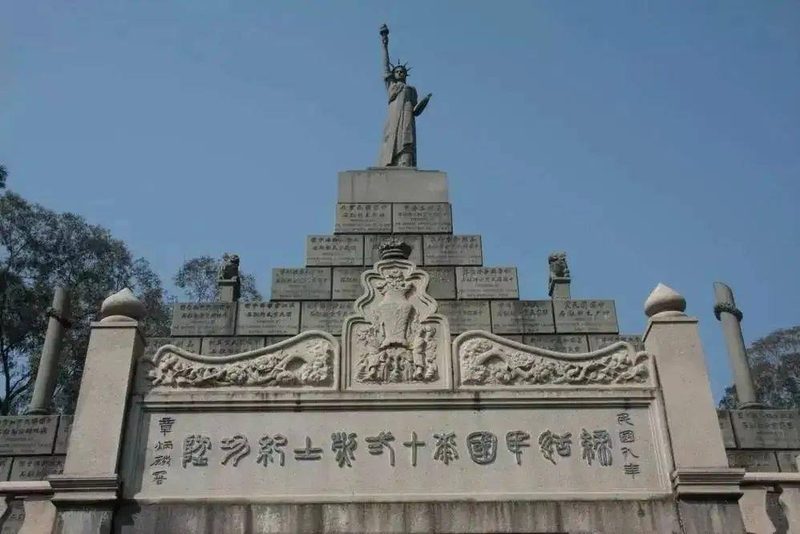
After a series of uprisings launched since the founding of the Tongmenghui failed, revolutionaries decided to concentrate their strength on one large-scale uprising in Guangzhou. In 1910, Sun Yat-sen, Huang Xing, Zhao Sheng and others met in Penang to plan it. Afterwards Sun went to Europe and the Americas to raise funds from overseas Chinese, while Huang Xing set up a planning office in Hong Kong as the command center. Word leaked out and the Qing government tightened its guard. On 27 April 1911, before preparations were complete, Huang Xing led more than a hundred members of a suicide squad in an attack on the office of the Viceroy of Guangdong and Guangxi, and Viceroy Zhang Mingqi fled. The rebels were outnumbered in fierce fighting and suffered heavy losses; the uprising failed. Huang Xing lost two fingers of his right hand and made his way back to Hong Kong wounded. Before the uprising Lin Juemin wrote his farewell letter “To My Wife” (Yu Qi Shu), expressing his resolve to sacrifice his personal happiness “to seek lasting happiness for all people”; he was captured and died bravely at the age of 24. Afterwards the revolutionary Pan Dawei took the risk of collecting the remains of 72 martyrs and burying them together at Honghuagang outside Guangzhou, renaming it “Huanghuagang”. The uprising is therefore called the Huanghuagang Uprising, and the dead the “72 Martyrs of Huanghuagang” (later research found more than eighty named victims). Sun Yat-sen said of the uprising that it “could shake heaven and earth and move the spirits, and deserves to share a lifespan with the Wuchang Uprising”. Although it failed, it greatly stirred revolutionary enthusiasm and hastened a nationwide revolutionary upsurge; the Wuchang Uprising broke out six months later.
References
Text and images from Wikipedia are used under CC BY-SA and their respective licenses