QingAD 1644–1912
Zhan Tianyou Builds the Beijing–Zhangjiakou Railway
1905–1909
In 1905 the Qing decided to build the Beijing–Zhangjiakou Railway itself with Zhan Tianyou as chief engineer; using methods such as the zigzag line, it opened two years ahead of schedule in 1909.
View on the timeline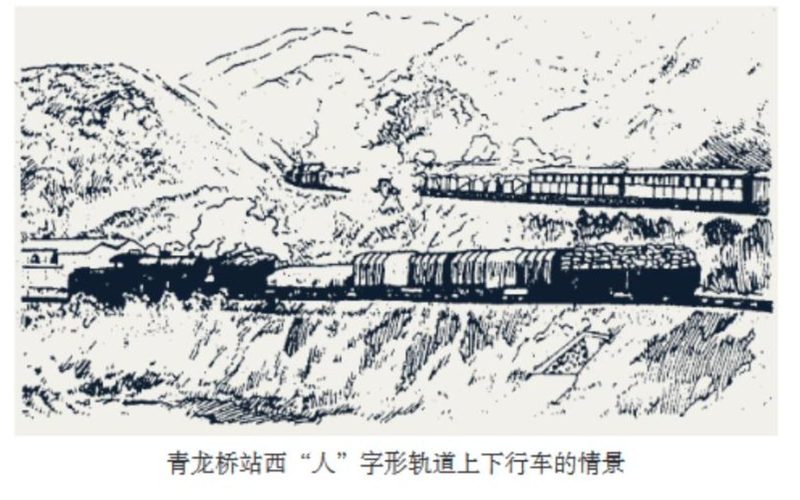
The Beijing–Zhangjiakou Railway runs about 200 kilometers from Fengtai in Beijing to Zhangjiakou in Hebei and is a main route linking North and Northwest China. Britain and Russia competed for the right to build it. In 1905 the Qing decided to build it itself and named Zhan Tianyou chief engineer. Some foreigners sneered that “the engineer who can build this line in China has not yet been born.” Zhan Tianyou (1861–1919), from Nanhai, Guangdong, went to the US in 1872 as one of the first Chinese Educational Mission boys, graduated in civil engineering from Yale, and long worked on railway building after returning. The line had to cross the steep mountains around Juyongguan and Badaling, making the work very hard. Zhan personally led the survey. For the Juyongguan tunnel he had workers dig from both ends toward the middle; for the longest, the Badaling tunnel, he used the “shaft method,” sinking a shaft in the middle and digging toward both ends to speed the work. To get trains up the steep slope from Nankou to Badaling he designed a zigzag line with one locomotive pulling and one pushing, easing the gradient, and he also introduced automatic couplers for safety. Under Zhan’s direction the railway overcame shortages of funds and technical difficulties and opened in 1909, two years ahead of schedule. It was the first trunk railway designed and built by Chinese themselves, showed the wisdom and strength of the Chinese people, and made Zhan Tianyou known as the “Father of China’s Railways.” In 2019 the Beijing–Zhangjiakou high-speed railway opened, echoing the original line of a century earlier.
References
Text and images from Wikipedia are used under CC BY-SA and their respective licenses