QingAD 1644–1912
Yan Fu Translates Evolution and Ethics
1898
In 1898 Yan Fu published his translation Tianyan Lun (Evolution and Ethics), spreading the ideas of “survival of the fittest” and urging the nation to save itself, influencing a generation of Chinese.
View on the timeline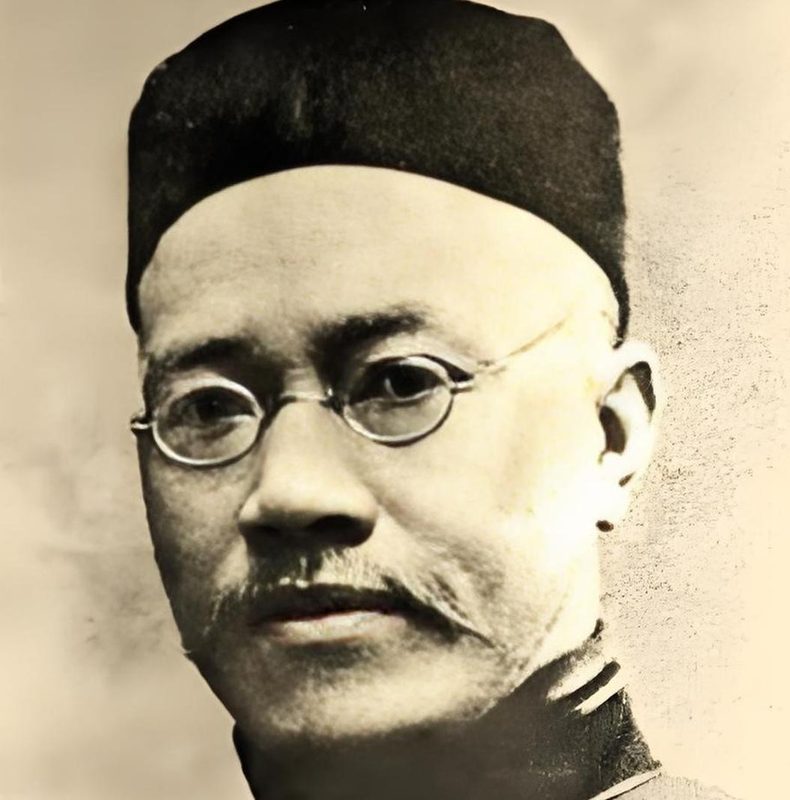
Yan Fu (1854–1921), courtesy name Jidao, was from Houguan (present-day Fuzhou), Fujian. He studied navigation at the Fuzhou Naval Academy, and in 1877 was sent to study naval science in Britain. After returning in 1879 he long taught at the Beiyang Naval Academy in Tianjin and later became its head. During the Sino-Japanese War he published essays in Tianjin’s Zhi Bao such as On the Urgency of World Change, On Strength and Refuting Han Yu, advocating “strengthening the people’s power, opening their minds and renewing their morals” and supporting reform. In 1897 he founded the newspaper Guowen Bao in Tianjin to spread reform ideas. Based on Thomas Huxley’s Evolution and Ethics, he wrote Tianyan Lun in classical Chinese, as a free translation with his own commentary, and it was published in 1898. The book spread Darwin’s theory of evolution and the idea of “survival of the fittest,” applied it to human society, and warned that unless China reformed and strengthened itself it would perish, giving theoretical grounds for reform. It caused a strong reaction; phrases such as “struggle for existence” and “natural selection” became household sayings, and many young people took names like “Jingcun” or “Zhi” from them; Hu Shi’s name came from this. Yan Fu also translated Adam Smith’s The Wealth of Nations, Montesquieu’s The Spirit of the Laws and Mill’s On Liberty, introducing Western political, economic and philosophical thought systematically. In translating he proposed the standards of “fidelity, clarity and elegance,” which deeply influenced Chinese translation.
References
Text and images from Wikipedia are used under CC BY-SA and their respective licenses