QingAD 1644–1912
Sun Yat-sen Founds the Revive China Society
November 1894
In November 1894 Sun Yat-sen founded the Revive China Society in Honolulu, pledging to “expel the Tartars, restore China, and establish a united government”; it was China’s first revolutionary group.
View on the timeline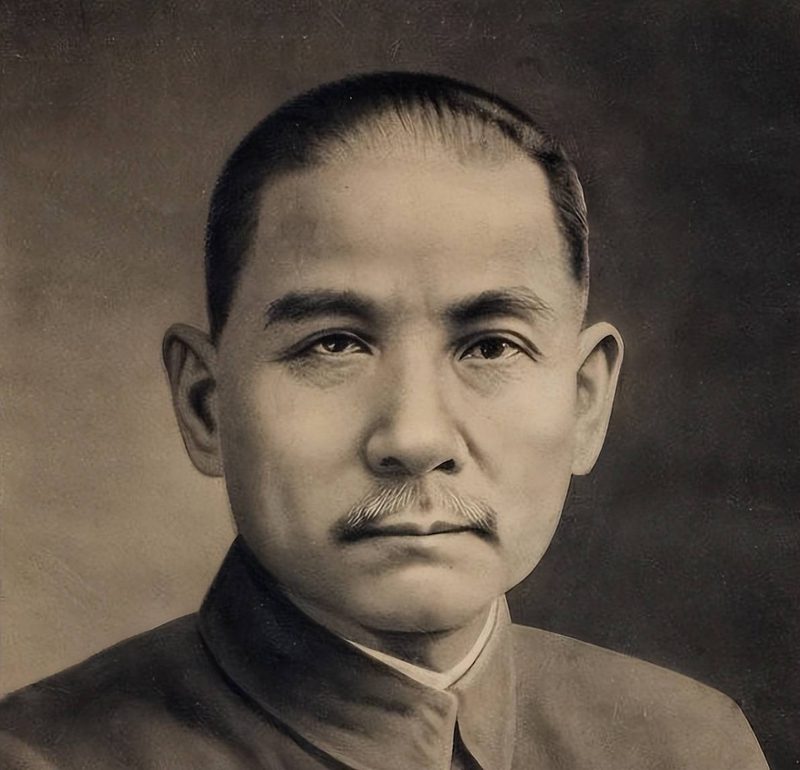
Sun Yat-sen (1866–1925), personal name Wen, courtesy name Yixian, was from Xiangshan (present-day Zhongshan), Guangdong. While living in Japan doing revolutionary work he used the alias “Nakayama Shō” (Zhongshan Qiao), and so people later called him Sun Zhongshan. As a boy he loved stories of the Taiping and praised Hong Xiuquan as “the first anti-Qing hero.” At twelve he went to Honolulu to join his elder brother Sun Mei, received a Western education, and later studied medicine in Hong Kong and practiced after graduating. Seeing Qing corruption and foreign aggression, he gradually resolved to save the nation, “using the school as a place to spread ideas and medicine as a way into the world.” In 1894 Sun submitted a petition to Li Hongzhang, Governor-General of Zhili, proposing reforms so that “people can make the best of their talents, land of its benefits, things of their uses, and goods flow freely,” but it was ignored; he gave up on reform and resolved to overthrow the Qing by revolution. In November 1894, in Honolulu, he rallied overseas Chinese and founded the Revive China Society (Xingzhonghui), China’s first bourgeois revolutionary group, with the oath to “expel the Tartars, restore China, and establish a united government.” In 1895 the society’s headquarters opened in Hong Kong and planned the Guangzhou uprising, which failed when the plot leaked; Lu Haodong and others were captured and killed, and Sun was wanted by the Qing and went into exile. In 1896 he was detained by the Qing legation in London and rescued; this “London kidnapping” made him a world-famous revolutionary. The society’s founding marks the beginning of China’s bourgeois democratic revolution, and in 1905 it joined others to form the Tongmenghui.
References
Text and images from Wikipedia are used under CC BY-SA and their respective licenses