QingAD 1644–1912
The First Sino-Japanese War
1894–1895
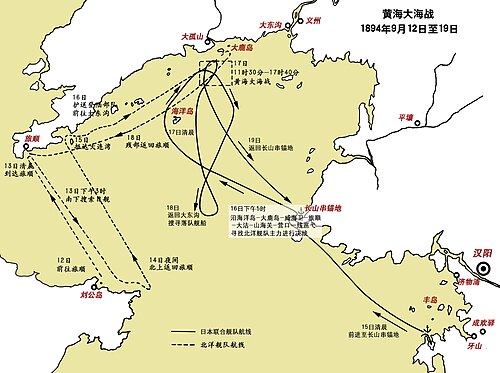
Japan provoked the First Sino-Japanese War in 1894; the Beiyang Fleet was mauled in the Battle of the Yellow Sea, where Deng Shichang died, and destroyed when Weihaiwei fell in 1895.
View on the timeline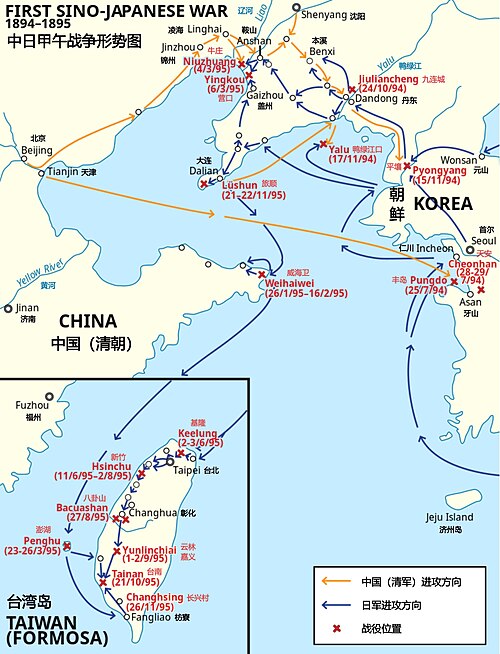
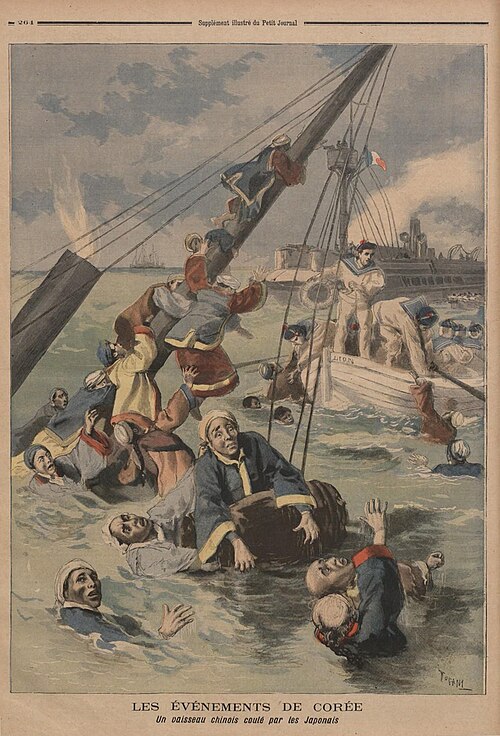
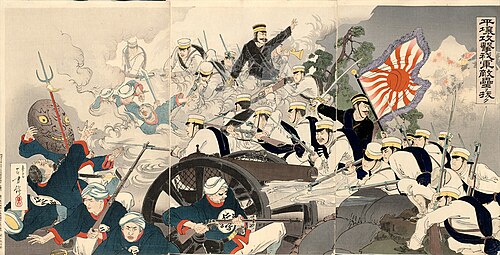
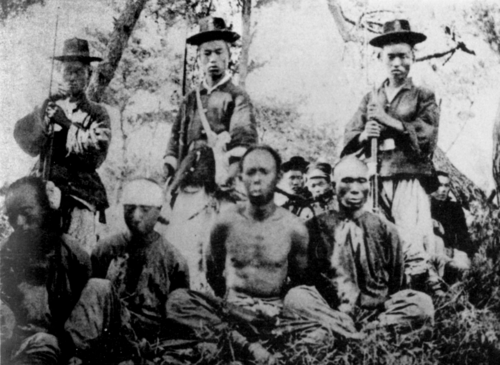
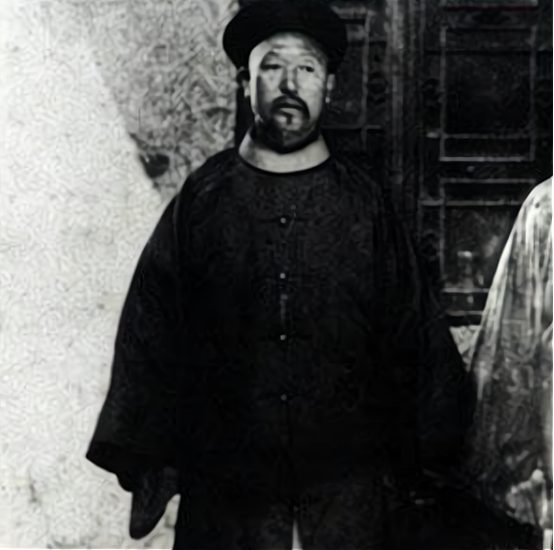
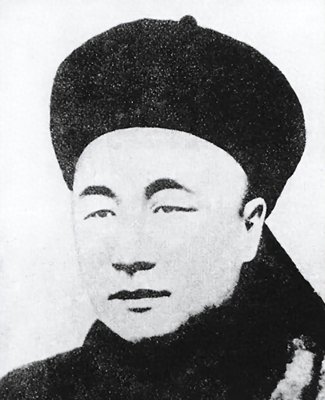
After the Meiji Restoration Japan rapidly embarked on foreign expansion, adopting a “continental policy” centered on invading Korea and China. In 1894 the Donghak uprising broke out in Korea; at the Korean king’s request the Qing sent troops to help suppress it, and Japan seized the chance to send large forces. After the uprising ended Japan refused to withdraw and kept adding troops, deliberately provoking war. In July 1894 the Japanese fleet attacked a Chinese troopship off Pungdo, Korea, starting the war. In September Japanese forces attacked Pyongyang, where Qing general Zuo Baogui was killed and commander Ye Zhichao fled, and Japan took all of Korea. The same month the Beiyang Fleet fought the Japanese Combined Fleet in the Yellow Sea; Deng Shichang, captain of the Zhiyuan, led his men bravely, and with ammunition nearly gone and the ship badly damaged, he ordered full speed at the Japanese ship Yoshino, but the Zhiyuan sank, and Deng and most of the crew died heroically. Li Hongzhang, to preserve his strength, ordered the fleet into Weihaiwei and forbade it to sail out. In October Japanese forces invaded Northeast China in two columns, and in November took Lüshun, carrying out the “Lüshun Massacre” of over 20,000 Chinese residents. In early 1895 the Japanese attacked Weihaiwei by land and sea; the Beiyang Fleet was besieged, Admiral Ding Ruchang refused to surrender and killed himself, and the fleet was wiped out. The defeat proclaimed the failure of the Self-Strengthening Movement, and the Qing sued for peace and signed the humiliating Treaty of Shimonoseki. The war brought an unprecedented national crisis and awakened the Chinese people’s national consciousness.
References
Text and images from Wikipedia are used under CC BY-SA and their respective licenses