QingAD 1644–1912
British and Russian Designs on Tibet; Two British Invasions
1870–1909
In the late 19th century Britain and Russia vied for Tibet; Britain invaded in 1888 and 1903, and Tibetan troops and people fought bravely at Lungthur and Gyantse.
View on the timeline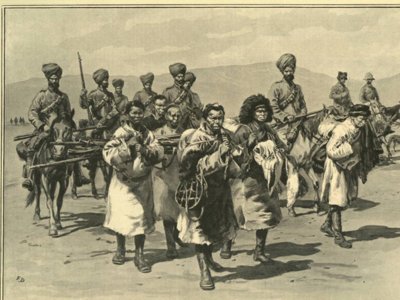
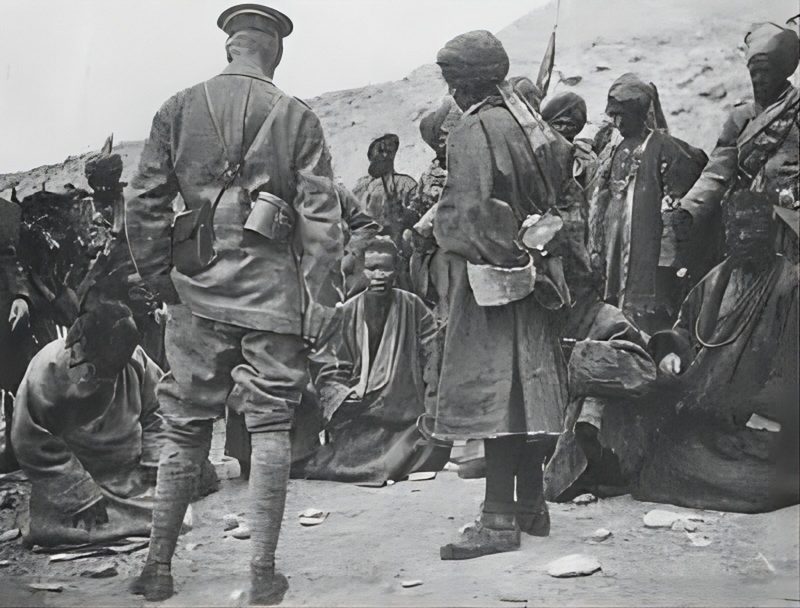
Tibet lies on China’s southwestern frontier and is strategically important. In the late 19th century both Britain and Russia coveted it. Between 1870 and 1909 tsarist Russia sent a dozen or more so-called “expeditions” into Tibet to gather intelligence. Britain, based in India, tried to make Tibet its sphere of influence and block Russia’s southward advance. In 1888 Britain used the pretext that Tibet had set up a post at Lungthur “across the border” to start its first invasion. Tibetan troops and people resisted at Lungthur and elsewhere but were defeated by inferior weapons. In 1890 the Qing Amban Shengtai signed the Sino-British Convention relating to Sikkim and Tibet, recognizing a British protectorate over Sikkim and fixing the Sikkim-Tibet boundary; in 1893 the Regulations regarding Trade, Communication and Pasturage opened Yadong as a trade mart. At the end of 1903 Britain sent Francis Younghusband to invade again. In 1904 Tibetan troops and people resisted stubbornly at Quxixiangu, Gyantse and elsewhere; the defense of Gyantse Dzong lasted over three months, and when ammunition and food ran out the defenders refused to surrender, many leaping off the cliffs to their deaths. British troops entered Lhasa and the 13th Dalai Lama was forced to flee. Britain forced the Tibetan authorities to sign the Treaty of Lhasa, but the Qing refused to recognize it. In 1906 China and Britain signed the Convention between Great Britain and China Respecting Tibet, in which Britain promised not to annex Tibetan territory or interfere in Tibetan government. In 1907 Britain and Russia agreed to recognize China’s “suzerainty” over Tibet. The Tibetan people’s anti-aggression struggle defended national sovereignty, and the Gyantse Dzong site is now an important patriotic education base.
References
Text and images from Wikipedia are used under CC BY-SA and their respective licenses