QingAD 1644–1912
Return of the Torghut Mongols
1771
In 1771 the Torghuts, who had migrated west to the Volga, could no longer bear Russian oppression and led by Ubashi made a perilous journey back east, where the Qing government resettled them.
View on the timeline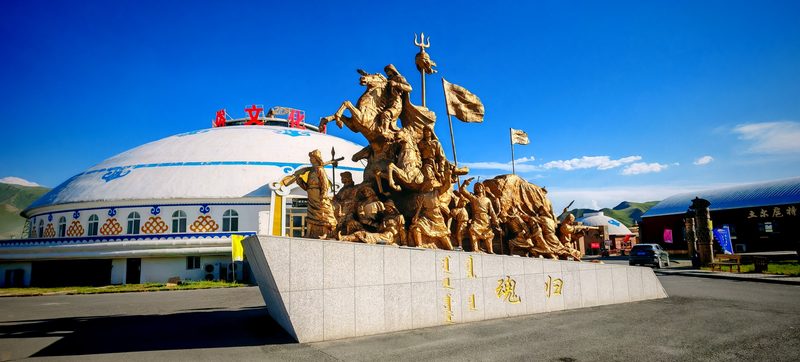
The Torghuts were a division of the Western Mongols (Oirat Mongols) of China, originally nomadic around Tacheng in Xinjiang. Around the 1630s, after conflicts with the Dzungars, their chief Khoo Orlug led them west to graze along the lower Volga. They kept in touch with the Qing and repeatedly sent envoys with tribute. Tsarist Russia steadily tightened its control and oppression, forcing their young men into its wars with heavy casualties and trying to control them completely in politics and religion. Unable to endure this, the Torghuts resolved to return to their homeland. In January 1771 their young leader Ubashi led about 170,000 people in burning their tents and setting out east. On the way they were pursued and blocked by Russian troops and Cossack cavalry and suffered cold, plague and hunger, with great losses of people and livestock. After more than half a year and a journey of over ten thousand li, only about 70,000 reached Ili. The Qing government resettled them well, providing livestock, grain, tea, clothing and felt tents as relief and assigning them pastures with abundant water and grass. The Qianlong Emperor received Ubashi at the Chengde Mountain Resort and made him Khan Zhuolitu, and in the Putuo Zongcheng Temple he erected two steles recounting the event. The Torghuts’ return is regarded as a glorious chapter in the consolidation and development of a multi-ethnic state; their descendants still live in places such as Hejing in Xinjiang.
References
Text and images from Wikipedia are used under CC BY-SA and their respective licenses