QingAD 1644–1912
Flourishing Handicrafts and Commerce in the Early Qing
Early Qing
In the early Qing, silk, cotton and porcelain industries thrived and larger workshops appeared; commerce boomed, and Shanxi merchants founded draft banks while merchant groups were active nationwide.
View on the timeline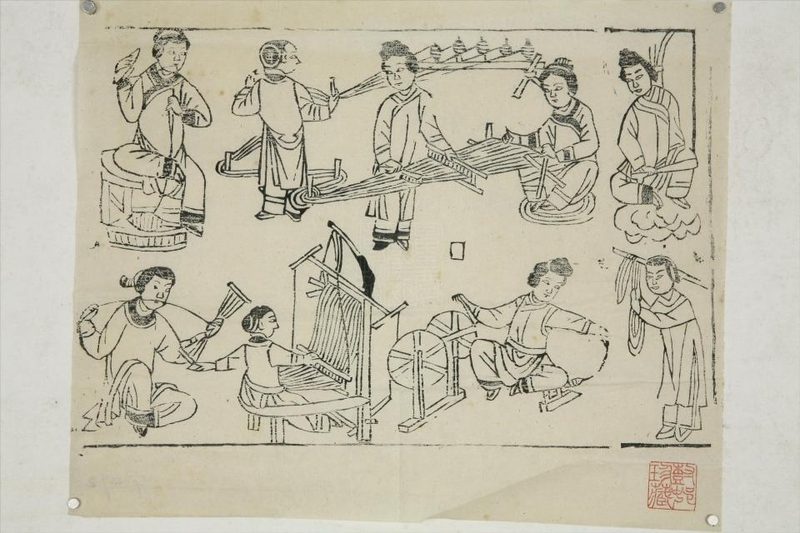
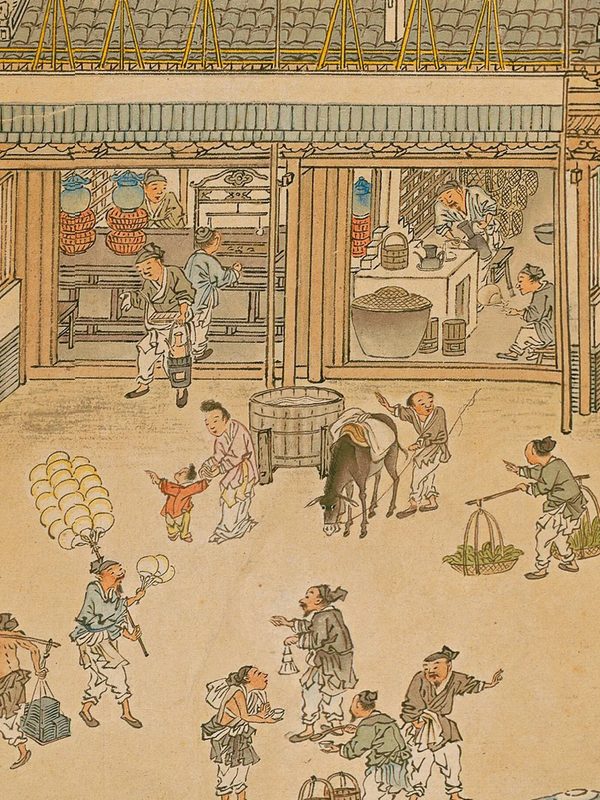
In the early Qing, as agriculture recovered, handicrafts and commerce also flourished. Silk and cotton weaving, dyeing, mining and smelting, porcelain, sugar and tea industries all grew greatly, with many fine products. Fairly mature workshops had appeared, some on a considerable scale: in Jiangning (present-day Nanjing), the loom owners Li Biandan and Li Dongyang each had five or six hundred looms; Foshan’s ironworking was so developed that it was said “Foshan’s iron goods are found everywhere”; Jingdezhen porcelain continued to prosper, and the famille-rose and enamel wares of the Yongzheng and Qianlong reigns were exquisite; Yunnan’s copper mines were huge, often employing tens of thousands. Commercial cities and market towns multiplied. Beijing, Nanjing, Suzhou, Hangzhou, Yangzhou, Guangzhou and Hankou were bustling centers, and Hankou, Foshan, Jingdezhen and Zhuxianzhen were known as the “Four Famous Towns.” Xu Yang’s Qianlong-era painting Prosperous Suzhou (Gusu Fanhua Tu) depicts the city’s bustle. Merchant groups were very active, the Shanxi and Huizhou merchants being the strongest, along with those of Shaanxi, Guangdong and Fujian. Besides trading in salt, tea, grain and cloth, Shanxi merchants ran money shops and pawnshops and later founded “piaohao” (draft banks) for remittances, deposits and loans; the Rishengchang in Pingyao, Shanxi, set up around 1823, is regarded as China’s first, and for a time Shanxi draft banks “remitted funds across the land.” However, the Qing policy of promoting agriculture and restraining commerce placed many limits on trade and industry, and together with the closed-door policy, capitalist sprouts developed slowly.
References
Text and images from Wikipedia are used under CC BY-SA and their respective licenses