QingAD 1644–1912
Early Qing Agriculture ("When Huguang Has a Harvest, the Realm Has Enough")
Early Qing
The early Qing promoted land reclamation and merged the poll tax into the land tax; farmland grew, maize and sweet potato spread, and Huguang became the granary of China.
View on the timeline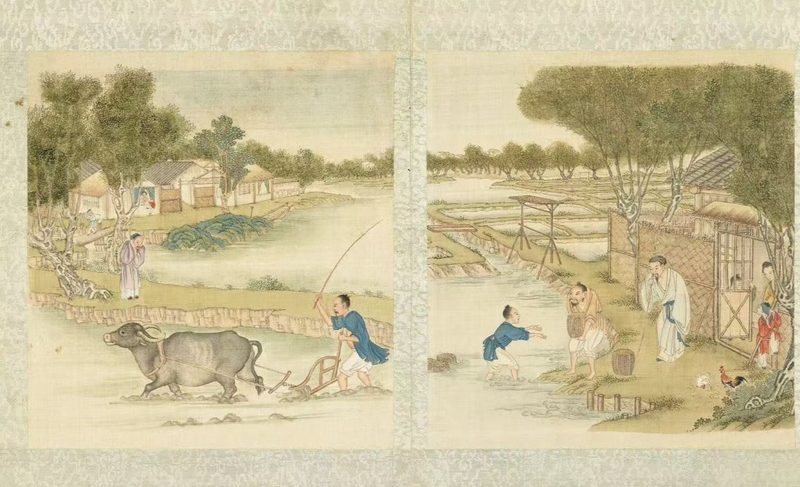
The great upheavals at the end of the Ming seriously damaged the economy, and the early Qing rulers recognized that restoring and developing agriculture was "the great plan of the state". The Shunzhi, Kangxi, Yongzheng and Qianlong emperors all valued farming and vigorously promoted land reclamation, exempting newly opened land from taxes for a number of years to encourage drifters to settle; they built irrigation works and managed the Yellow and Huai Rivers; and under Kangxi the "renamed land" policy gave part of the Ming princes' land to those who had been farming it and recognized it as theirs. In 1712 the Kangxi Emperor declared that the population count of 1711 would be the fixed basis for the poll tax, and that thereafter "added population will never add to the tax". Under Yongzheng the "land-and-poll tax merger" was carried out nationwide, spreading the poll tax evenly into the land tax, abolishing the head tax of over two thousand years and easing the burden on landless and land-poor peasants while also loosening the government's control over peasants' persons. These measures soon restored and developed agricultural output, and by the mid-Qianlong reign China's cultivated land exceeded 700 million mu. Maize and sweet potato, native to the Americas, spread widely in the Qing, opening up many mountain areas and greatly raising grain output. Many southern regions grew double-crop rice, some even three crops a year. Huguang (present-day Hubei and Hunan) became an important national granary, and the saying "When Huguang has a harvest, the realm has enough" was widely repeated. Cash crops such as cotton, sugarcane, tobacco, tea and mulberry were also widely grown, and frontier regions such as the northeast and Taiwan were further developed.
References
Text and images from Wikipedia are used under CC BY-SA and their respective licenses