MingAD 1368–1644
The Travel Diaries of Xu Xiake
Late Ming
Over thirty years Xu Xiake traveled much of China; his diaries became The Travel Diaries of Xu Xiake, with limestone-landform studies among the world's most advanced of the time.
View on the timeline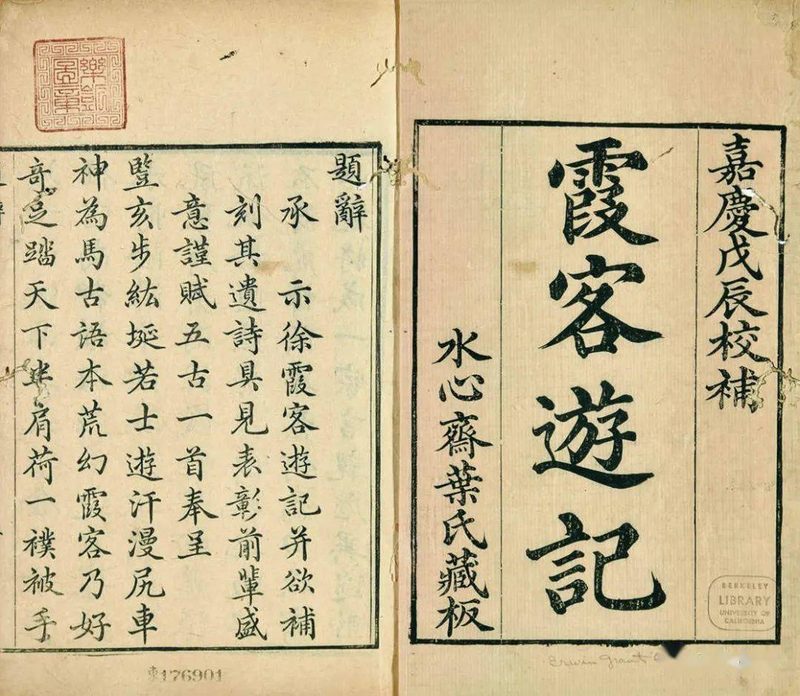
Xu Xiake (1587–1641), given name Hongzu, art name Xiake, was from Jiangyin in Nanzhili (present-day Jiangyin, Jiangsu). From childhood he loved books on geography, history and travel and exploration, set the ambition that "a real man should be at the blue sea in the morning and Cangwu in the evening", and was unwilling to take the examination path to office. With his mother's support he began traveling at 22, and over more than thirty years his footprints covered a dozen present-day provinces and regions, much of China. He traveled mainly on foot, often climbing cliffs and entering caves in the face of great danger. In 1636 Xu began his last and longest "ten-thousand-li journey", going through Zhejiang, Jiangxi, Hunan, Guangxi and Guizhou to Yunnan, as far as Tengchong in western Yunnan; in 1640 he was brought home ill and died the next year. He insisted on writing a diary every day recording his observations, leaving over 600,000 characters of travel material, later compiled as The Travel Diaries of Xu Xiake. The book records in detail natural phenomena such as geography, hydrology, geology and plants in each place, along with economy, transport, towns and villages and local customs. He systematically surveyed and described the limestone (karst) landforms of Guangxi, Guizhou and Yunnan and analyzed the origin of caves and peaks, ahead of comparable European studies; he also established that the Jinsha River is the upper course of the Yangtze, correcting the old view that "the Min Mountains are the source of the Yangtze". Xu's descriptions are concrete and vivid, blending scene and feeling, and the Diaries are both a great geographic work and a literary classic.
References
Text and images from Wikipedia are used under CC BY-SA and their respective licenses