MingAD 1368–1644
Portuguese Gain Residence at Macao
1553
In 1553 Portuguese colonists, claiming they needed to dry their cargo, bribed local officials for the right to stay at Macao, though sovereignty over Macao remained with China.
View on the timeline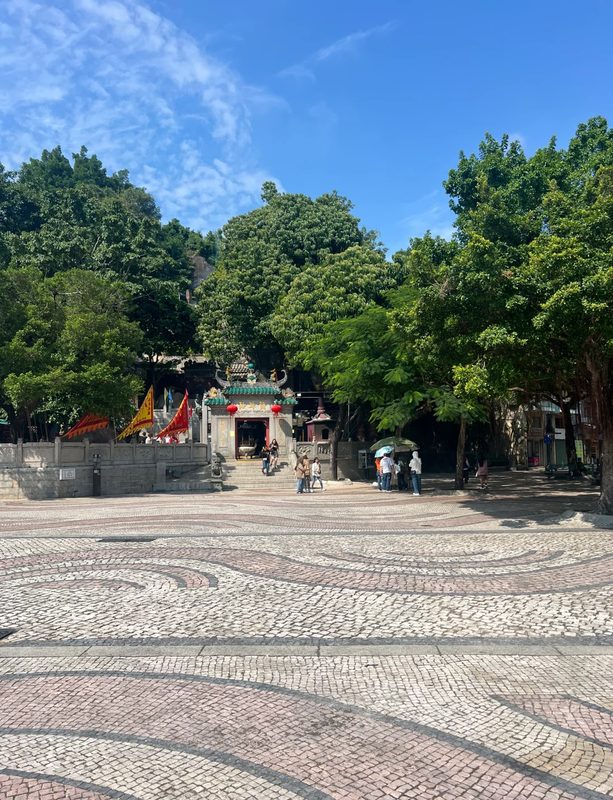
After the opening of new sea routes, the Portuguese were the first Europeans to reach the East. In 1511 Portugal took Malacca and then came to the Chinese coast. Their several incursions on the coasts of Guangdong, Fujian and Zhejiang were driven off by Chinese soldiers and civilians; for example, in 1521 Ming forces defeated the Portuguese at the Battle of Tunmen in Guangdong. In 1553 the Portuguese falsely claimed that their ships had met a storm and their cargo had been soaked, and asked to borrow land to dry it; bribing Guangdong officials and promising 500 taels of silver a year, they were able to land at Macao and gradually established a settlement. In 1573 the 500 taels became "ground rent" paid to the Ming government, and the Portuguese gained the right to reside at Macao by lease. Sovereignty over Macao, however, remained with China. The Ming government appointed a Macao guard official and stationed troops there to administer it fully. Macao gradually became an important international trading port in the Far East and a window for East-West cultural exchange, and many Western missionaries entered inland China through it. The A-Ma Temple in Macao is one of its oldest temples; it is said that when the Portuguese landed nearby and asked the name of the place, the locals answered "Ma Ge", from which the name "Macau" comes. After the Opium War, Portugal took advantage of Qing weakness to stop paying the rent and gradually occupied the Macao peninsula and the islands of Taipa and Coloane, and in 1887 forced the Qing government to sign the Sino-Portuguese Treaty of Peace, Amity and Commerce, in effect occupying Macao.
References
Text and images from Wikipedia are used under CC BY-SA and their respective licenses