Five Dynasties and Ten KingdomsAD 907–979
Emperor Shizong of Later Zhou's Reforms
Later Zhou
Chai Rong, Emperor Shizong of Later Zhou, reformed officialdom, evened out land taxes, reorganized the imperial army and curbed Buddhism, laying the ground for Song unification. He died at 39.
View on the timeline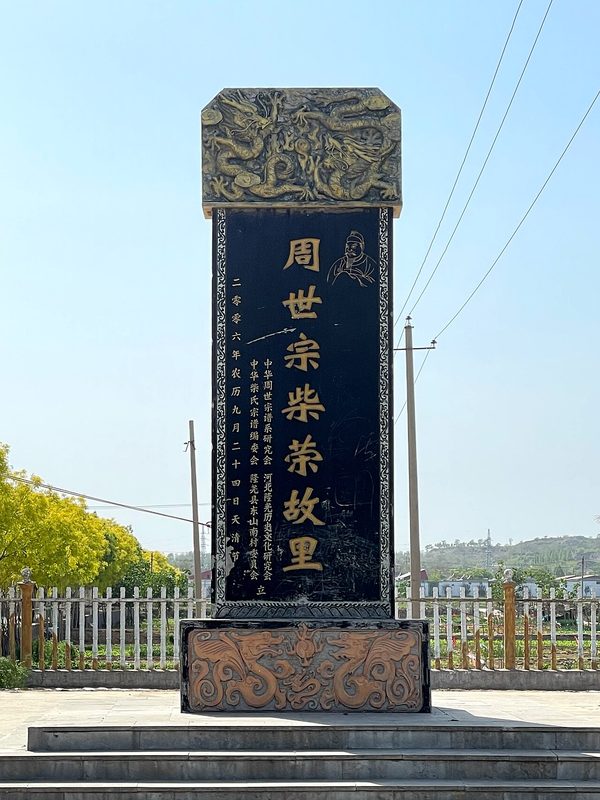
Chai Rong (921–959), from Yaoshan, Xingzhou (present-day Longyao, Hebei), adopted son of Guo Wei, Emperor Taizu of Later Zhou, took the throne in 954. It was the late Five Dynasties: long unrest, political chaos and a ruined economy, with the Northern Han and the Khitan threatening in the north and Southern Tang, Later Shu and other regimes in the south. Chai Rong had great ambitions and worked to reverse the disorder with a series of reforms. Politically, he strengthened central control, tidied officialdom, punished corrupt officials severely, selected talent and revised the laws. Economically, he stressed production, drew back displaced people, encouraged land clearing, built irrigation works, controlled the Yellow River, and sent officials to survey fields everywhere and even out the land tax, easing the peasants' burden. In religion, he curbed Buddhism, abolishing over thirty thousand temples without imperial approval and forcing many monks and nuns back to lay life, which added labor and state revenue. Militarily, he reorganized and expanded the central imperial army and weakened regional military power. In 954 he personally led the army to defeat the combined Northern Han and Khitan forces at the Battle of Gaoping. He then campaigned against Southern Tang and took fourteen prefectures between the Yangtze and Huai, attacked Later Shu in the west and took four prefectures including Qin and Feng, and in 959 marched north against the Khitan, recovering Ying and Mo prefectures and the three passes of Waqiao, Yijin and Yukou. Just as he prepared to retake Youzhou, he fell suddenly ill and died not long after returning to the capital, at only 39. His reforms strengthened Later Zhou, ended the chaos of the Five Dynasties and laid the ground for Northern Song unification.
References
Text and images from Wikipedia are used under CC BY-SA and their respective licenses