Five Dynasties and Ten KingdomsAD 907–979
Shi Jingtang Cedes the Sixteen Prefectures
936 (Later Jin)
In 936 Shi Jingtang, a Later Tang governor, ceded the Sixteen Prefectures and called himself the Khitan emperor’s “son” for troops to destroy Later Tang, founding Later Jin.
View on the timeline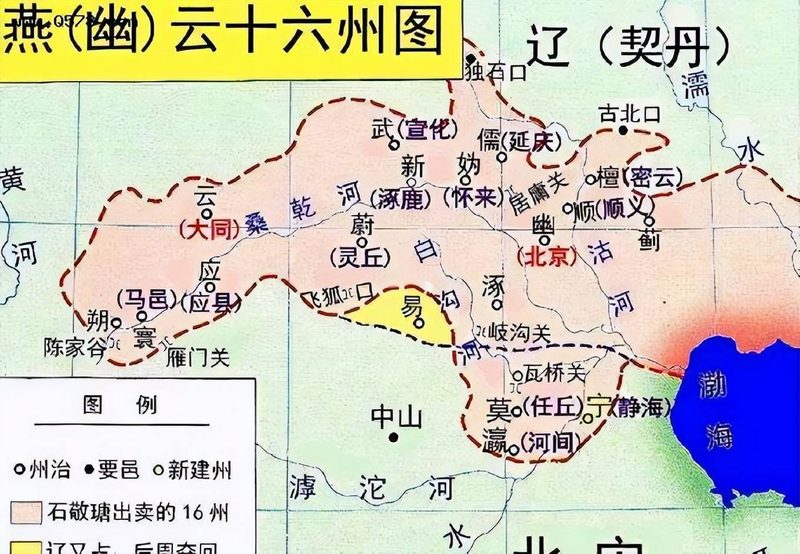
The Sixteen Prefectures of Yan and Yun, also called the Sixteen Prefectures of Youyun or Youji, were sixteen prefectures centered on Youzhou (present-day Beijing) and Yunzhou (present-day Datong, Shanxi), roughly covering present-day Beijing, northern Tianjin and northern Hebei and Shanxi. The area is strategically rugged, with many passes of the Great Wall, and was an important northern barrier for Central Plains dynasties. At the end of the Later Tang, Shi Jingtang, military governor of Hedong, held Taiyuan, and he and Emperor Li Congke of Later Tang suspected each other. In 936 Li Congke ordered Shi Jingtang transferred; Shi rebelled and was besieged at Taiyuan by Later Tang troops. To win Khitan help, Shi Jingtang declared himself a subject of Emperor Yelü Deguang, even called Yelü Deguang, ten years younger than himself, his father, and promised to cede the Sixteen Prefectures to the Khitan and pay an annual tribute of 300,000 bolts of silk. The Khitan sent troops that defeated the Later Tang, and in the same year installed Shi Jingtang as emperor under the dynastic name Jin, known as the Later Jin. In 937 Shi Jingtang destroyed the Later Tang and made Bianzhou (present-day Kaifeng, Henan) his capital, keeping his promise; in 938 the Sixteen Prefectures were formally handed to the Khitan. Shi Jingtang was later called the “son emperor” and reviled. The cession opened the northern gateway of Central Plains dynasties and deprived them of the natural barrier of the Great Wall, so that Khitan cavalry could ride south as far as the Yellow River. Later, Emperor Shizong of Later Zhou recovered Ying, Mo and other prefectures, and Emperor Taizong of Northern Song tried twice to recover the rest, both failing.
References
Text and images from Wikipedia are used under CC BY-SA and their respective licenses