Northern SongAD 960–1127
Chenqiao Mutiny and Founding of Northern Song
960 · Five Dynasties and Ten Kingdoms → Northern Song
In 960 Zhao Kuangyin, commander of the Later Zhou imperial guard, was acclaimed emperor at Chenqiao Station in the “Yellow Robe” mutiny. He returned to Kaifeng and founded the Northern Song.
View on the timeline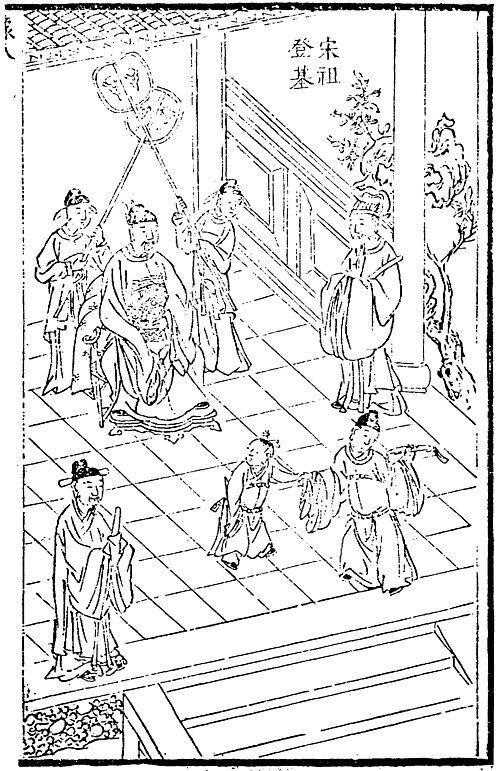
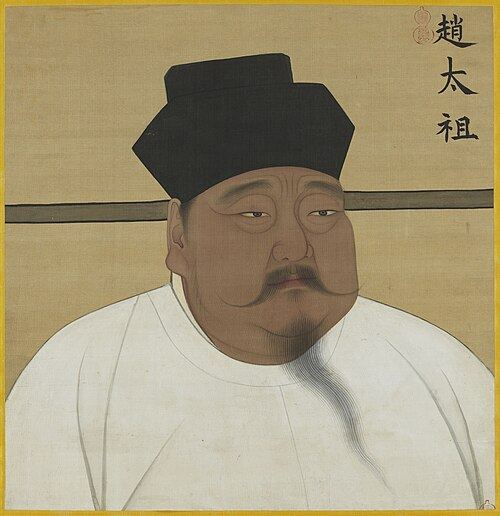
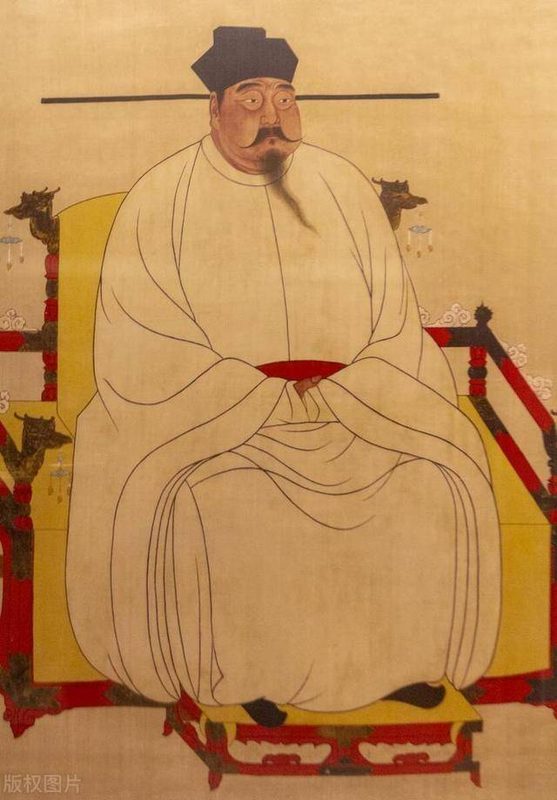
Emperor Shizong of Zhou died in 959 and the seven-year-old Emperor Gong took the throne, a child ruler and an uneasy state. Zhao Kuangyin was commander of the Later Zhou imperial guard, holding the post of Palace Command Inspector, and controlled the capital's troops. In early 960 the court learned that the Liao and Northern Han had joined forces to invade, and sent Zhao Kuangyin north to resist them. When the army reached Chenqiao Station, forty li northeast of Kaifeng (present-day Chenqiao Town, southeast of Fengqiu, Henan), Zhao Guangyi, Zhao Pu and others stirred up the soldiers, draped a yellow robe prepared in advance over Zhao Kuangyin, kowtowed and hailed him “Long live the emperor”, acclaiming him emperor: the origin of the “Chenqiao Mutiny” and of “the yellow robe being put on him”. Zhao Kuangyin then led the army back to Kaifeng, and Emperor Gong was forced to yield the throne. As he had once been military governor of Guide at Songzhou (present-day Shangqiu, Henan), he chose Song as the dynastic name and made Kaifeng, as the Eastern Capital, his capital; this is the Northern Song, and Zhao Kuangyin is Emperor Taizu of Song. On taking the throne he forbade his soldiers from plundering the city. To end division he and Zhao Pu settled on a strategy of “south first, then north”, and he destroyed the southern regimes of Jingnan, Hunan, Later Shu, Southern Han and Southern Tang in turn. After his death his brother Zhao Guangyi took the throne as Emperor Taizong; in 978 Wuyue and Chen Hongjin of Zhangquan yielded their lands, and in 979 the Northern Han was destroyed, largely ending the division of the Five Dynasties and Ten Kingdoms.
References
Text and images from Wikipedia are used under CC BY-SA and their respective licenses