TangAD 618–907
Sun Simiao and Prescriptions Worth a Thousand Gold
Tang dynasty
The Tang physician Sun Simiao wrote Essential Prescriptions Worth a Thousand Gold and its supplement, with many prescriptions and teachings on medical ethics. He is honored as the “King of Medicine”.
View on the timeline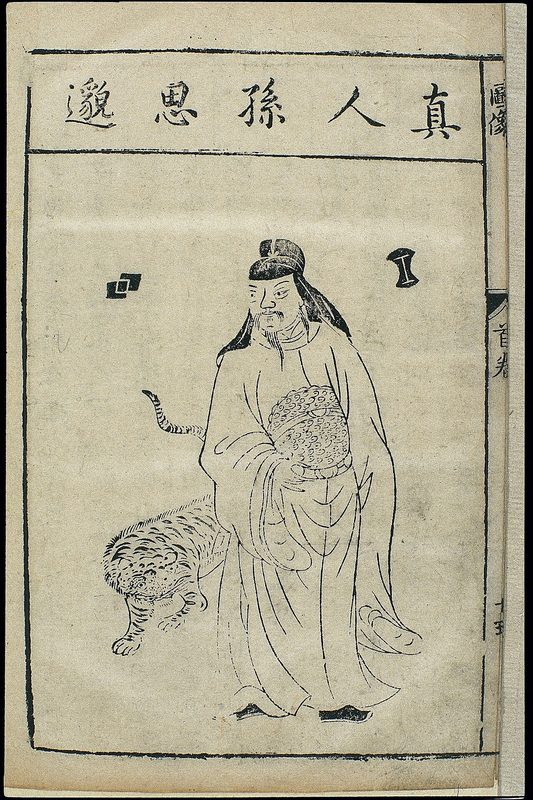
Medicine reached new heights in the Sui and Tang. The Tang government opened medical schools and compiled the Newly Revised Materia Medica (also called the Tang Materia Medica), the world's earliest pharmacopoeia issued by a state. Sun Simiao (c. 581–682), an eminent Tang physician from Huayuan, Jingzhao (present-day Yaozhou District, Tongchuan, Shaanxi), was frail and sickly as a child and spent his family's wealth on treatment, so he resolved to study medicine. He read widely and mastered both medicine and Daoist thought. Emperors of the Sui and Tang repeatedly invited him to serve but he declined, spending his life practicing medicine and gathering herbs among the people. Sun held that “human life is of utmost importance, worth more than a thousand gold, and one prescription that saves it is a greater virtue still”, and so titled his work Essential Prescriptions Worth a Thousand Gold (Beiji Qianjin Yaofang), in 30 volumes; late in life he wrote a 30-volume sequel, Supplement to the Prescriptions Worth a Thousand Gold. Together they are called the Qianjin Fang. They contain several thousand prescriptions and sum up medical achievements before Tang, covering internal medicine, surgery, gynecology, pediatrics, ear, nose and throat, acupuncture and moxibustion, dietary therapy and health preservation. He was the first to give gynecological and pediatric diseases separate volumes, and recorded effective methods such as treating night blindness with animal liver. The chapter “On the Absolute Sincerity of Great Physicians” sets out the virtues a doctor should have, asking that the physician treat patients without asking “whether they are noble or lowly, rich or poor, old or young, beautiful or plain... all alike”.
References
Text and images from Wikipedia are used under CC BY-SA and their respective licenses