TangAD 618–907
Friendly Exchanges Between Tang and the Arabs
Tang dynasty
During Tang, the Arab Caliphate (Dashi) sent envoys over forty times, its merchants traded in China by land and sea, and Chinese papermaking spread west through the Arab world.
View on the timeline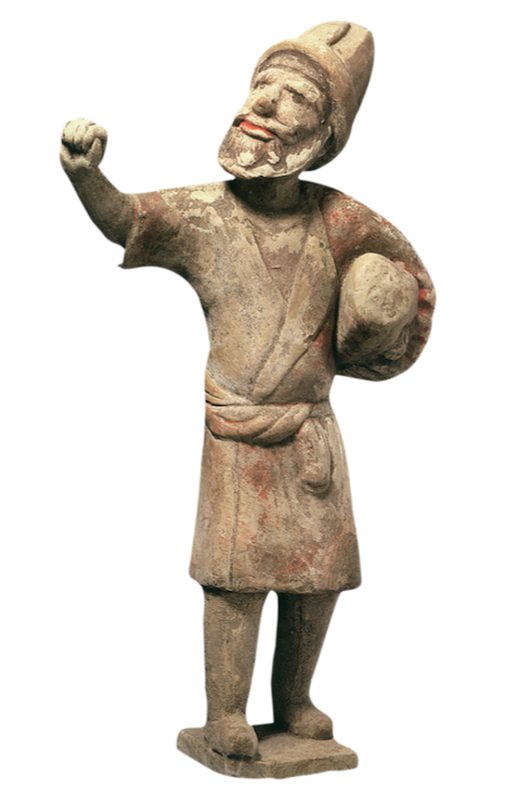
In the early 7th century Muhammad founded Islam on the Arabian Peninsula and a unified Arab state, which kept expanding into an Arab empire spanning Asia, Africa and Europe, called “Dashi” in Chinese histories. In 651 Dashi sent its first envoy to Chang'an, establishing formal contact with Tang. Until the end of Tang, Dashi sent more than forty missions. Trade between the two was very active. Arab merchants came by the overland Silk Road or by sea, traded at Guangzhou, Yangzhou, Quanzhou, Chang'an and elsewhere, sold pearls, spices, ivory, rhinoceros horn and medicines, and shipped Chinese silk, porcelain and tea west. Many settled in China for the long term; Guangzhou had a “foreign quarter” (fanfang) for foreign traders, and some served at the Tang court or even passed the jinshi examination. Islam came with them, and the Huaisheng Mosque in Guangzhou is traditionally said to date from Tang, one of China's earliest mosques. In 751 Tang and Dashi fought at Talas in Central Asia and the Tang army was defeated; it is generally held that papermaking passed from China to the Arab world through Samarkand and later to Europe. Friendly relations nonetheless continued, and during the An Lushan Rebellion Dashi even sent troops to help Tang. Du Huan, captured in the battle, lived in the Arab world for over ten years, and after returning wrote Record of Travels (Jingxing Ji), which describes the customs of Dashi and other places and is one of the earliest Chinese eyewitness accounts of the Arab world. Friendly contacts between Tang and Dashi promoted economic and cultural exchange between East and West.
References
Text and images from Wikipedia are used under CC BY-SA and their respective licenses