JinAD 266–420
The Mogao Caves at Dunhuang
4th–13th century
The Mogao Caves at Dunhuang, Gansu, were first carved in AD 366 and added to over a thousand years across ten dynasties, preserving over 45,000 square meters of murals and some 2,400 painted statues.
View on the timeline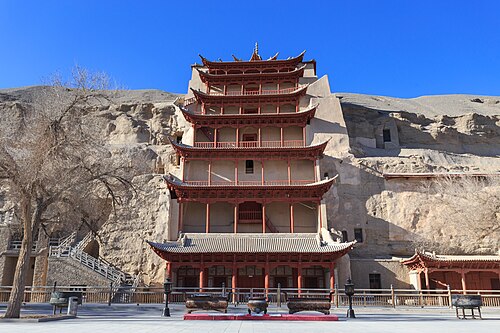
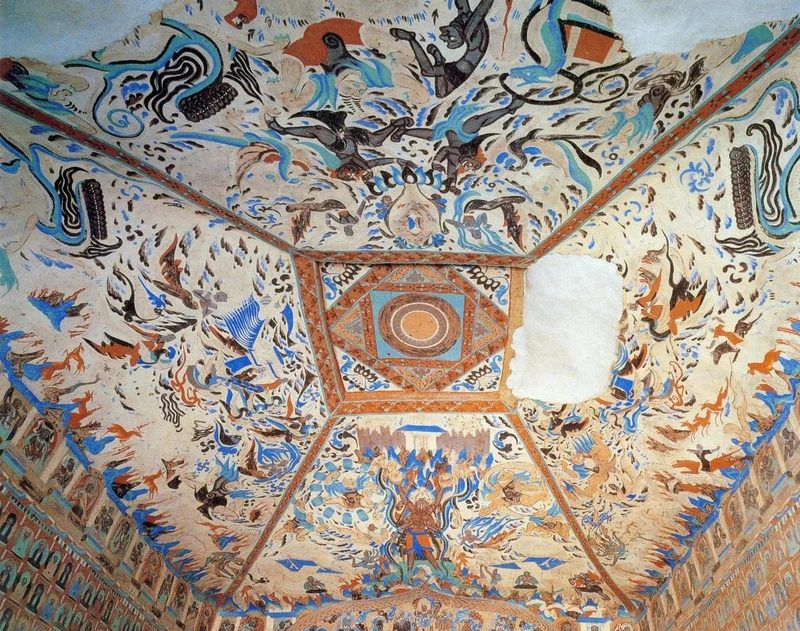
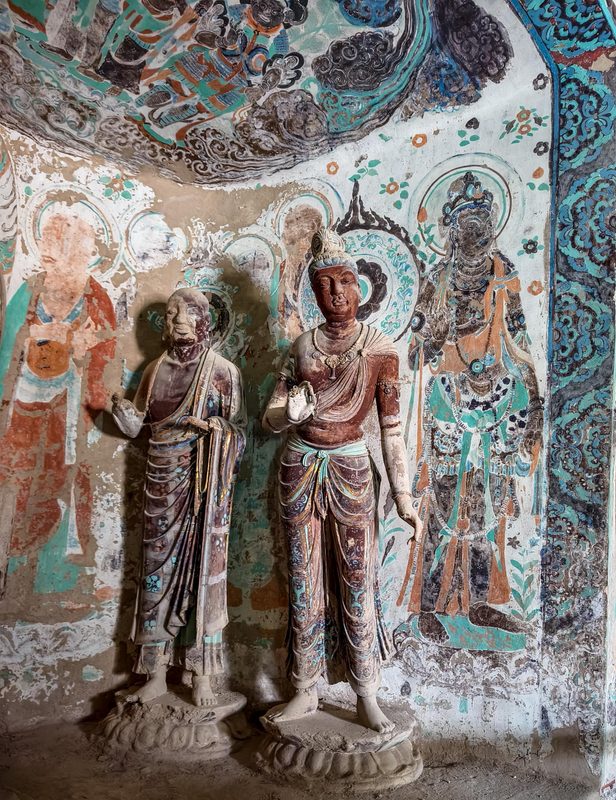
The Mogao Caves at Dunhuang, popularly called the Caves of the Thousand Buddhas, lie in a cliff face at the eastern foot of Mingsha Mountain about 25 km southeast of Dunhuang, Gansu, and stretch over 1,600 m from north to south. Dunhuang was an important Silk Road town where Eastern and Western cultures met. Records say that in AD 366 the monk Le Zun, passing by, suddenly saw golden light on the hill like a thousand Buddhas and carved the first cave in the cliff. From then, through the Sixteen Kingdoms, Northern Dynasties, Sui, Tang, Five Dynasties, Song, Western Xia and Yuan, ten dynasties and over a thousand years of continuous carving created a vast cave complex. Today 735 caves survive, over 490 of them with murals and painted statues, preserving over 45,000 square meters of murals and some 2,400 painted statues. They are mostly on Buddhist themes but also vividly reflect social life, trade and exchange between China and other lands, and the flying apsaras are especially beautiful. The Sui and Tang were the high point of the caves. In 1900 the Daoist Wang Yuanlu discovered the Library Cave (now Cave 17) while clearing caves, sealed with over 50,000 manuscripts, silk paintings and other items from the 4th to 11th centuries. Aurel Stein of Britain, Paul Pelliot of France and others later bought large numbers of them cheaply and carried them abroad, a major loss to Chinese cultural history. Study of these documents gave rise to the international field of “Dunhuang studies.” The Mogao Caves, with the Yungang Grottoes of Datong, Shanxi, and the Longmen Grottoes of Luoyang, Henan, are called China's three great grottoes and were inscribed on the World Heritage List in 1987. Generations of scholars, including Chang Shuhong and Fan Jinshi, have worked to protect the caves.
References
Text and images from Wikipedia are used under CC BY-SA and their respective licenses