JinAD 266–420
Wang Xizhi's Orchid Pavilion Preface
AD 353
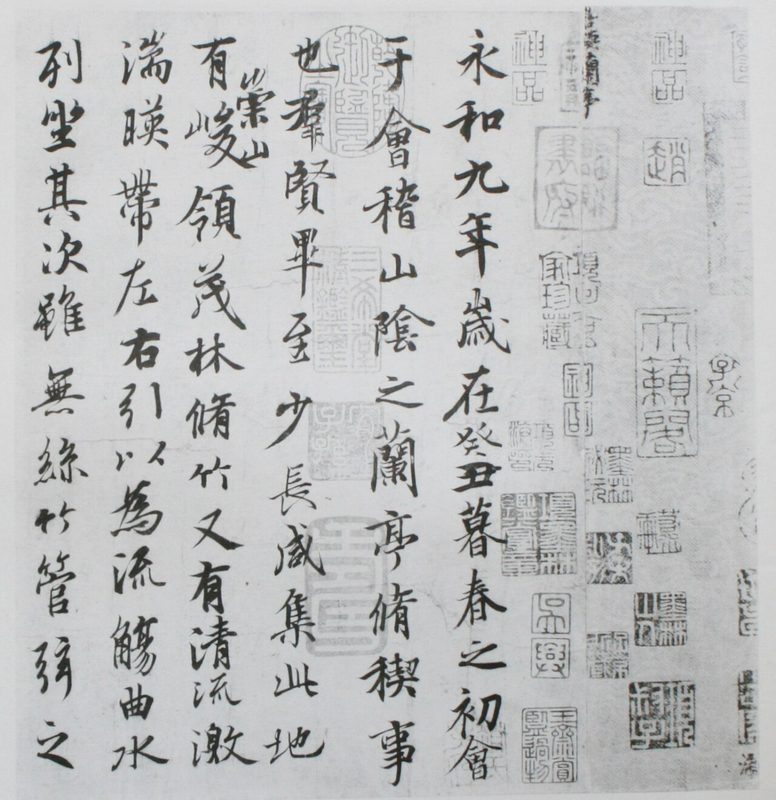
The Eastern Jin calligrapher Wang Xizhi, honored as the “Sage of Calligraphy,” wrote his Preface to the Orchid Pavilion Collection in AD 353, called the “finest running script under heaven.”
View on the timeline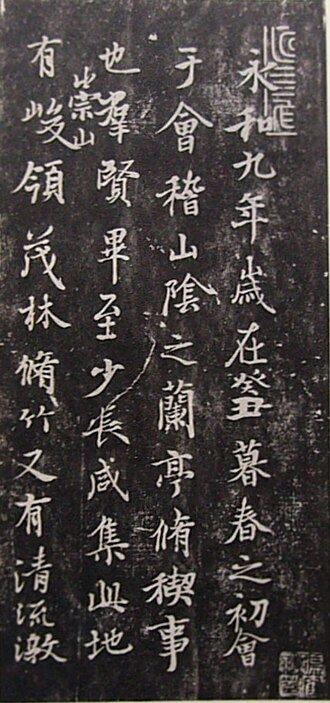
After the Eastern Han, as papermaking improved, calligraphy gradually became an art appreciated for its own sake. Zhong Yao of Cao Wei excelled at regular script and is revered as its founder. The man who took calligraphy to a new stage was Wang Xizhi of the Eastern Jin. Wang Xizhi (303–361, by another account 321–379), courtesy name Yishao, of the Wang clan of Langye, rose to General of the Right Army and was called “Wang of the Right Army.” He studied under Lady Wei and later drew on Zhong Yao, Zhang Zhi and other masters. His regular, running and cursive scripts were all superb; he changed the plain style of the Han and Wei and created a new, graceful, flowing manner, his writing “drifting like floating clouds, leaping like startled dragons,” and later generations revered him as the “Sage of Calligraphy.” On the third day of the third month of AD 353, Wang Xizhi gathered forty-one noted scholars including Xie An and Sun Chuo at the Orchid Pavilion in Shanyin, Kuaiji (present-day Shaoxing, Zhejiang) for a purification gathering, with wine and poetry; the poems were compiled as the Orchid Pavilion Collection, and in high spirits Wang wrote the preface. Its 324 characters record the beauty of the scenery and the joy of the gathering and express feelings about life; its calligraphy is vigorous and graceful, and the twenty or so characters zhi are each written differently, so it is called the “finest running script under heaven.” Tradition says Emperor Taizong of Tang so loved the original that he had it buried with him at Zhaoling; surviving versions are Tang copies, the best known being Feng Chengsu's “Shenlong” copy. Wang's son Wang Xianzhi was also an outstanding calligrapher, and the two are called the “Two Wangs,” with profound influence on later calligraphy.
References
- Wikipedia (Chinese) - Preface to the Orchid Pavilion Collection
- Wikipedia (Chinese) - Preface to the Orchid Pavilion Collection
Text and images from Wikipedia are used under CC BY-SA and their respective licenses