Qin221–207 BC
Digging the Lingqu Canal and Taking Lingnan
After Qin unification
Qin Shi Huang sent troops south against the Baiyue, set up Guilin, Nanhai and Xiang commanderies, and dug the Lingqu Canal to link the Xiang and Li rivers, joining the Yangtze and Pearl River systems.
View on the timeline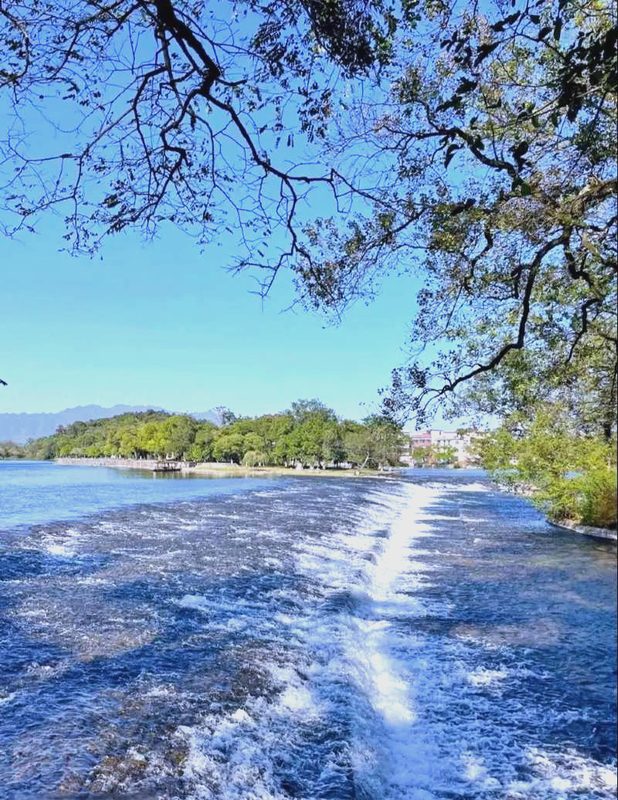
The Yue were an old people of southern China, living along the southeastern coast and in the Pearl River basin; because they had many tribes they were called the “Hundred Yue” (Baiyue). After unifying the six states, Qin Shi Huang sent Tu Sui with several hundred thousand troops by separate routes to attack the Baiyue. Because Lingnan was mountainous and distant, transporting supplies was very difficult, the Qin advance was blocked and the commander Tu Sui was killed by the Yue. To solve the supply problem, Qin Shi Huang ordered the Supervising Censor Lu (called “Shi Lu” in the histories) to dig a canal in present-day Xing'an County, Guangxi: the Lingqu. The Lingqu made clever use of the terrain: a diversion head split the upper Xiang River into the South Canal and North Canal, the large and small “Tianping” weirs regulated the water level, and “doumen” (a kind of lock) overcame differences in water level, letting boats cross the Yuecheng Range and linking the Xiang and Li rivers, thus connecting the Yangtze and Pearl River systems. The Lingqu was opened around 214 BC; over 30 km long, it is among the oldest surviving canals in the world and, with the Dujiangyan and Zhengguo Canal, is called one of the three great water works of the Qin. Once it was open, supplies reached the front without interruption, and in 214 BC Qin unified Lingnan and set up Guilin, Nanhai and Xiang commanderies there, moving several hundred thousand people from the Central Plains to garrison the area and live among the Yue, promoting the development of Lingnan and ethnic integration. At the end of the Qin, Zhao Tuo, commandant of Nanhai, held Lingnan and founded the Nanyue kingdom, which was not brought back under a unified dynasty until Emperor Wu of Han.
References
Text and images from Wikipedia are used under CC BY-SA and their respective licenses