Qin221–207 BC
Qin Establishes Centralized Rule
221 BC
After unification Qin created the imperial system, with three top ministers at the center and commanderies and counties in the regions, shaping the next two thousand years.
View on the timeline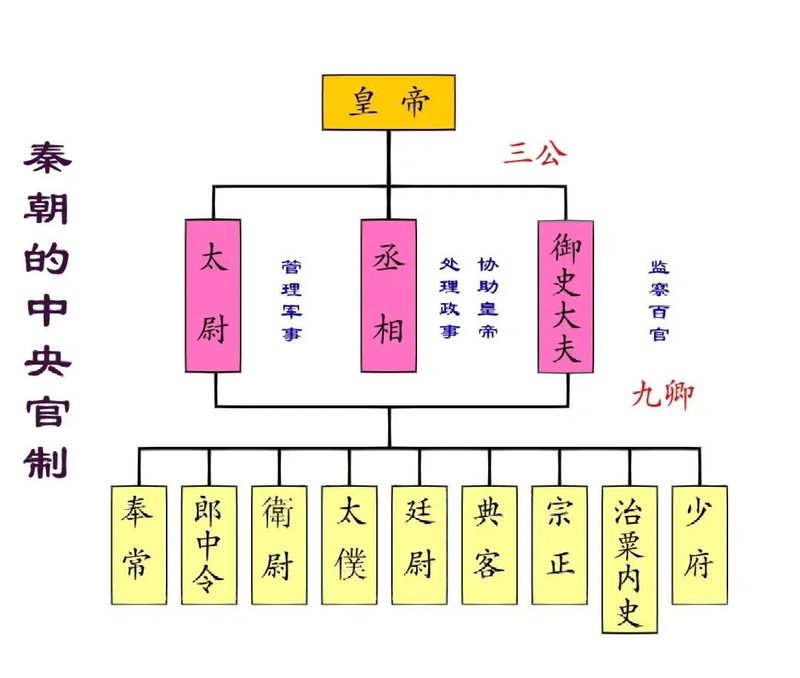
After Qin unified China, it created a full system of centralized rule to strengthen control over the country. First came the emperor system: Ying Zheng, regarding his achievements as surpassing the legendary Three Sovereigns and Five Emperors, took “Emperor” (Huangdi) as the supreme ruler's title and called himself the “First Emperor,” hoping his descendants would rule for ten thousand generations. The emperor held supreme authority and all military and political power; his orders were called “zhi” and “zhao,” he called himself “zhen,” and he used a jade seal. Second, at the center were set up the chancellor, grand commandant and imperial secretary, the “Three Excellencies,” in charge of administration, military affairs and supervision respectively, checking one another with the final decision resting with the emperor; below them were the Nine Ministers handling specific affairs. In the regions, Qin abolished the Western Zhou enfeoffment system: when Chancellor Wang Wan and others proposed enfeoffing imperial sons, the Commandant of Justice Li Si strongly urged the commandery-county system, which Qin Shi Huang supported. The country was first divided into 36 commanderies, later over 40; each commandery had a governor, a military commandant and a supervising censor, with counties below headed by a magistrate, all appointed and dismissed directly by the court and not hereditary. Below the county were township, village and pavilion units. Qin also made unified laws and applied political, legal, military, land and tax systems throughout the country, so that the emperor and court firmly controlled power everywhere.
References
Text and images from Wikipedia are used under CC BY-SA and their respective licenses