Qin221–207 BC
Qin Unifies the Six States
230–221 BC · Warring States → Qin
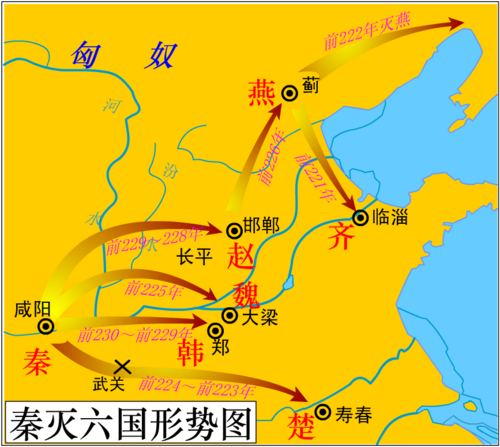
From 230 BC King Zheng of Qin destroyed Han, Zhao, Wei, Chu, Yan and Qi in turn and in 221 BC founded the Qin dynasty, China's first unified multiethnic state.
View on the timeline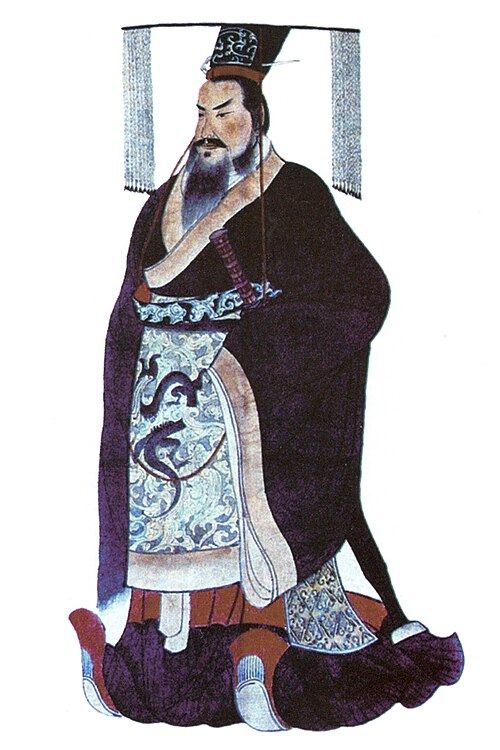
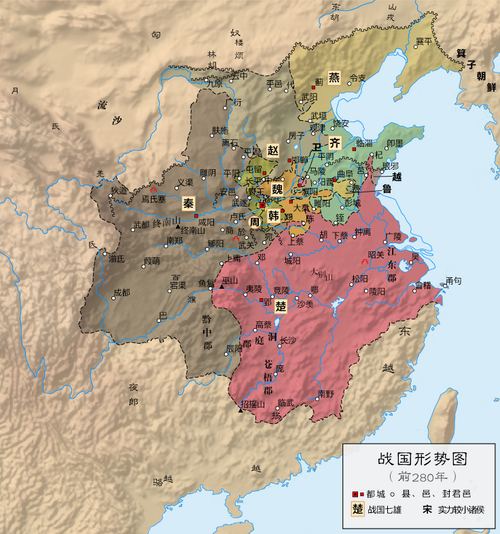
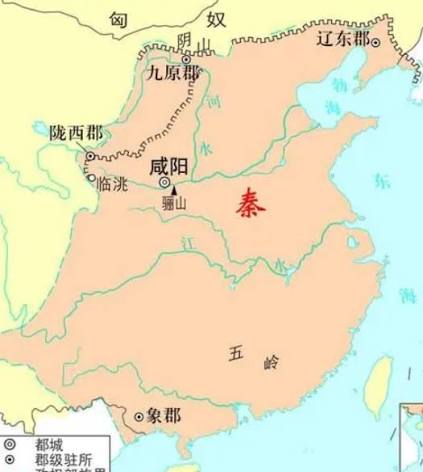
In the late Warring States, constant war badly damaged the economy and social stability, and people in every state longed for an end to turmoil and for unification. Through Shang Yang's reforms Qin's economy and military far surpassed those of the six eastern states, and it was ready for unification. King Zheng of Qin (259–210 BC) took the throne at thirteen and after taking personal charge removed Lao Ai and Lü Buwei and held all power himself. He recruited talent regardless of birthplace or background, employing Li Si, a minor official of Chu, and Wei Liao, a commoner of Wei; he adopted Li Si's advice to “destroy the lords and achieve imperial rule,” adopting the strategy of allying with distant states and attacking near ones, defeating them one by one, and bribed powerful ministers of other states with gold to sow discord among the six. In 230 BC Qin launched a strong offensive, first destroying Han, then Zhao (228 BC), Wei (225 BC), Chu (223 BC) and Yan (222 BC), and finally Qi in 221 BC, completing unification and founding the Qin dynasty with its capital at Xianyang. During this time Crown Prince Dan of Yan sent Jing Ke to assassinate the King of Qin, without success. After destroying the six states, Qin struck the Xiongnu in the north and conquered the Baiyue in the south, built the Great Wall and dug the Lingqu Canal, and its domain extended east to the sea, west to Longxi, north to the Great Wall and south to the South China Sea. Qin's unification ended the long division and warfare since the Spring and Autumn and Warring States periods and created the first unified, multiethnic, centralized feudal state in Chinese history, in line with the trend of history and the wishes of the people, with deep consequences.
References
Text and images from Wikipedia are used under CC BY-SA and their respective licenses