Warring States475–221 BC
Building the Dujiangyan
256 BC
Around 256 BC Li Bing, governor of Shu, led construction of the Dujiangyan, with its Fish Mouth, Flying Sand Weir and Bottle-Neck Channel, which has served for over 2,000 years.
View on the timeline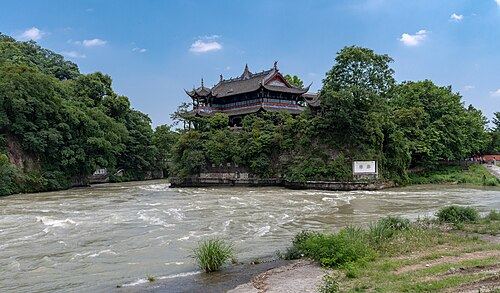
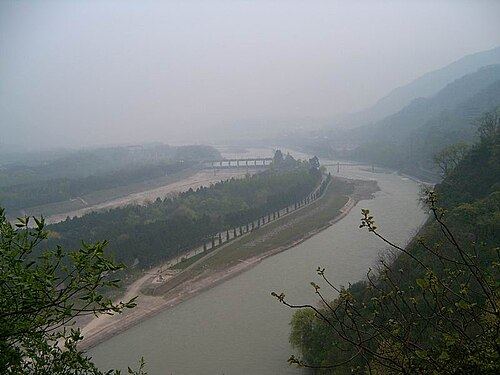
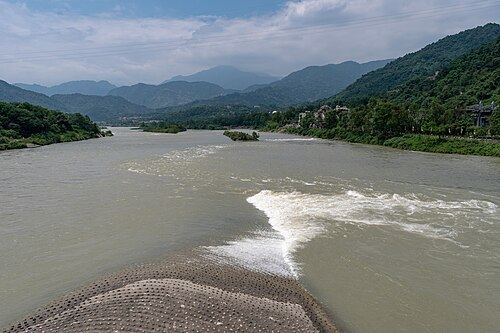
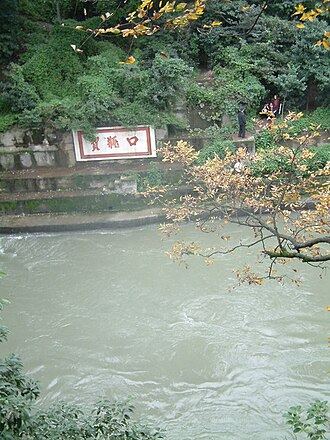
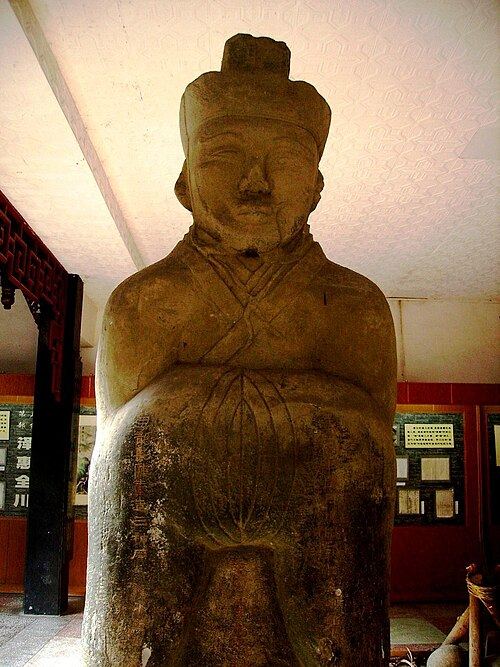
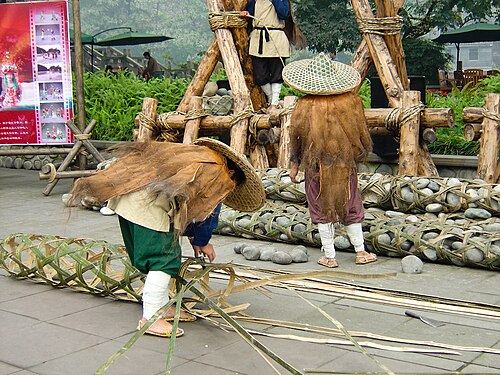
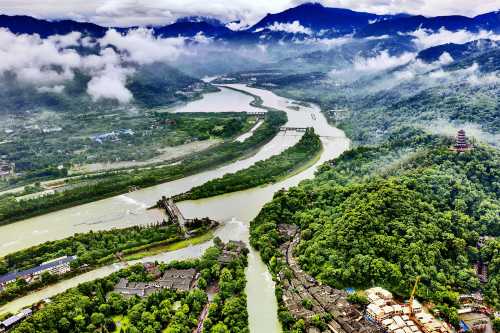
In the late Warring States, while reforming its government and developing its economy, Qin paid close attention to building water works. The Min River on the Chengdu Plain ran swift and often flooded, while the east of the plain was often dry. About 256 BC Li Bing, governor of Shu for Qin, building on earlier flood-control work, directed construction of the Dujiangyan (in present-day Dujiangyan City, Sichuan). After careful planning, Li Bing and others chose the point where the Min River leaves the mountains and meets the plain, and made use of the terrain and river course to build this large water project. The headworks have three parts. The Fish Mouth is a dividing embankment built in mid-river like a great fish lying in the water; it splits the Min into an inner river for irrigation and an outer river for flood discharge, and adjusts the flow automatically by season, the “four-six division of water.” The Flying Sand Weir is an overflow and silt-removal structure that sends surplus water and silt into the outer river in flood. The Bottle-Neck Channel is an intake cut through Mount Yulei, shaped like the neck of a bottle, which controls the water entering the inner river and sends it into a dense network of irrigation canals. Tradition says workers cut the Bottle-Neck Channel by heating rock with fire and then dousing it with cold water to crack it. The Dujiangyan combines flood control, irrigation and navigation without needing a dam, a model of harmony between people and nature, and made the Chengdu Plain the “Land of Abundance,” where “flood and drought are at the people's command, and famine is unknown.”
References
Text and images from Wikipedia are used under CC BY-SA and their respective licenses