Neolithicc. 10,000 years ago–2070 BC
Taosi Capital Site
c. 4,300–4,000 years ago
The Taosi site in Xiangfen, Shanxi, c. 4,300–4,000 years ago, has a palace city, large tombs and a possible observatory; some scholars think it may be “Yao's capital Pingyang.”
View on the timeline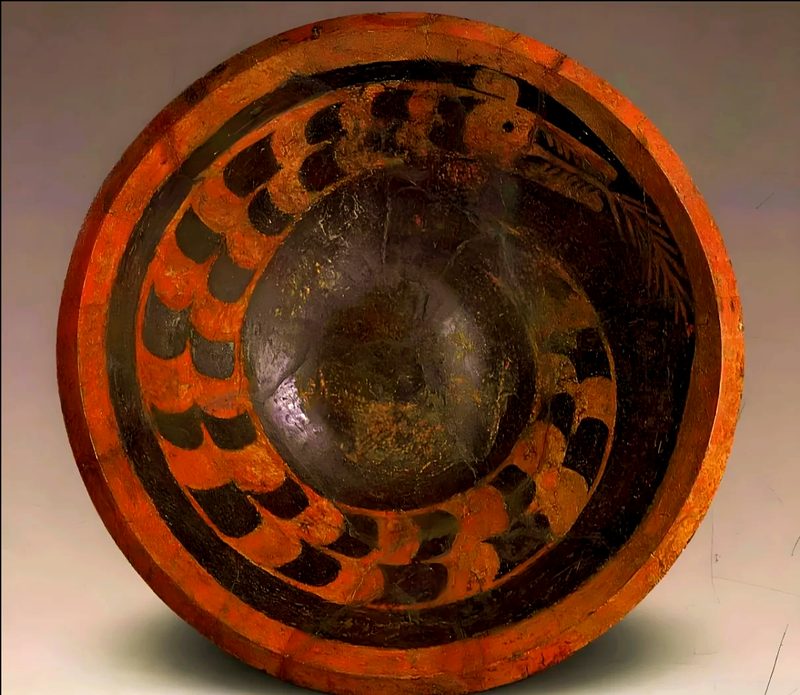
The Taosi site lies around Taosi village northeast of Xiangfen County, Shanxi, and dates to about 4,300–4,000 years ago, belonging to the Taosi type of the Longshan culture. Systematically excavated since 1978, a large walled city was confirmed after 1999, covering about 2.8 million square meters, one of the largest contemporary cities in the middle Yellow River region. In the middle of the city is a walled palace enclosure containing several large rammed-earth foundations, with architectural elements such as clay tiles that may have roofed palaces. The city has a cemetery with clear ranks: large tombs contained ritual items such as painted pottery drums, stone chimes, jade yue axes and painted dragon-design plates, showing the high status of the occupants, while many small tombs had almost no goods, indicating clear social stratification. The site also produced small copper objects such as a bell, and a pottery flask with symbols written in cinnabar, which some scholars consider writing. Particularly striking is a semicircular rammed-earth structure southeast of the city, with observation slits formed by rammed-earth pillars, thought possibly to have been an observatory for watching the sunrise position and fixing the solar terms. Based on its location, date and scale, many scholars suggest Taosi may be the “Yao's capital Pingyang” of the texts, indicating that an early state had appeared in the middle Yellow River, which is of great significance for exploring the origins of Chinese civilization. Taosi was named one of the “100 Great Archaeological Discoveries in 20th-Century China” and is a key site of the Project to Trace the Origins of Chinese Civilization.
References
Text and images from Wikipedia are used under CC BY-SA and their respective licenses