Neolithicc. 10,000 years ago–2070 BC
Longshan Culture
Over 4,000 years ago
The Longshan culture, over 4,000 years ago, is known for black pottery, including “eggshell” ware under 1 mm thick; walled towns multiplied and social divisions deepened.
View on the timeline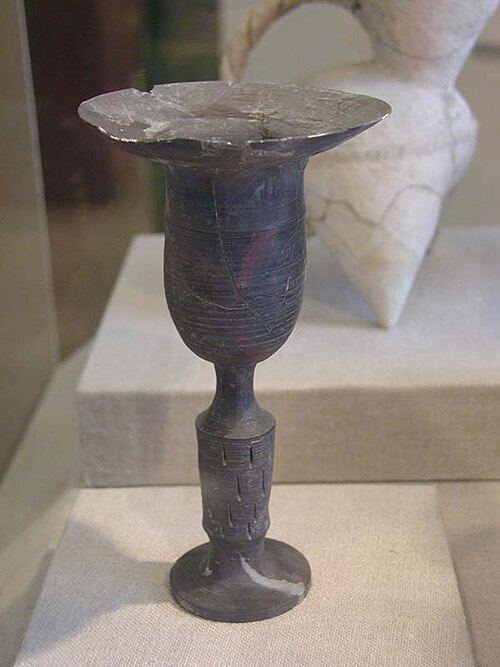
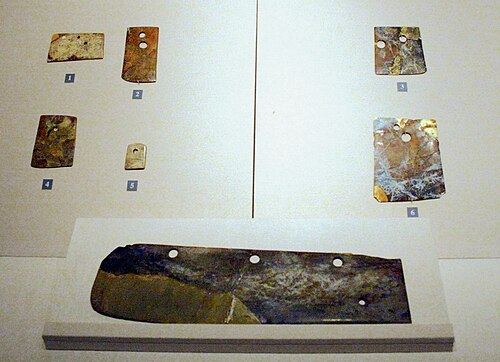
The Longshan culture refers broadly to a series of late Neolithic archaeological cultures in the middle and lower Yellow River region, dating from about 2500 BC to 2000 BC. In 1928 archaeologists first found such remains at the Chengziya site in Longshan Town, Zhangqiu, Shandong, hence the name. Because glossy black pottery is common at the sites, it was once called the “Black Pottery Culture.” The fast potter's wheel was widely used, and the vessels are regular and fine. The “eggshell” black pottery tall-stemmed cups of the Shandong Longshan culture have walls as thin as an eggshell, under 1 mm at the thinnest, the highest level of Neolithic pottery-making in China. Agriculture developed further, animal raising became more common, and a few copper objects appeared. Rammed-earth walled towns appeared in many places, such as Chengziya in Shandong, Wangchenggang in Henan and Taosi in Shanxi; some were large and had defenses. Graves differ sharply in size and goods: large tombs hold sets of pottery, jade and ritual vessels, while small ones have almost nothing, showing deepening social divisions and the concentration of rank and power. The period roughly corresponds to the legendary age of Yao, Shun and Yu. The Longshan culture follows the Yangshao and Dawenkou cultures and precedes the Erlitou culture, a key stage in China's move from tribal alliances to early states. Chengziya is one of the earliest prehistoric sites excavated independently by Chinese archaeologists, and the study of Longshan also offers clues in the search for Xia culture.
References
Text and images from Wikipedia are used under CC BY-SA and their respective licenses