QingAD 1644–1912
The Eight-Power Allied Invasion
1900
In 1900 eight powers (Britain, the US, Russia, Japan, France, Germany, Italy, Austria) took Tianjin and Beijing; Cixi fled with the emperor to Xi’an while the allies looted the capital.
View on the timeline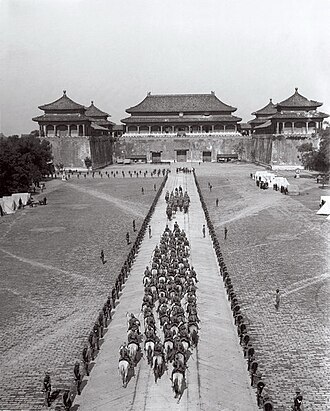
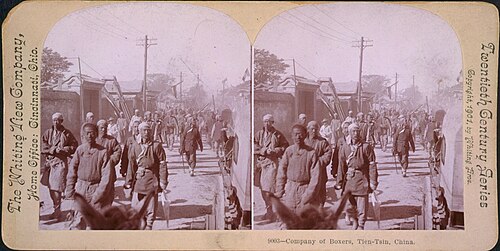
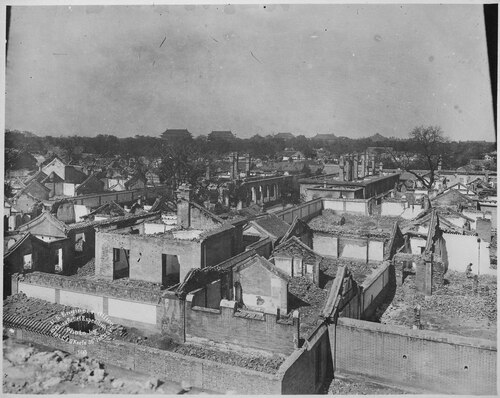
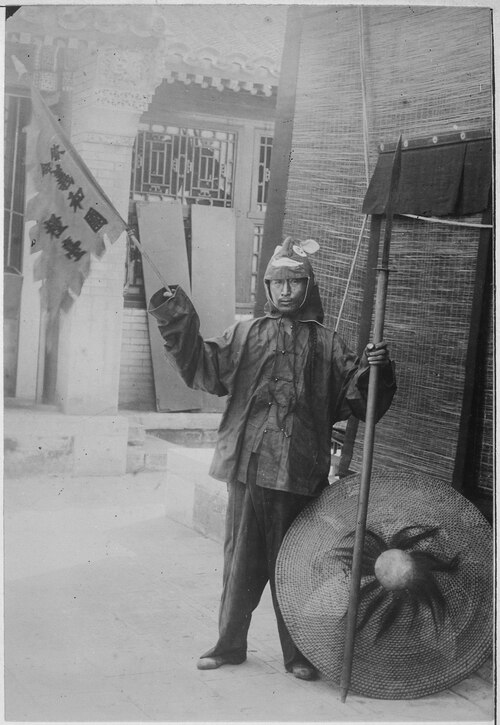
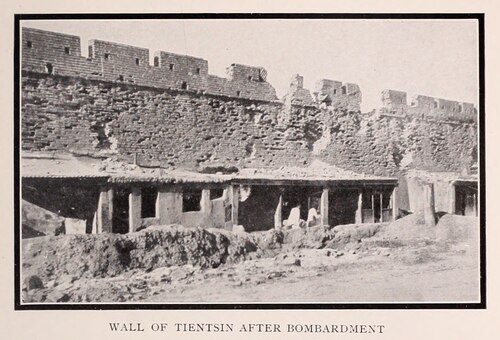
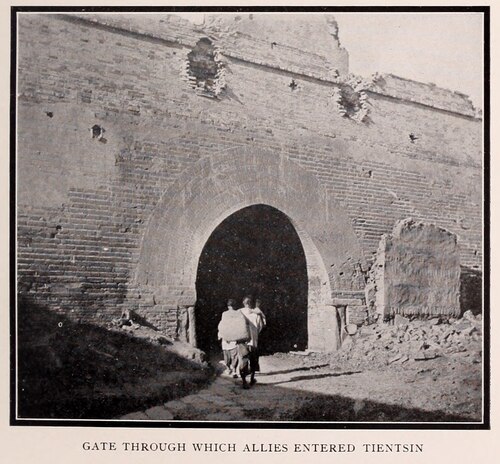
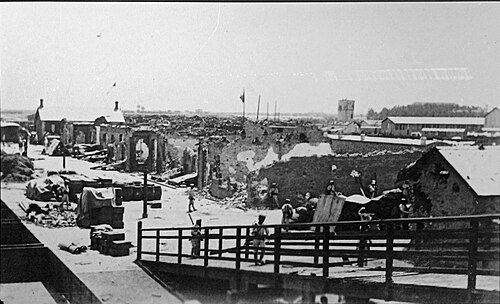
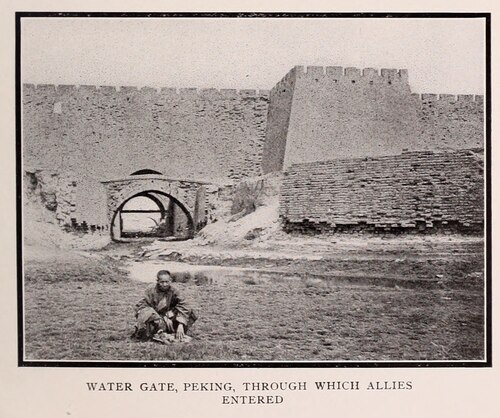
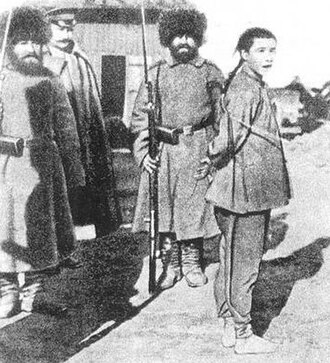
The rapid growth of the Boxer movement drew the close attention of the powers. At the end of May 1900 Britain, Russia and others sent over three hundred troops into Beijing’s legation quarter. In June a force of over two thousand from eight countries, Britain, the US, Russia, Japan, France, Germany, Italy and Austria, led by British Vice Admiral Seymour, advanced on Beijing from Tianjin, was stopped at Langfang and elsewhere by the Boxers and Qing troops, and was forced back to Tianjin. The allies then took the Dagu forts, and the Qing declared war on them on 21 June. In July they took Tianjin, where Qing general Nie Shicheng died heroically at Baliqiao. In early August about 20,000 allied troops advanced from Tianjin on Beijing and entered it on 14 August; the next day Empress Dowager Cixi hurriedly fled to Xi’an with the Guangxu Emperor. The allies killed, burned and looted in Beijing; vast treasures and relics were plundered from the Forbidden City, the Summer Palace and elsewhere, rare texts such as the Yongle Encyclopedia were largely destroyed or carried off, and many innocent residents were killed. They divided Beijing into occupation zones under military rule. Meanwhile Russia sent over 100,000 troops to occupy Northeast China, committing the Blagoveshchensk massacre and the “Sixty-Four Villages East of the River” massacre and killing many Chinese residents. The allies also sent “punitive” columns that occupied many places in Zhili, Shanxi and elsewhere. On the run, the Qing ordered the Boxers “ruthlessly suppressed” and named Li Hongzhang plenipotentiary to negotiate with the powers. The invasion brought deep suffering to the Chinese people and ended with the Boxer Protocol.
References
Text and images from Wikipedia are used under CC BY-SA and their respective licenses