QingAD 1644–1912
The Self-Strengthening Movement
1860s–mid-1890s
From the 1860s to the 1890s, reformers seeking “self-strengthening” and wealth brought in Western technology, built modern arsenals and civilian enterprises, and founded a new navy.
View on the timeline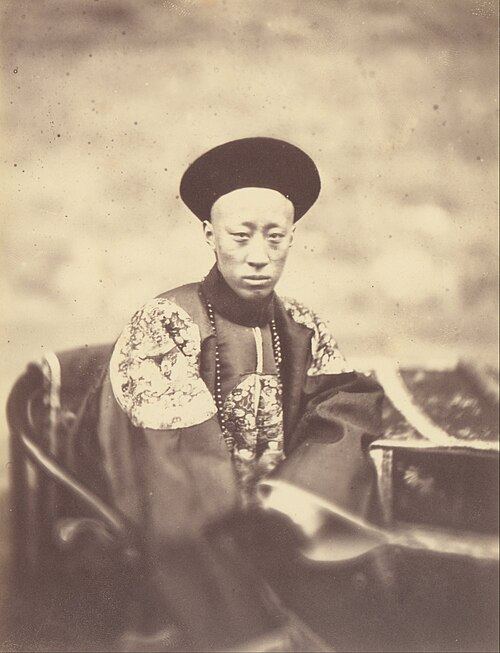
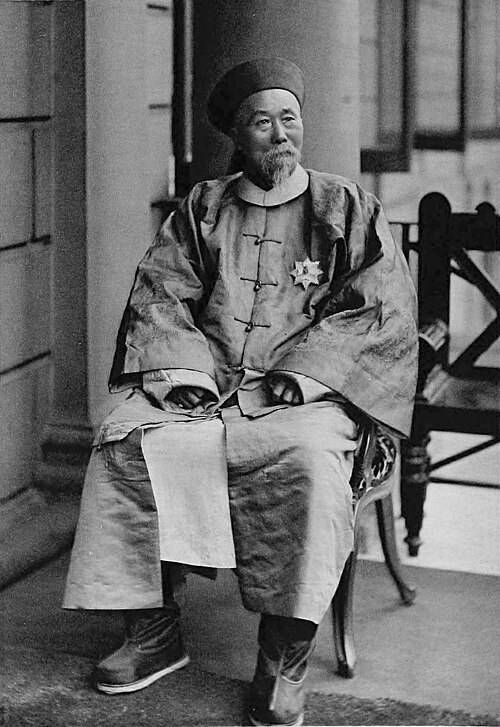
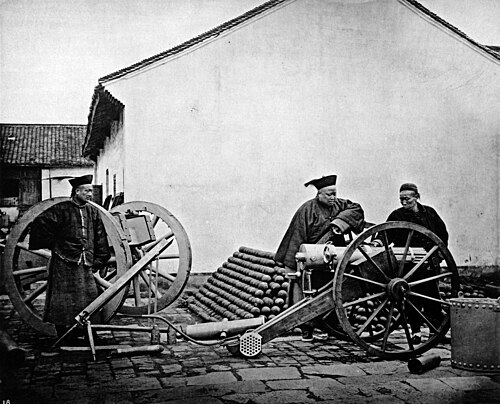
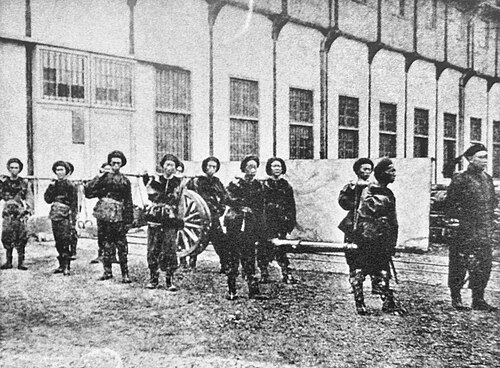
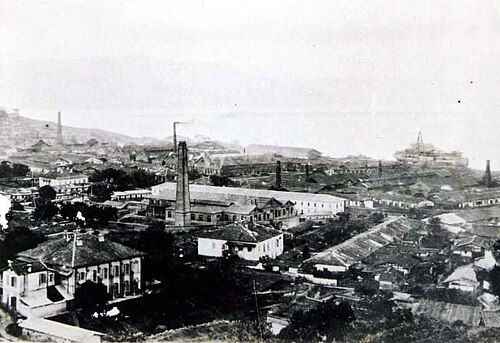
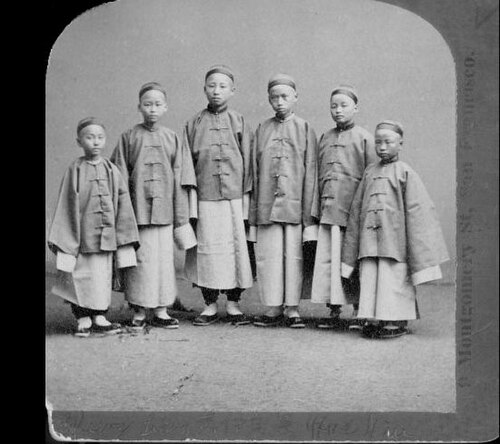
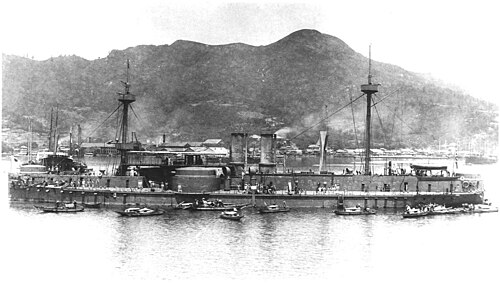
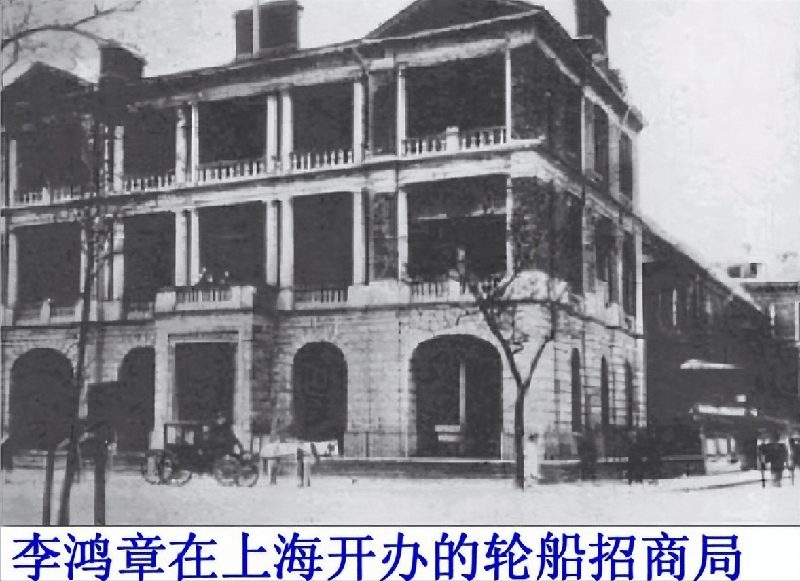
After the Second Opium War, more open-minded officials in the Qing ruling circle argued for using advanced Western technology to strengthen the army and enrich the country; they were called the “Foreign Affairs faction.” Prince Gong Yixin led them at the center, and Zeng Guofan, Li Hongzhang, Zuo Zongtang and Zhang Zhidong in the provinces; their guiding principle was later summarized as “Chinese learning as the essence, Western learning for practical use.” From the 1860s, under the slogan of “self-strengthening,” they founded modern military industry, such as Zeng Guofan’s Anqing Arsenal, Li Hongzhang’s Jiangnan Arsenal and Jinling Machine Works, and Zuo Zongtang’s Fuzhou Shipyard, making guns, ammunition and steamships. From the 1870s, under the slogan of “seeking wealth,” they founded civilian enterprises such as the China Merchants Steam Navigation Company, Kaiping Mines, Shanghai Machine Weaving Mill, Hanyang Iron Works and Hubei Textile Mill. They also set up new schools such as the Tongwen Guan, the Fuzhou Naval Academy and the Tianjin Naval Academy and sent students abroad; from 1872 the Qing sent 120 young boys to the US, among them Zhan Tianyou. In the 1880s they also built the Beiyang, Nanyang and Fujian fleets. The movement brought in advanced Western production technology, objectively stimulated the birth and growth of Chinese national capitalism, and began China’s modernization. But it left the feudal system untouched, its enterprises were corruptly run and dependent on foreigners, and the destruction of the Beiyang Fleet in the 1894 Sino-Japanese War marked its failure.
References
Text and images from Wikipedia are used under CC BY-SA and their respective licenses