QingAD 1644–1912
The Burning of the Yuanmingyuan and the Convention of Beijing
1860
In 1860 Anglo-French forces entered Beijing and looted and burned the Yuanmingyuan; the Qing was forced to sign the Convention of Beijing, ceding the Kowloon district to Britain.
View on the timeline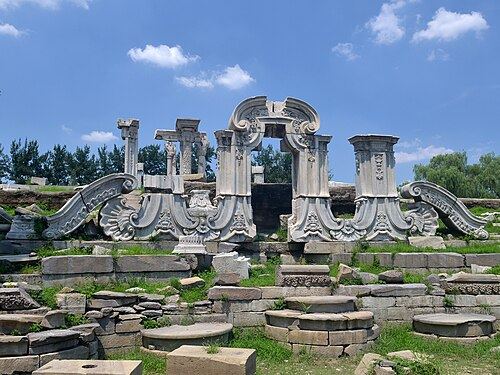
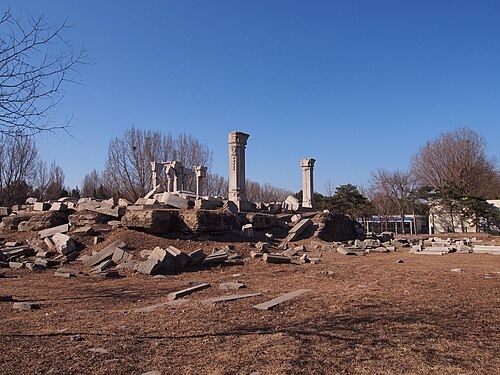
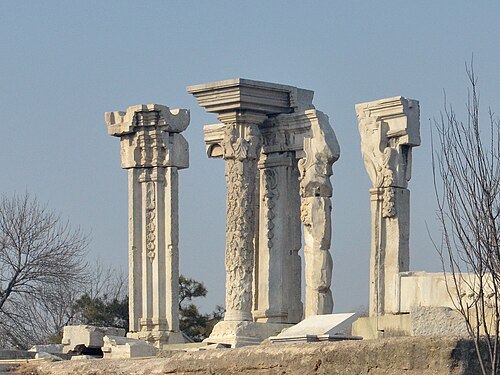
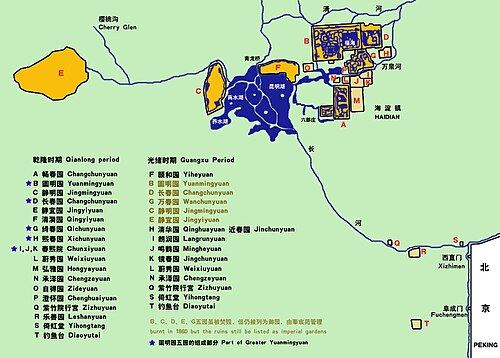
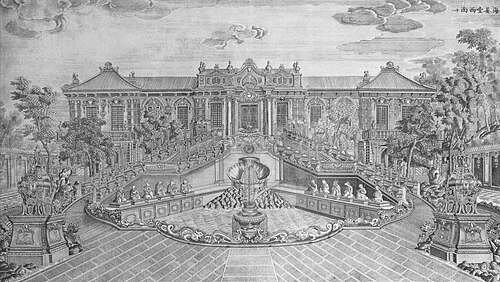
After the Treaties of Tianjin Britain and France were still unsatisfied. In 1859 their envoys, citing the exchange of ratifications in Beijing, forced their way into the Dagu estuary with a fleet and were driven back by Qing troops at the Dagu forts. In 1860 the two countries formed a joint force again, took Dagu, entered Tianjin and pressed on Beijing. The Xianfeng Emperor made his brother Prince Gong Yixin the peace negotiator to stay in Beijing and fled to the Chengde Mountain Resort. In October the Anglo-French force entered Beijing and broke into the imperial garden Yuanmingyuan in the northwest suburbs. Begun in the Kangxi reign and built up over more than 150 years from the Yuanmingyuan, Changchunyuan and Qichunyuan, it held great treasures and was called the “garden of gardens.” The invaders looted it extensively. To cover up the crime, the British plenipotentiary Lord Elgin ordered it burned; the fire burned for days and the unrivaled imperial garden became ruins. The French writer Victor Hugo condemned it: “One day two bandits entered the Summer Palace; one plundered, the other burned.” That year Yixin was forced to sign the Convention of Beijing with Britain and France, confirming the Treaties of Tianjin, opening Tianjin as a port, ceding the Kowloon district to Britain and raising the indemnity to eight million taels each for Britain and France. Russia, claiming credit for “mediation,” forced the Qing to sign the Sino-Russian Treaty of Beijing, seizing about 400,000 square kilometers east of the Ussuri. The Second Opium War cost China much more sovereignty and deepened its semi-colonization. The remains of the Western-style buildings in the Yuanmingyuan ruins today bear witness to the powers’ crimes.
References
Text and images from Wikipedia are used under CC BY-SA and their respective licenses